Lighting up the ordinary with technicolour
Discover how Windhoek residents Kat Stahl and Wynand Lens are transforming neglected bus stops into vibrant public artworks, inspiring community pride, creativity and positive urban
Namibia is redefining what conservation can look like. In March 2026, the country formally recognised its first three Other Effective Areabased Conservation Measures (OECMs), signalling a shift toward more inclusive, outcome-driven biodiversity protection.
OECMs differ from traditional protected areas. They are not officially proclaimed parks or reserves, but rather landscapes, often communal, private or mixed-use, managed in ways that achieve sustained conservation outcomes. In essence, they acknowledge that biodiversity protection does not stop at park fences.
At the heart of this milestone are three newly recognised sites: the NamibRand Nature Reserve (188,980 hectares), ProNamib Nature Reserve (84,500 hectares) and Canyon Nature Park (45,000 hectares).
Together, they cover approximately 318,480 hectares, adding significant ecological value through improved landscape connectivity and ecosystem protection. These sites complement Namibia’s existing conservation network, strengthening links between protected areas, communal conservancies and community forests.
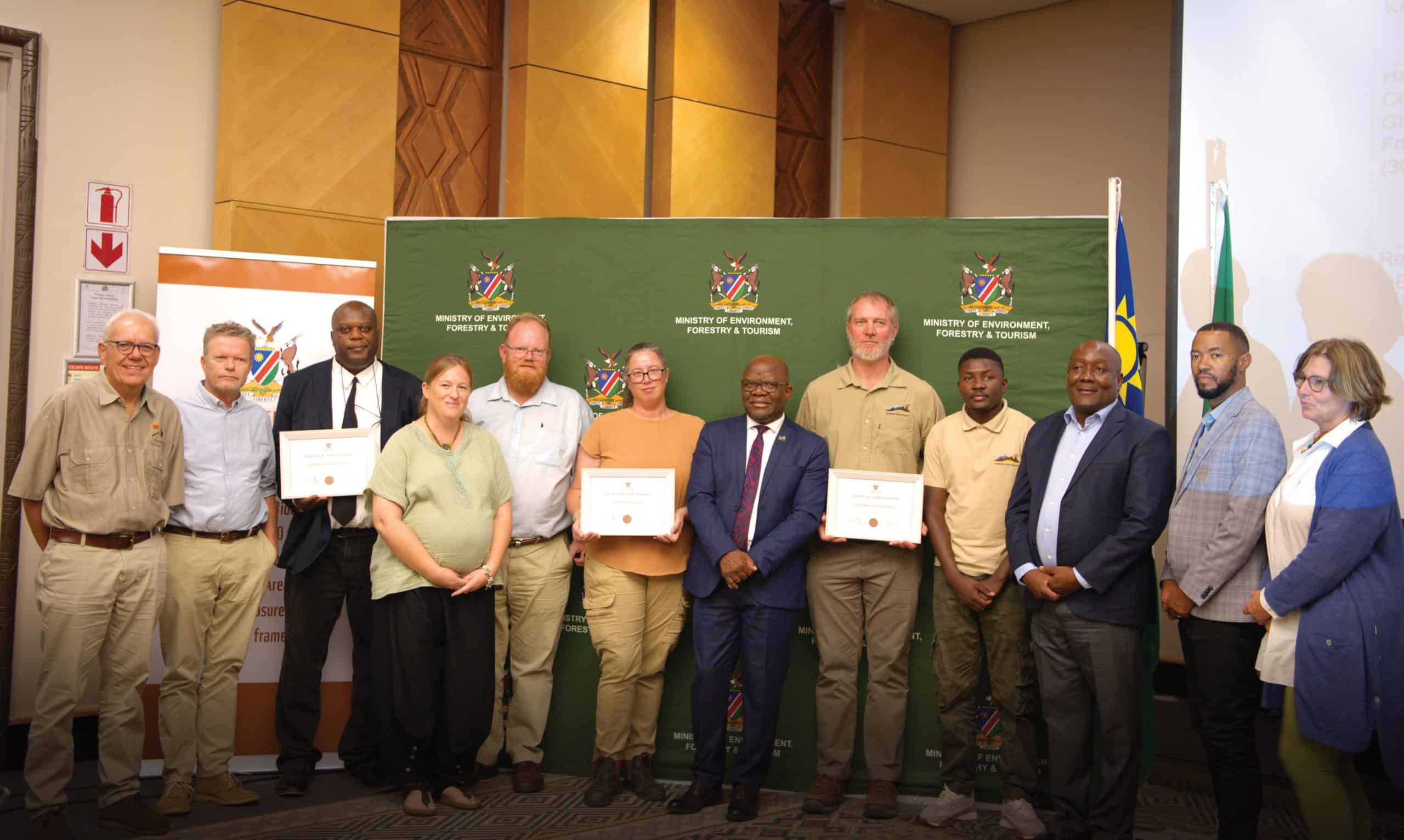
The recognition followed a validation workshop and certification ceremony held in Windhoek from 30 to 31 March 2026. The gathering brought together key stakeholders, including representatives from the Ministry of Environment, Forestry and Tourism (MEFT), the Ministry of Fisheries and Marine Resources, WWF Namibia, the Namibia Nature Foundation (NNF), conservation practitioners and land managers.
Far from being a symbolic event, the workshop played a critical role in shaping Namibia’s conservation future. It provided a platform to review and validate the national framework and guidelines for identifying OECMs, assess expressions of interest and build a shared understanding of how this approach can complement existing conservation efforts.
Namibia’s conservation journey has long been rooted in innovation and community involvement. Dr Juliane Zeidler, WWF Namibia’s country director, highlighted how this latest step builds on decades of progress.
“Over the past couple of decades, Namibia has made tremendous strides by unlocking tourism development, creating employment and stimulating local and regional economies, all for the benefit of conservation and sustainable development,” she said. “The recognition of the first three OECM sites takes Namibia a step further in people-centred, landscape-level conservation.”
A key strength of Namibia’s approach lies in its enabling policy environment. By recognising conservation beyond state-owned land, the country has created space for a wider range of contributors.
“It is commendable that Namibia’s legislation allows conservation to be recognised beyond state-owned protected areas, communal conservancies and community forests,” said Sikongo Haihambo, the executive director of MEFT. “OECMs demonstrate that effective conservation cuts across communal, private and mixed-use landscapes where people live and work as stewards of our natural heritage.”
The designation of these sites also reflects Namibia’s commitment to global conservation goals. According to Kenneth Uiseb, the deputy director of wildlife monitoring and research at MEFT, the sites directly contribute to the Kunming-Montreal Global Biodiversity Framework’s Target 3 – the “30×30” ambition to conserve at least 30% of the world’s land and sea areas by 2030.
“They demonstrate that well-managed landscapes can deliver long-term conservation outcomes even when not formally proclaimed as protected areas,” he noted.
For those on the ground, the recognition is a meaningful endorsement of years of work. Nils Odendaal, the chief executive officer of NamibRand Nature Reserve, emphasised the role of collaboration in achieving these outcomes.
“This recognition affirms the dedication of land managers, conservation partners and communities who have worked consistently to achieve real conservation outcomes,” he said. “Recognition as OECMs highlights the strength of partnerships and shared stewardship for Namibia’s biodiversity.”
The certification of Namibia’s first OECMs is more than a milestone; it is a signal of where conservation is heading. By embracing diverse governance and management models, the country is broadening both the scale and inclusivity of its conservation efforts.

Discover how Windhoek residents Kat Stahl and Wynand Lens are transforming neglected bus stops into vibrant public artworks, inspiring community pride, creativity and positive urban

Discover how to spend 24 hours in Windhoek with this curated guide featuring scenic hiking trails, local culture, traditional Namibian cuisine, rooftop dining and the

Namibia’s 2026 State of the Nation Address highlights economic growth, infrastructure development, governance reforms, energy investments and job creation as the government advances Vision 2030

Namibia is advancing its sustainable finance agenda as RMB Namibia and the Bank of Namibia lead efforts to unlock climate finance, attract investment, and support