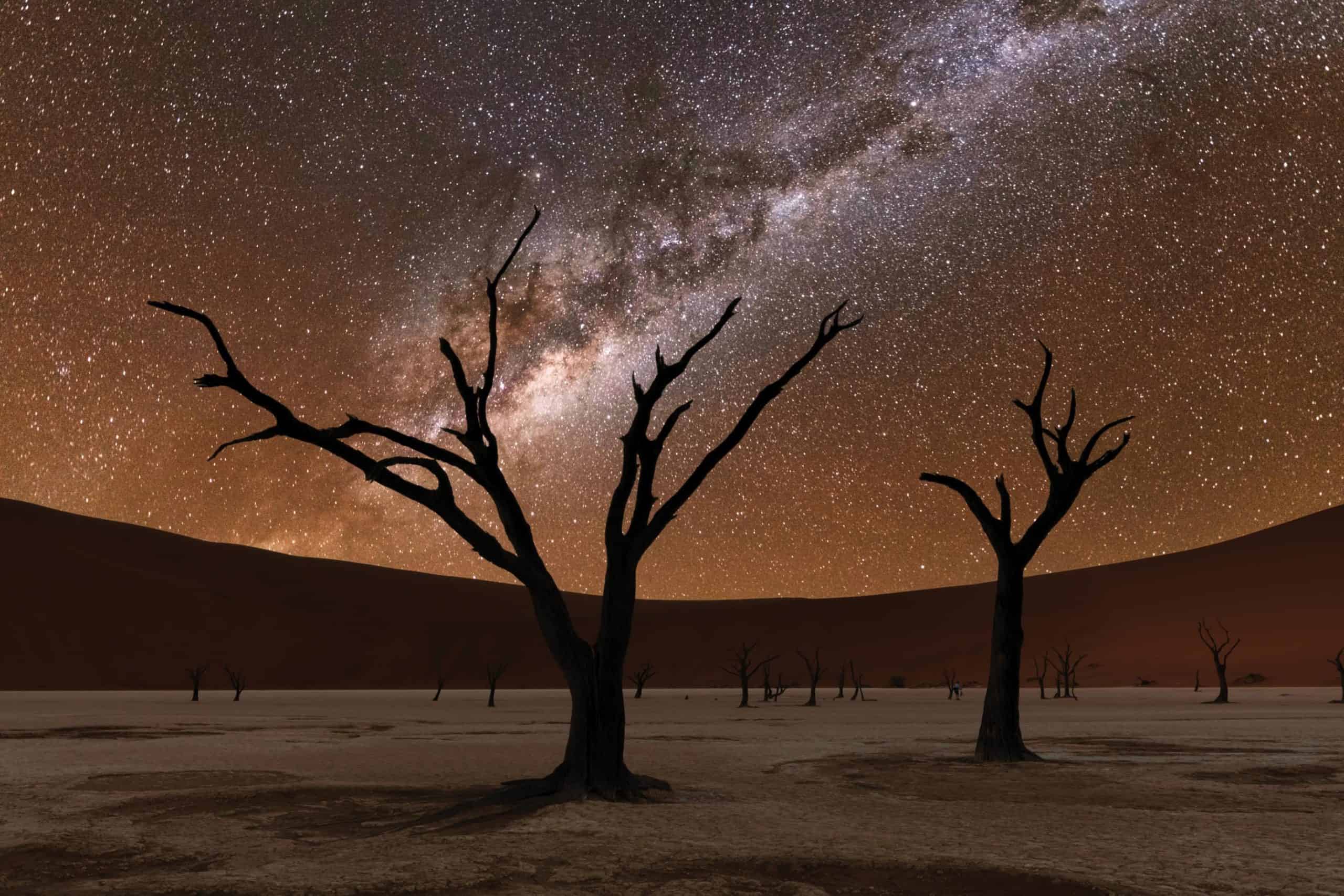
Long before astronomy explained the motion of celestial bodies, people looked to the sky and interpreted its wonders through beliefs and traditions. Meteor showers are no exception. Across Africa, the sudden appearance of a shooting star has often been understood not merely as a physical event, but as a sign carrying meaning. Among Oshiwambo-speaking communities in Namibia, for example, a shooting star is often taken as a sign that someone has died.
Science explains the same event in a different way. A shooting star is not a star, but a small piece of dust or rock entering Earth’s atmosphere at high speed. As it moves through the air, it heats up and glows, producing the brief streak of light seen from the ground. Most of these particles are small, often no larger than grains of sand or tiny stones, yet their speed makes them appear dramatic.
Meteor showers occur when Earth passes through streams of debris left behind by comets, and sometimes asteroids, as it orbits the sun. When these particles enter the atmosphere, they burn up in quick flashes. What appears to us as a sudden event is therefore part of a regular cycle within the solar system. These displays are not random accidents, but recurring events linked to the paths of celestial bodies.
During August, the Perseid meteor shower is often the one that receives the most attention. It is known for bright, fast meteors and is especially impressive in the northern hemisphere. In southern Africa, however, it is not always ideally placed, since its radiant lies lower in the sky. Some brighter Perseids may still be visible, but local observers are often better served by showers that favour southern skies, such as the Southern Delta Aquariids. Under dark conditions, even a modest display can be worth watching. Namibia is particularly well placed for this kind of viewing. Much of the country still offers dark skies, little light pollution and broad horizons. In such conditions, meteor showers become one of the easiest astronomical events to observe. They require no telescope and no special equipment, only a clear view of the sky and a little patience.
These events matter for more than their appearance. They remind us that Earth is moving through a solar system filled with the debris from older celestial bodies. At the same time, they show how the sky can be understood in more than one way. Tradition gives such sights cultural and spiritual meaning, while science explains their physical cause. Neither response cancels the other. Together, they show that the night sky remains both something to study and something to reflect on.
When a meteor crosses the Namibian sky, it is easy to see why such moments stay with people. The flash is brief, but it connects the observer to something larger: the motion of the Earth, the history of the solar system and the long human habit of looking upward for meaning.