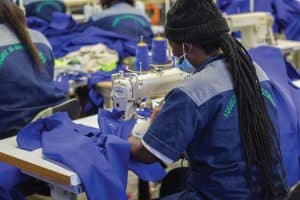
Work Integrated Learning (WIL) has become increasingly important as the country seeks to address youth unemployment and improve graduate employability. While access to education has expanded since independence, many graduates still face challenges transitioning from study to meaningful employment, largely due to limited workplace exposure during training. WIL helps to close this gap by ensuring that learners graduate not only with theoretical knowledge but also with practical skills, workplace discipline and industry experience. It further strengthens collaboration between educational institutions and employers, while also helping industries shape training to meet real labour market needs.
The approach is also closely aligned with Namibia’s national development priorities, including Vision 2030 and the Sixth National Development Plan (NDP6), which emphasise skills development, economic diversification, industrialisation and job creation.
Officially launching the WIL Policy 2025–2030, Prime Minister Elijah Ngurare described the development as a major step towards strengthening skills development and improving youth employability. He said the initiative is not only about policy formulation but about building a bridge between education and industry, noting that many graduates continue to face challenges transitioning from the classroom to the workplace, while employers report persistent gaps in practical skills and workplace readiness. “Public institutions should lead by example by expanding placement opportunities for our students and graduates. Leading by example also means being deliberate and thinking out of the box,” he noted. Deputy Minister of Education, Innovation, Youth, Sports, Arts and Culture Dino Ballotti stressed that the success of the policy would depend on strong collaboration between the government, the private sector and training institutions, warning that the real work begins with implementation rather than policy formulation.
According to the deputy minister, the policy is the result of an extensive and inclusive consultative process involving stakeholders across multiple sectors, including technical working groups, validation workshops, industry leaders, educators, youth representatives and development partners. “Despite all the efforts to get here, the work really only starts now,” said Ballotti.
Prime Minister Ngurare further called for stronger partnerships between the government, the private sector and educational institutions, urging employers to open up workplace opportunities for internships and apprenticeships, while encouraging institutions to fully integrate WIL into their curricula. He also emphasised the importance of expanding opportunities beyond urban centres, calling for placements in both rural and urban areas to ensure inclusive access for all young people. Ngurare commended the MEIYSAC steering committee, development partners and stakeholders who contributed to the development of the policy, describing it as a critical step towards transforming education into employment pathways and strengthening Namibia’s long-term economic competitiveness.
With the policy’s focus on practical skills development, inclusivity and economic alignment with national development goals, the initiative is expected to play a key role in improving graduate employability and supporting Namibia’s long-term drive towards skills-based economic growth.