If you are one of those that believe there is no value in being a jack-of-all-trades, then read on…
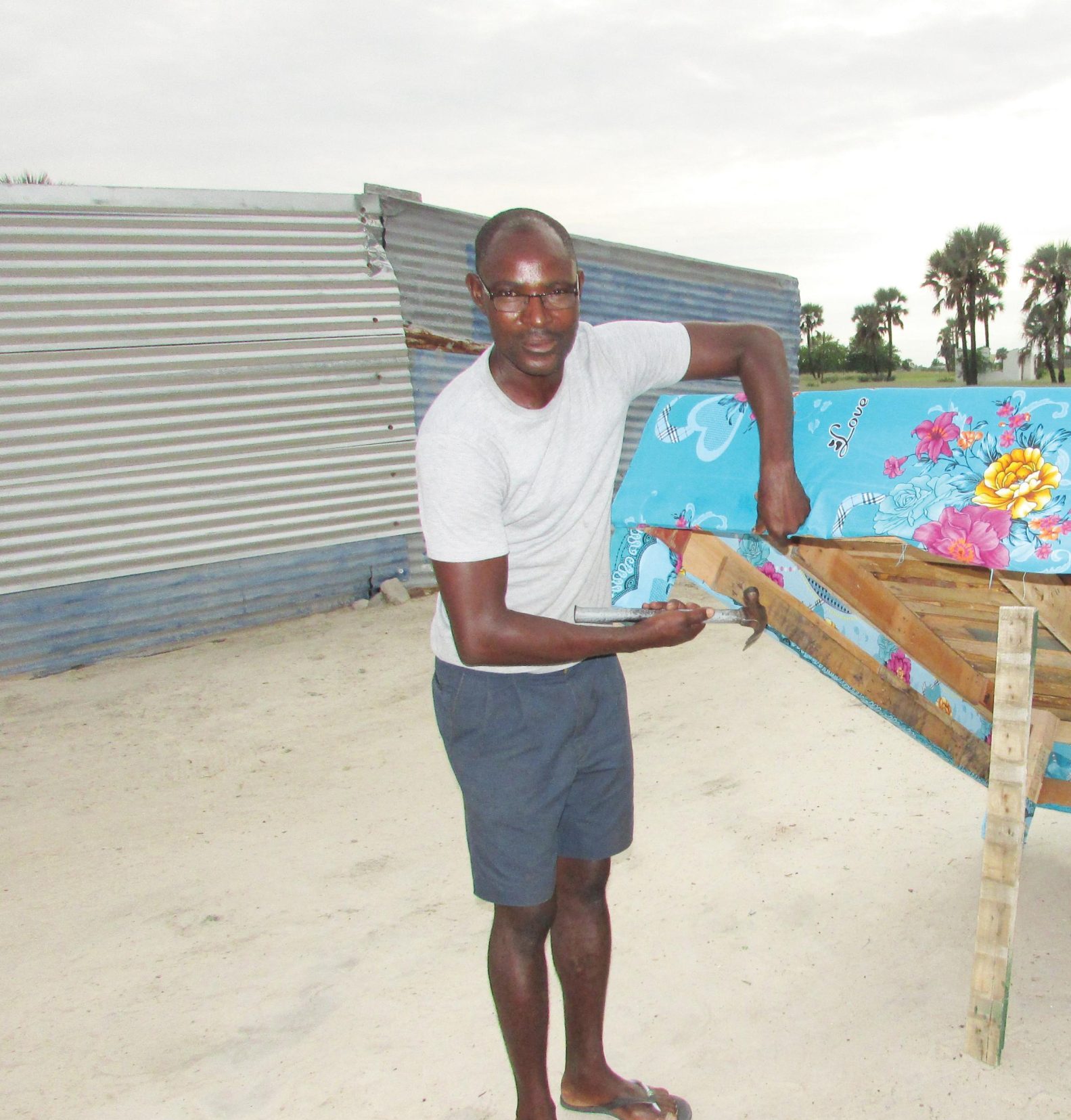
Johannes Timoteus is a security guard and a selftaught carpenter. At night, he earns a salary as a security guard at a retail shop in Ondangwa, while during the day, you will find him under a camelthorn tree, busy making wooden beds, tables and chairs. “I have been doing this since 2011,” he tells while showing some of the beds he has made. He explains that the furniture he makes and sells helps to supplement his “not-so-good” salary. His workshop under the tree is in the Onguta location, near the Andimba Toivo ya Toivo Shopping Mall.
Forty-four-year-old Timoteus uses pallets that he buys from shops to make his furniture. He spends between N$20 and N$40 per pallet, depending on the quality. Before becoming a security guard, Timoteus was a fruit and vegetables vendor for many years at Oshikango in Ohangwena Region, and it was there that he developed his carpentry skills. “I was not earning enough from selling fruit and vegetables and that is when I realised I could make some money if I started making good-quality yet cheap furniture for those who cannot afford expensive stuff,” says Timoteus, who hails from Oniihwa village near Onayena in Oshikoto Region.
For N$750, one can buy a luxury double bed, while for only N$350 one can become the owner of a single bed, all neatly dressed in colourful sheets sourced from Chinese shops. His chairs and tables cost between N$50 and N$300, depending on the size. “If you want them varnished, I charge a few extra dollars for the varnish,” says Timoteus, whilst adding a few final touches to a double bed that is about to be picked up by a client.
Most of his clients are from the town of Ondangwa and surrounding villages. Although he has fixed prices for his furniture, the prices are negotiable, as is common practice in all informal business practices. Unfortunately, he says, he works alone because he does not make enough money for more than one person.
“I wanted to have at least two guys helping, but you find that sometimes you don’t earn enough to pay them. In order to avoid such problems, I decided to work alone,” he says, adding that despite this, he makes enough money to supplement his salary. However, during peak times like year-end holidays and during the annual Ongwediva Trade Fair, he always hires extra hands to help with the volume of work.
“During that time, there are many customers and I cannot manage alone. There are always guys sitting idle with nothing to do, so I would get one or two to help me out and I pay them on commission,” he notes.
“There are many things which I would not be able to do if I hadn’t made furniture. I am thankful that I can do this,” says Timoteus, adding that he is able to support one of his daughters through university with the income he is getting from his part-time day job.
Customers not living up to their promises and those that make deposits and refuse to pay the balance after they have already taken the goods are some of the challenges he encounters regularly. “There are many people who take goods and don’t want to finish paying. You then have to chase them to get the full payment. It’s part of business and I have to be tactful when dealing with them, because I don’t want to offend clients, as they are the ones who give me referrals,” the father of six stresses.
He has some advice for anyone who wants to earn an extra income as well as for the unemployed: “It’s useless to sit at home and complain that you don’t have a job. There are many opportunities to put a few dollars in your pocket. Go out there and explore. Do something.”
Regular client and local entrepreneur Sakaria Shinyengu says that Timoteus’ furniture saves people like him money. “I own a bar and restaurant, and you know how clients can misbehave. Tables and chairs can be damaged or destroyed at any time, especially at the bar. So, with him around, I can always rely on him for an affordable price,” he says.