We’re for Namibians: Kanyanga Simaho
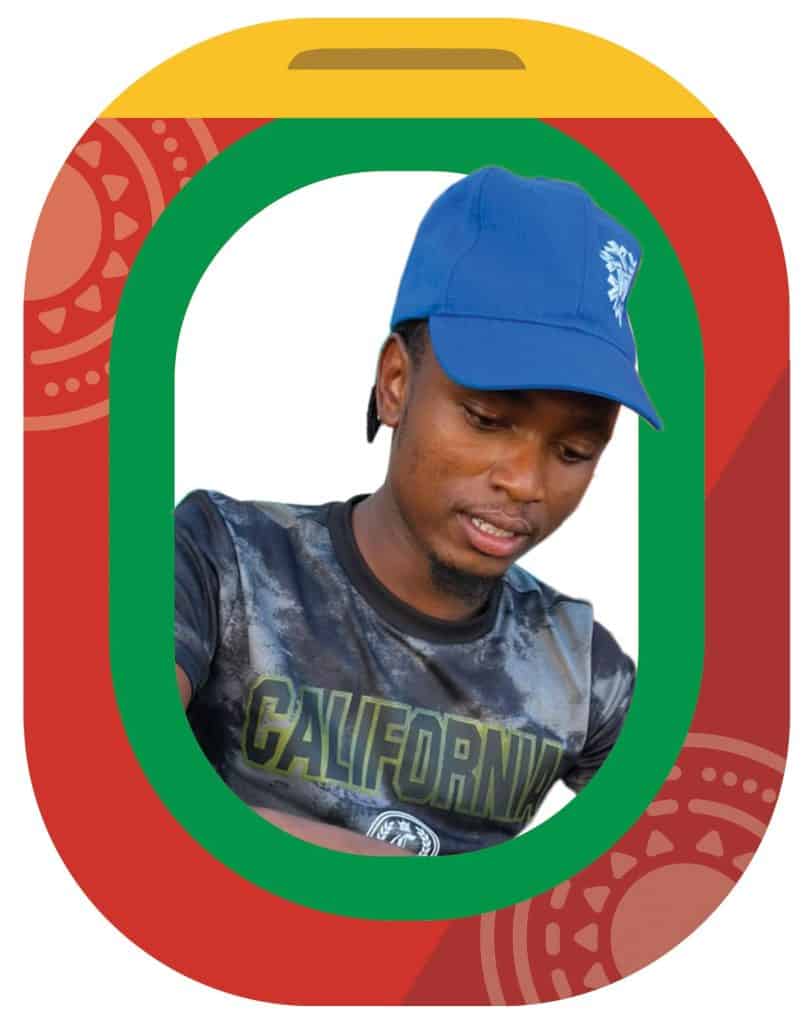
Meet FlyNamibia Maker Kanyanga Paulus Simaho, the UNAM Arts student turning recycled materials into handmade Namibian art, aircraft models and a growing brand.
Long before Dallin !Noabeb discovered string art, he had already discovered something about himself: he wanted to create.
Born in Windhoek and raised in Groot-Aub, Dallin grew up in an environment where resources were limited and finished products were not always readily available. For him, creativity became a way to stand out — and a way to turn imagination into something tangible. “I always wanted to be different,” he says. As a child, that desire first found expression through drawing. Although he never quite mastered the art form, he refused to stop exploring. Instead, he experimented with different creative skills, searching for the medium that would allow him to express his ideas in his own way.
Three years ago, he found it.
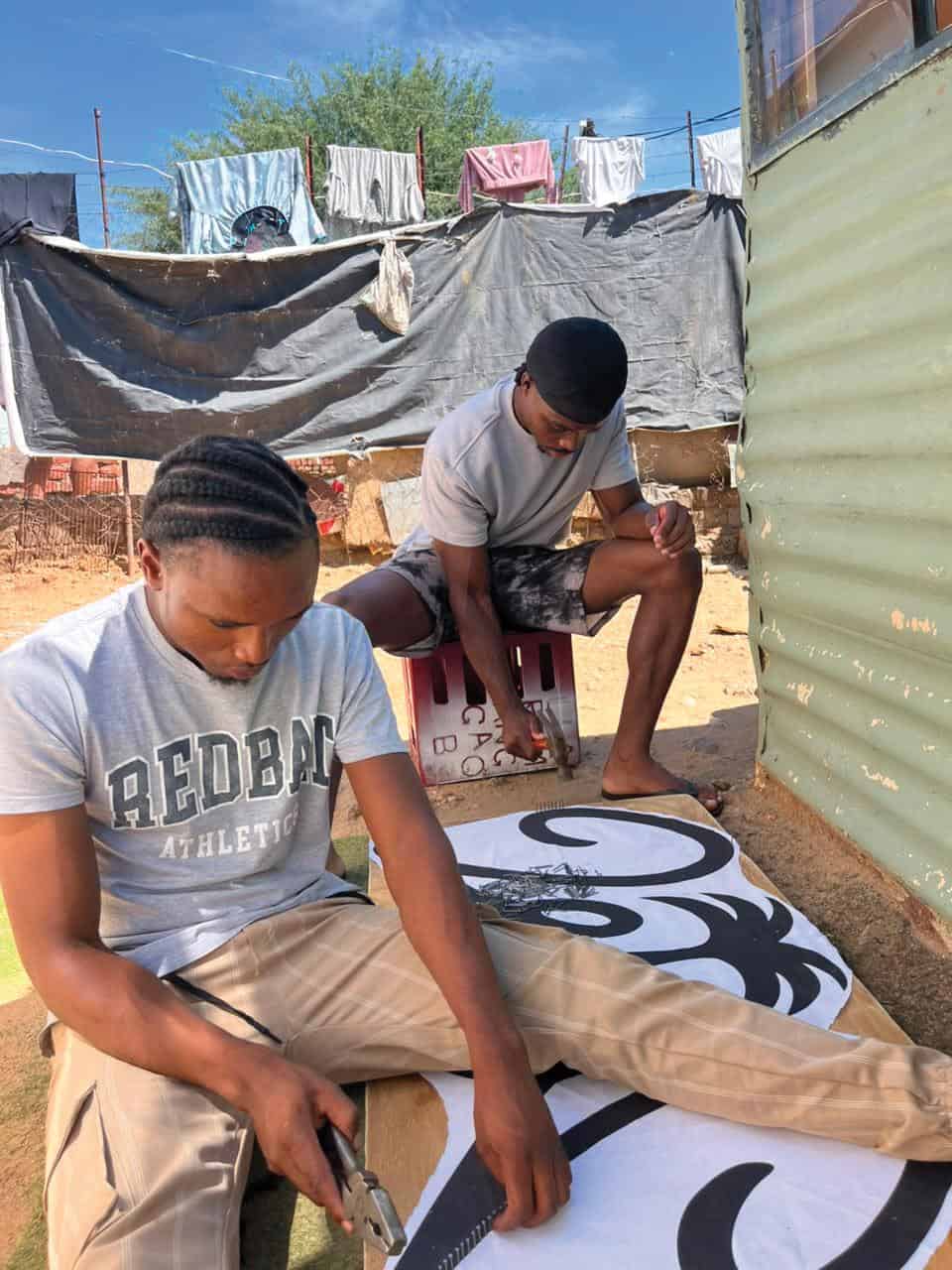
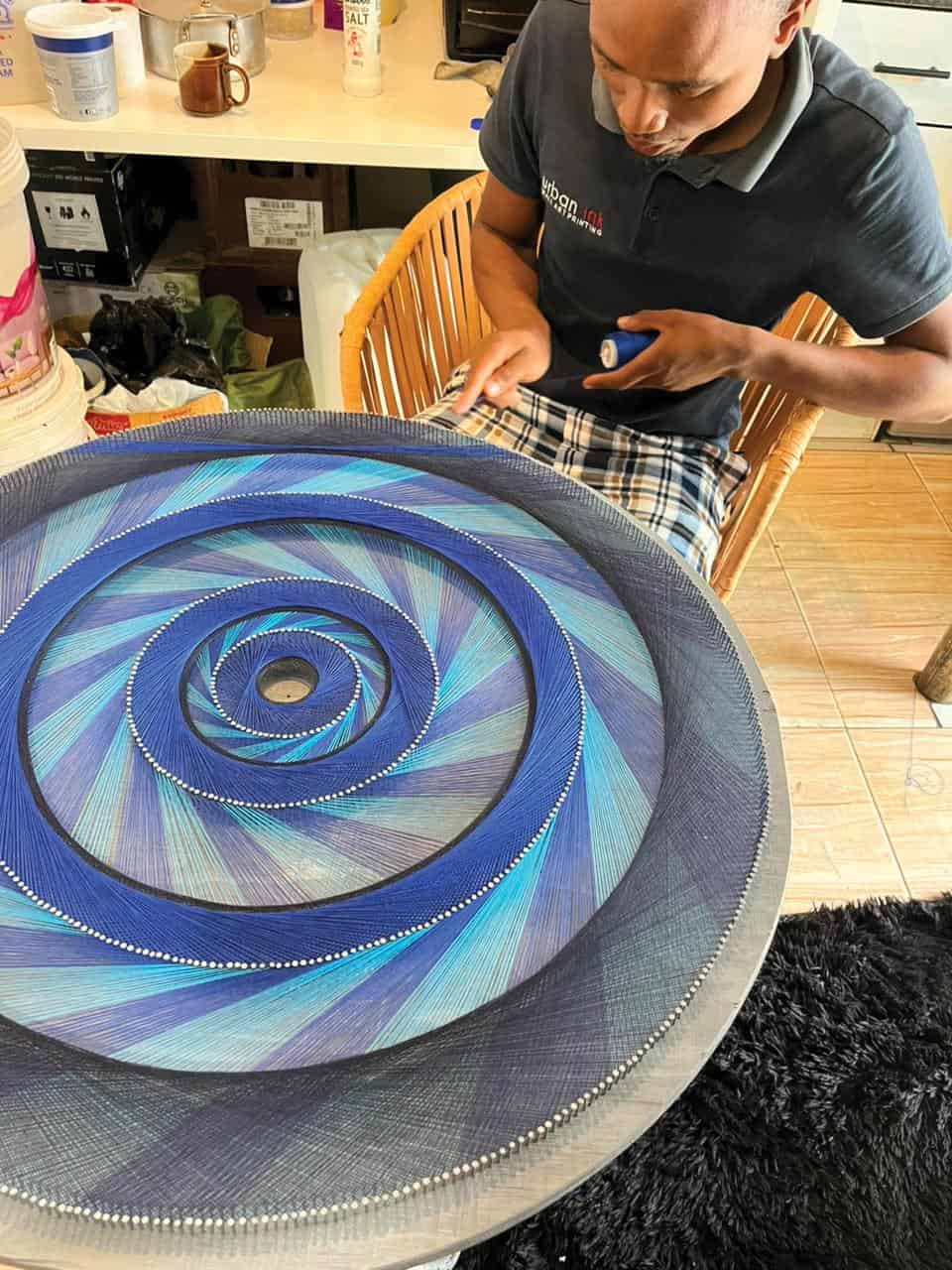
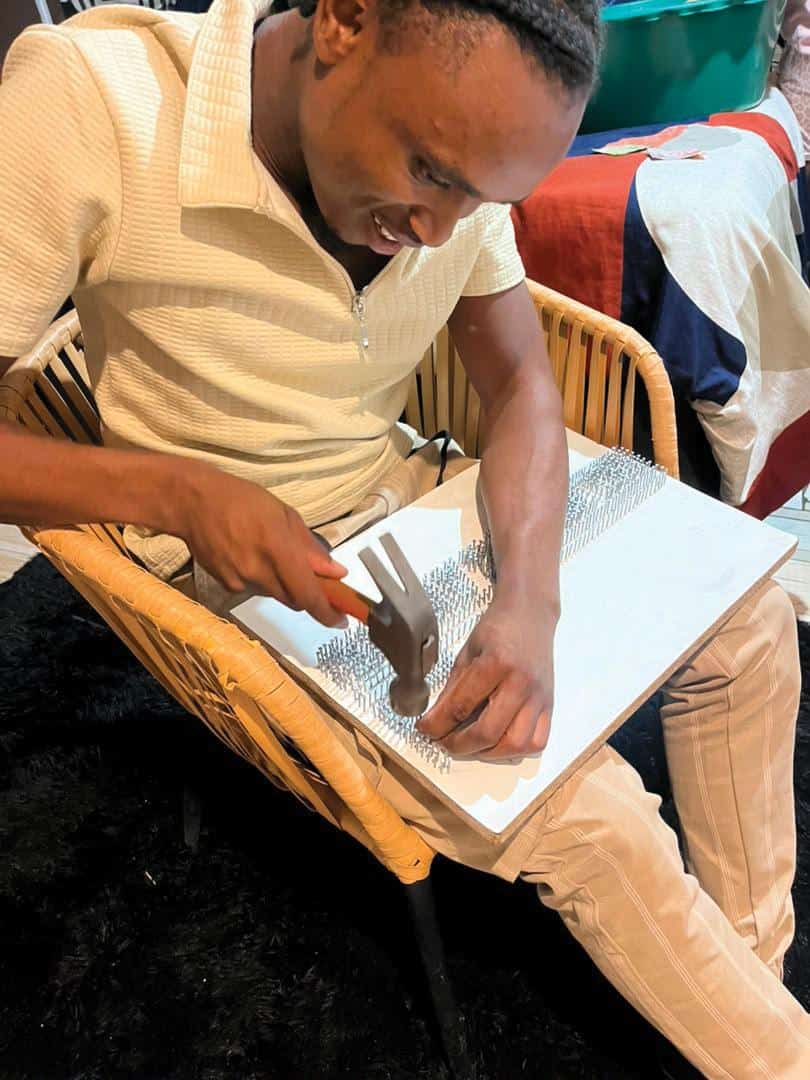
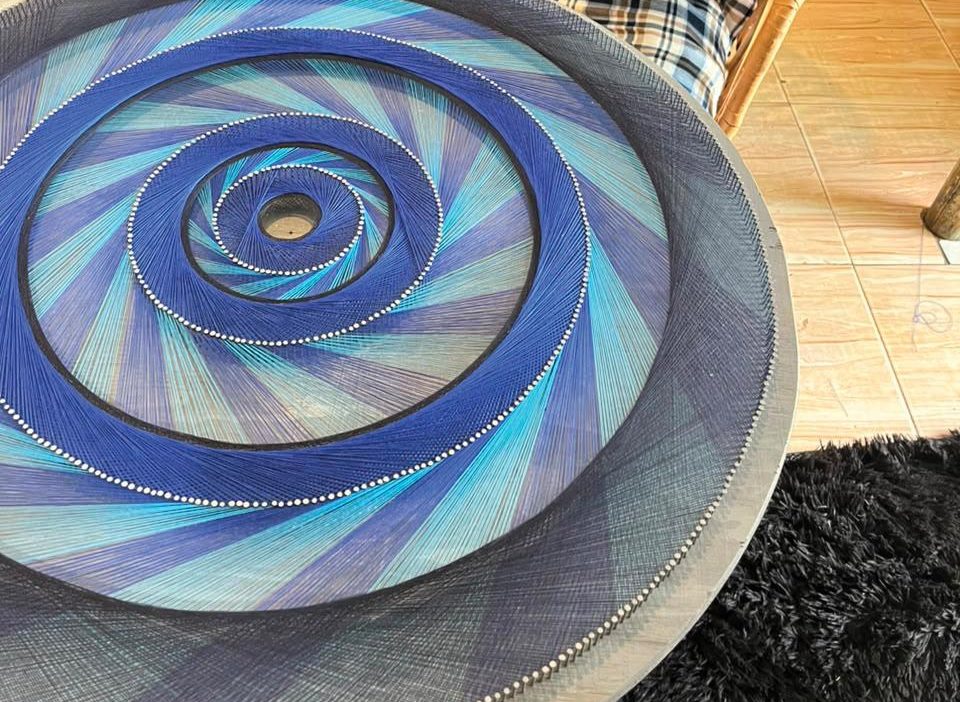
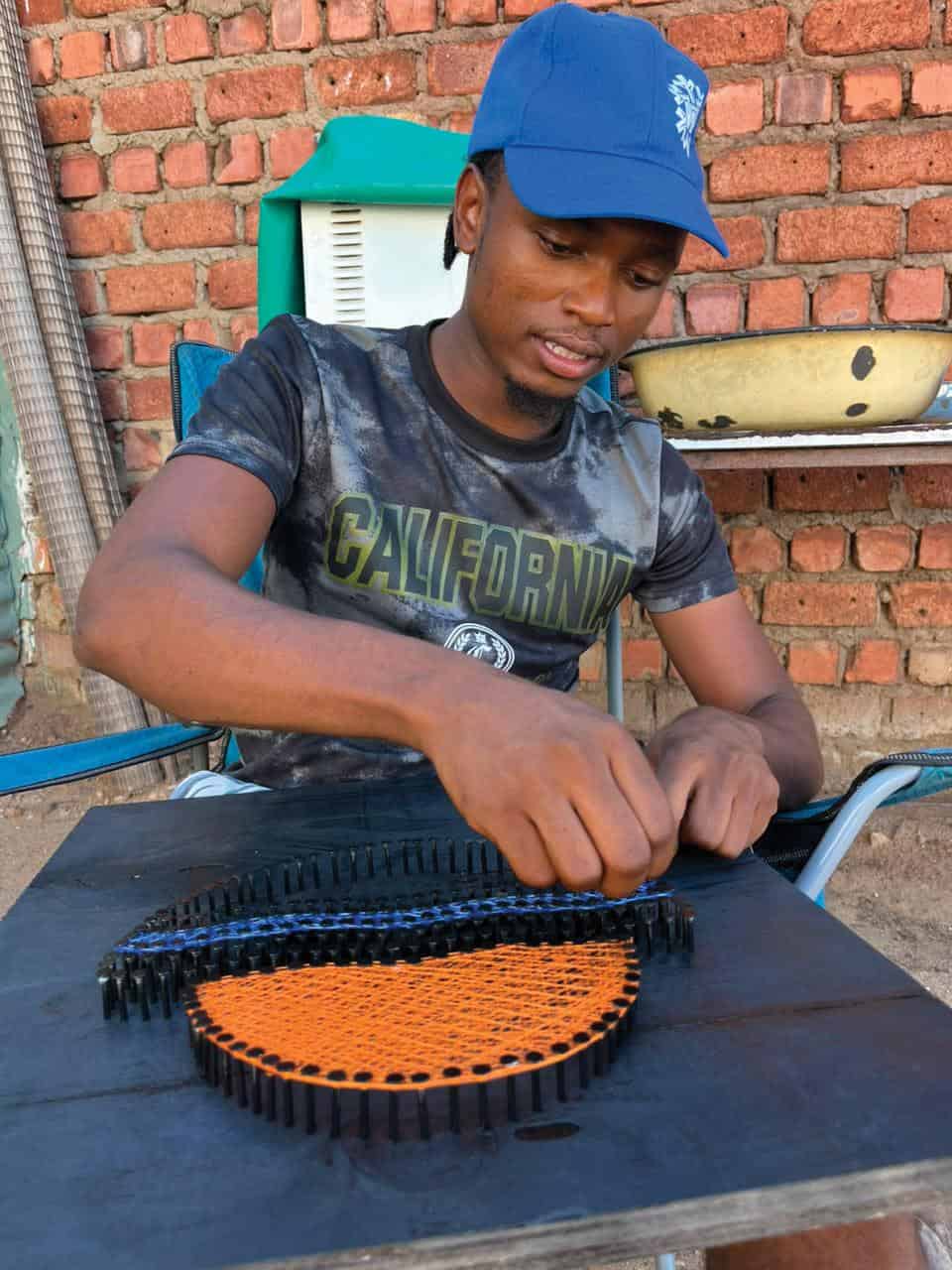
Dallin discovered string art — a technique that uses thread or string, combined with other materials, to create intricate portraits, designs, logos and decorative pieces. With no formal training in the craft, he began researching the technique and teaching himself how to work with its different elements.
What started as curiosity gradually became a craft, and eventually, a business.
Today, Dallin’s String Art specialises in interior wall designs, creating everything from portraits and corporate logos to wall clocks and custom decorative pieces. The uniqueness of his work lies in the unusual combination of three elements that, at first glance, might not seem to belong together. In Dallin’s hands, they do.
Through careful placement, patience and precision, those elements come together to form artwork that is distinctive, durable and deeply personal.
For Dallin, the process is about more than making something beautiful. It is about bringing an idea to life.
“As a dreamer that I’ve always been, making my imagination and your imagination a reality with string art, using my own hands inspires me a lot,” he says.
There is a sense of gratitude behind that creative drive, too.
Dallin believes his ability to create is a gift — one he has a responsibility to develop rather than leave unused.
“God blessed my hands to do this and I don’t want to waste the talent that I have.”
That belief has helped shape his journey as an emerging creative entrepreneur. Instead of waiting for perfect conditions or extensive resources, he has built his skills through experimentation, research and practice.
His story is also a reminder that innovation does not always begin in a fully equipped studio. Sometimes, it begins with curiosity, determination and a willingness to work with what is available.
“God blessed my hands to do this and I don’t want to waste the talent that I have.”
For Dallin, becoming a FlyNamibia Maker carries a special significance.
He had hoped that one day he would have the opportunity to create something with FlyNamibia — not simply as a collaboration, but as a platform through which more Namibians could discover his work.
“I am very happy for the opportunity to collaborate art with FlyNamibia,” he says.
The collaboration gives him an opportunity to place his work in a new setting and introduce his craft to a wider audience. The N$5,000 seed funding will also provide practical support at an important stage of his journey. Dallin plans to use it to purchase raw materials for his upcoming projects, giving him the resources to continue creating and developing new pieces.
For a growing creative business, that support can mean more freedom to experiment, refine techniques and turn ideas into finished works.
Dallin does not have to look far for inspiration. Namibia’s landscapes provide an ever-changing creative backdrop, while its people and cultural diversity offer countless stories and perspectives for artists to explore.
With 13 regions and 11 distinct cultural groups, he sees an opportunity for Namibian artists to create work that is rooted locally while speaking to a much broader African identity.
For Dallin, that connection to place is important.
His ambition is not simply to produce string art. He wants his work to become part of the visual identity of Namibia and, eventually, to travel far beyond the country’s borders.
One of his dreams is to see his work displayed at the National Art Gallery of Namibia. Beyond that, he imagines a future where his art can be found in galleries, homes, businesses and collections around the world.
His goal is clear: to transform a small creative business into an international art business.
It is an ambitious vision, but Dallin is already taking the first steps.
Every piece he creates is an opportunity to improve his technique. Every new project is an opportunity to test an idea. And every person who encounters his work becomes part of a journey that began with a young boy in Groot-Aub simply wanting to create something different.
Today, that difference is expressed through string, imagination and three unlikely elements brought together by hand.
And for Dallin, being a FlyNamibia Maker represents the beginning of something bigger.
“Being a FlyNamibia Maker means I can be more than just an artist.”
For a young creator who once searched for a way to be different, that possibility may be the most meaningful creation of all.

Meet FlyNamibia Maker Kanyanga Paulus Simaho, the UNAM Arts student turning recycled materials into handmade Namibian art, aircraft models and a growing brand.

The Cortex Collective creates a space where every ability belongs – supporting neurodivergent personalised care and celebrating every milestone.

From humble beginnings to hundreds of thriving gardens, discover how young Namibians are growing food security, self-reliance, and stronger communities.

Discover the inspiring story of Vesta Burger, a Namibian therapeutic horse riding practitioner who helps children and adults overcome physical and emotional challenges through the