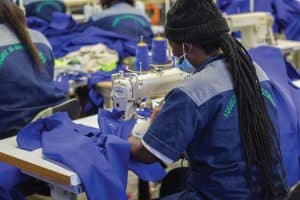
Made in Namibia, by Namibians
August 26 Manufacturing makes garments and footwear in Windhoek and Okahandja—PPC, healthcare and workwear for mining, oil and gas, hydrogen

On the outskirts of Rehoboth, where sand-laden winds frequently sweep across informal neighbourhoods such as Block E, a different routine starts the day. Children arrive in small groups – some for early household duties while others are simply drawn by habit and familiarity. By mid-morning, the property at Lighthouse Ministry is already humming with activity: voices, laughter and the scattered focus of learning in progress.
For more than 140 children, Lighthouse Ministry is a safe space and a place of consistency in a world that offers very little of it. With seven programmes running across after-school care, youth development, social work, a hostel programme and targeted support for vulnerable girls, its work stretches beyond education alone. It is equally concerned with the realities that face children here: teenage pregnancy, alcoholism and the growing number of children forced to run households on their own.
The story of Lighthouse Ministry begins with co-founder Gerlinda Shipipa-Bruijnes, who first arrived in Rehoboth from the Netherlands 15 years ago for a short internship. She did not plan to stay. But something about the place – and more specifically, the children – shifted that trajectory. “I lost my heart there,” she says. “I saw how children were growing up and how little investment there was in helping them reach their potential.” She returned to the Netherlands to complete her studies, but the decision to come back to Namibia was already made. The day after graduating, she was on a plane.
Years followed in Windhoek, where she worked for a similar child-focused initiative and met her husband, Kenneth, from Namibia. However, the pull towards Rehoboth remained. Eventually, the newlywed couple relocated and began opening their home to children in the neighbourhood. “You would find children everywhere: in the living room, the kitchen, the yard…” she recalls with a laugh.
What began informally soon outgrew their home. The need was too visible, too constant. With support from board members in Namibia and the Netherlands, Lighthouse Ministry was formally established six years ago. The name was chosen to reflect what they hoped it would become: a beacon in a place where many families navigate daily uncertainty.
For a while, the work continued from their home. Then came the turning point: a five-hectare plot near Block E was offered to the organisation, opening up space for something more structured. From then on, programmes began to multiply.
Today, the centre offers a wide range of support, from structured learning and after-school care to youth mentoring, social work and home visits. One of the centre’s vital initiatives is a support group for pregnant teenagers – young girls navigating adulthood long before they should have to.
In 2025, another significant shift came when the land was officially donated by its Dutch owners, securing the future of the site and allowing for long-term planning. New classrooms are now in development, intended to replace the current outdoor learning areas where children sit beneath shaded nets that offer little relief from Rehoboth’s persistent wind and heat.
Each day, around 80 children pass through the centre. For many, it is the only place where they can pause, where childhood is not interrupted by responsibility. They receive a warm meal, often their only one of the day, along with time to read, play and learn.
Learning here is deliberately orientated around play. “Everything we teach, we teach from the principle of play,” Gerlinda says. It is an approach designed not only to educate, but to reawaken curiosity in children who have often fallen behind or disengaged from formal schooling.
Alongside educational support, the centre introduces conversations that rarely happen elsewhere: about emotional awareness, physical boundaries and personal safety. In a context where genderbased violence and domestic abuse are present realities, these lessons carry immeasurable weight.
There is also space for creativity and sport, for structure and routine, for simply being a child. Before leaving, children are given fruit and a small food parcel for breakfast the next day, along with basic toiletries – practical gestures that extend care beyond the centre.
“Alongside educational support, the centre introduces conversations that rarely happen elsewhere: about emotional awareness, physical boundaries and personal safety.”
Yet one question continued to surface for the team: What happens after school?
For many young people in Rehoboth, and in the rest of Namibia, finishing school does not necessarily lead to opportunity. It often marks the beginning of joblessness and passivity. It was within this gap that Lighthouse Ministry began the Skills Centre, designed to help young people navigate life beyond the classroom.
One of these initiatives is the Hope Garden, an agricultural project that has grown into something far greater than its modest beginnings. When it started in 2022, the garden functioned simply to grow, harvest and share produce. But its potential was clear.
By 2024, it had become the foundation of the skills centre. Young people taking a gap year after school are invited to join the programme. Here, they are given time to figure out what they are good at, while developing practical, hands-on skills. Through a structured curriculum, they are introduced to the fundamentals of agriculture, sustainability and small-scale food production, while also building habits that improve long-term employability.
In the Hope Garden, learning is tangible. Children and young adults plant, tend and harvest their own crops, gaining an understanding of seasons, soil and the patience required to grow something from seed. The vegetables they cultivate are used in the daily meals prepared at the centre, creating a direct and visible link between effort and outcome.
But the programme extends beyond agriculture.
Mornings begin with personal development – an intentional focus on confidence and communication. “We had a student with intense shyness,” says Norris, programme coordinator at the Hope Garden. “By the end of the year, she was dancing in front of her classmates.”
Alongside this, participants are introduced to financial literacy and basic business principles. They manage small “plots” of land as their own, learning about responsibility, planning and the value of consistency. The idea is simple but powerful: effort, when sustained, can translate into both income and ownership.
Still, the challenges are not only practical. According to Gerlinda, mindset remains one of the biggest obstacles. “When things get difficult, as they often do, many want to give up. There’s a deeply rooted belief that they are not enough.” It is this belief that the programme actively works to dismantle, starting with personal development as its foundation.
Students move into internships, first within Lighthouse Ministry itself, where they are guided in punctuality, teamwork and responsibility. In their second year, they begin stepping outwards into placements at local businesses such as Lake Oanob Resort or small enterprises like car washes. In some cases, these opportunities have led to long-term employment.
The Skills Centre also connects with a wider network of programmes at Lighthouse Ministry. From cooking and baking to woodwork, needlework and dance, each initiative feeds into a broader ecosystem of learning.
August 26 Manufacturing makes garments and footwear in Windhoek and Okahandja—PPC, healthcare and workwear for mining, oil and gas, hydrogen
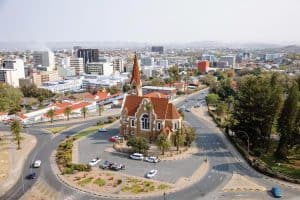
With youth joblessness at 44.4%, Namibia cannot recruit its way out of a skills gap. Leadership means first chances, local
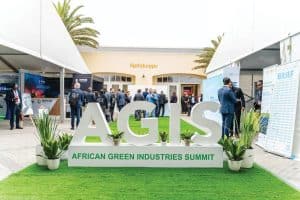
At AGIS 2026 in Swakopmund, Namibia set green industrialisation as a jobs strategy—hydrogen, iron and ammonia under NDP6, not just
First oil is not the starting line. At NOGC 2026, Namibia’s energy talk shifted to readiness: local content, joint ventures