UNESCO recently facilitated a National Validation Workshop as part of the AfricaEurope Partnerships for Culture project, which promotes culture and heritage-based sustainable tourism development in Southern Africa. The programme is currently active in six countries, including Namibia.
The workshop, held at the Roof of Africa Hotel, provided a platform to bring together national stakeholders from the culture, tourism and development sectors, alongside representatives of local communities at Twyfelfontein. A comprehensive baseline study on the Twyfelfontein site offered key insights and recommendations to guide future interventions in support of culture and heritage-based tourism. One of the priorities highlighted was the need to strengthen collaboration, particularly between the National Heritage Council and traditional authorities.
Supported by the European Union and implemented by UNESCO, the partnership aims to enhance the contribution of culture and heritage to sustainable development. The project focuses on strengthening heritage-based tourism and improving the quality of visitor experiences at selected UNESCO designated sites. In Namibia, the focus centres on the unique and widely known “/Ui //aes” Twyfelfontein site.
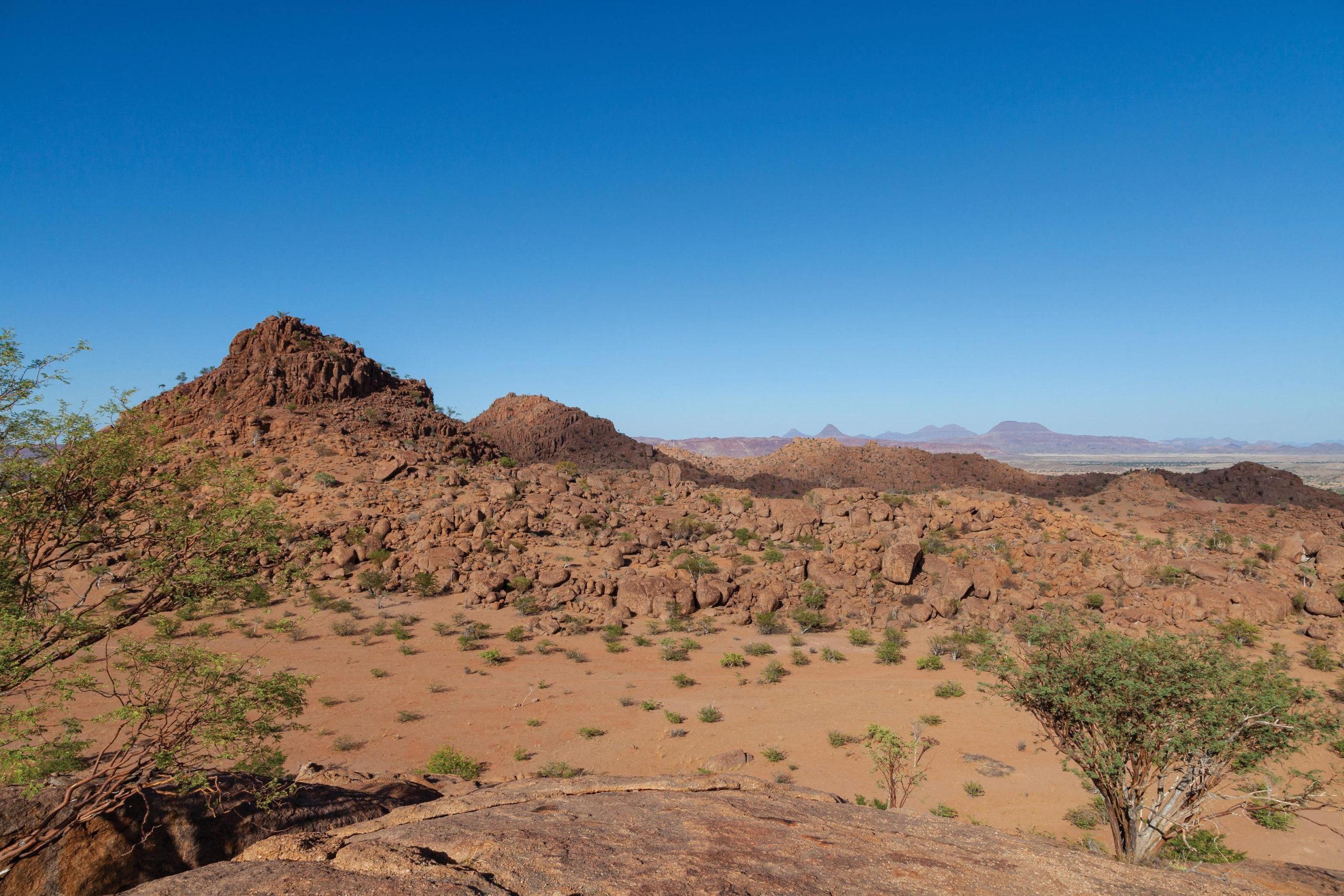
Twyfelfontein is situated in the Kunene region, about one hundred kilometres from the larger town of Khorixas. From this point, a network of dusty tracks leads through a stark yet captivating landscape. At the end of the road, visitors discover a remarkable open-air museum of Stone Age huntergatherer art. The site has been inhabited for approximately six thousand years, first by hunter-gatherers and later by Khoikhoi herders. Both groups used the area as a place of worship and a setting for spiritual rituals.
During these rituals, at least two thousand five hundred rock carvings were created, along with a small number of rock paintings. Twyfelfontein contains one of the largest concentrations of rock petroglyphs in Africa. In recognition of its outstanding cultural value, UNESCO approved Twyfelfontein as Namibia’s first World Heritage Site in 2007.
Behind the ancient ruins, the first engravings appear in the red sandstone. Alongside depictions of human and animal footprints, visitors can observe representations of rhinos, elephants, ostriches and giraffes. Beneath an overhanging rock, further animal figures painted in red ochre can be found. These artworks have adorned the stone surfaces for almost six thousand years and remain impressively well preserved.
For its World Heritage status, UNESCO emphasised the following criterion: “The site forms a coherent, comprehensive and high-quality record of ritual practices related to huntergatherer communities in this part of southern Africa over at least 2000 years and eloquently illustrates the links between ritual and economic practices.”
Twyfelfontein is particularly noted for its engraving technique. Its size, complexity and exceptionally good state of preservation continue to grant it special significance within the field of rock art research.
Preserving the ancestral memory of the area is central to the partnership’s goals. The initiative encourages local, multivoiced interpretation that includes community perspectives rather than relying solely on historians and academics. A key aim is to improve the livelihoods of communities in the region, including youth, women and indigenous peoples, through capacity building and income-generating opportunities.
The Twyfelfontein Country Lodge, located within the site, offers guided tours and visits to the Living Damara Museum, enabling visitors to engage more deeply with the cultural and historical significance of the landscape.
With wise stewardship and consistent implementation of UNESCO’s objectives, the Twyfelfontein site has the potential to become a leading model of inclusive and sustainable heritage tourism in Southern Africa.