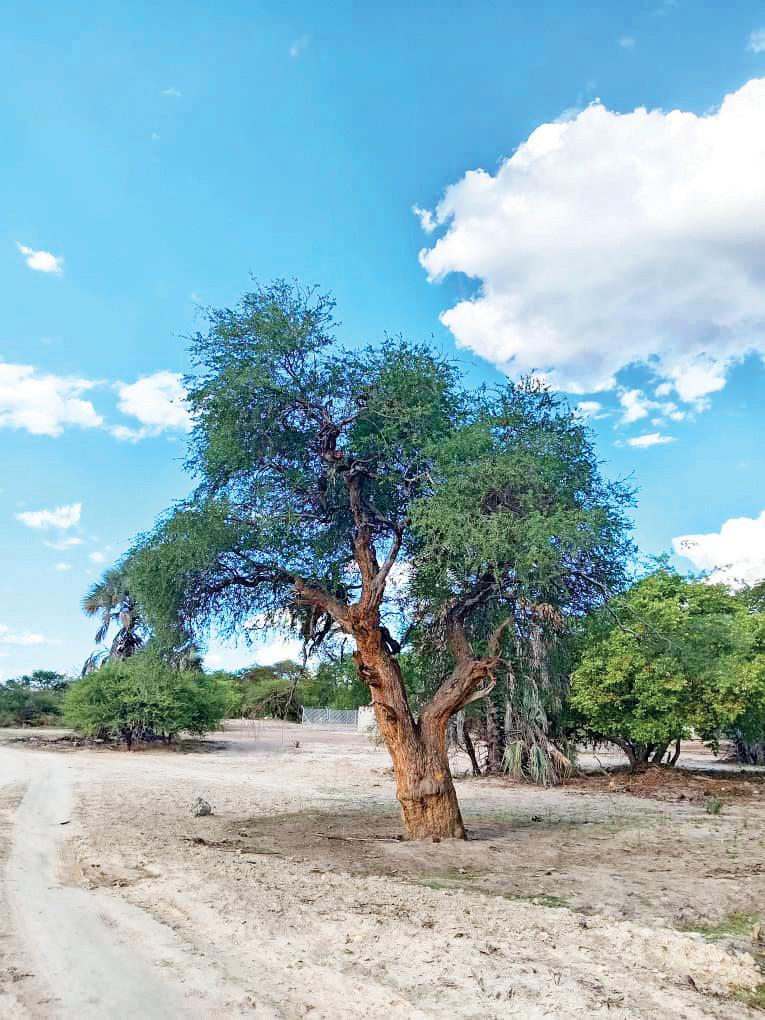
The shepherd’s tree can also be referred to as a bush. Owing to its ability to adapt well across the country, the tree’s growth rate is determined by the environmental conditions within a particular area. It therefore sometimes takes the shape of a bush rather than a tree. This evergreen tree happens to be one of the most widespread trees in Namibia. It is known to be browsed by both livestock and game as it has highly nutritious leaves.
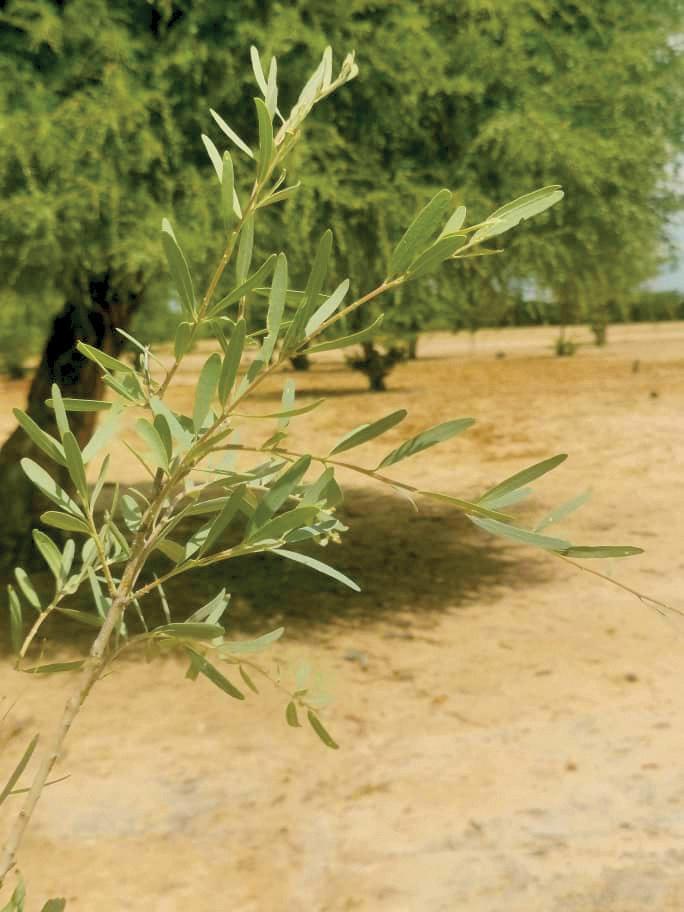
The tree has pale, almost white bark with a rough texture which flakes occasionally. The rougher the surface, the more frequent the flaking. Its leaves are oblong and arranged in spirals around the branches. The leaves are dark, pale or olive green with a slightly rough texture and a leathery feeling on both sides due to the tiny surface hairs. While not all shepherd’s trees are tall, they can grow up to a height of 10 metres.
Flowering occurs from August to February, when small, greenish-yellow flowers become visible. The fruits formed after the flowering are spherical and green, turning yellow when ripe. The seeds are round with a creamy colour.
Uses of the shepherd’s tree vary, as different ethnic groups have sought their own benefits from this rather versatile tree. The one common use across all groups is that of fodder for livestock, especially during droughts. Where livestock cannot reach, branches are often cut from trees and scattered on the ground for livestock to feed on.
For me, the most intriguing fact about this tree is its ability to thicken cow’s milk. Communal farmers must have done plenty of experiments over the years to improve their farming practices and general lifestyle. However, in an environment with various plant species ranging from herbs, shrubs, bushes and trees, one can only imagine to what lengths they must have gone to conclude that the shepherd’s tree bark is best suited for this thickening process.
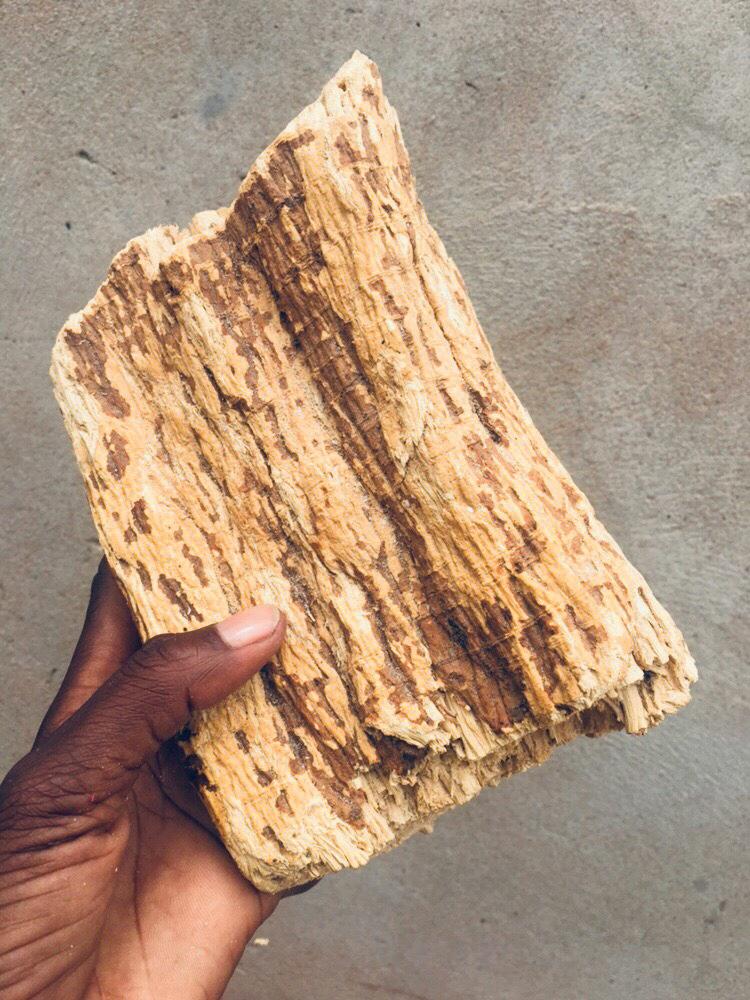
In short, pieces of the bark of older trees are cut and left to dry, or it can be used in its moist state. These pieces are then placed and left in the milk for several days until the milk shows signs of the desired thickening after shaking it in an enclosed container. These pieces of bark are not thrown away after being used but rather left to dry and used again when needed. It can be used several times. Farmers know when they are no longer useful and can be disposed of.
A recent visit to the open market allowed me to buy a large piece of the shepherd’s tree, because there were none in our homestead for me to take up-close pictures. To my surprise, it was quite affordable, despite being a rather large chunk. The wood is quite low in density, very light and scent-free. I also concluded that large pieces cut from the tree can be easily dried.
Due to dwindling livestock populations, cow’s milk production has also decreased. This means that the demand for the use of the shepherd’s tree as a milk thickener is no longer a threat to the population of the plant species. In fact, records suggest that the shepherd’s tree populations are healthy throughout the country, occurring in many different habitats and exhibiting different forms of growth. Without current reforestation needs, the seeds are definitely a good backup for future population regeneration if ever the need would arise.