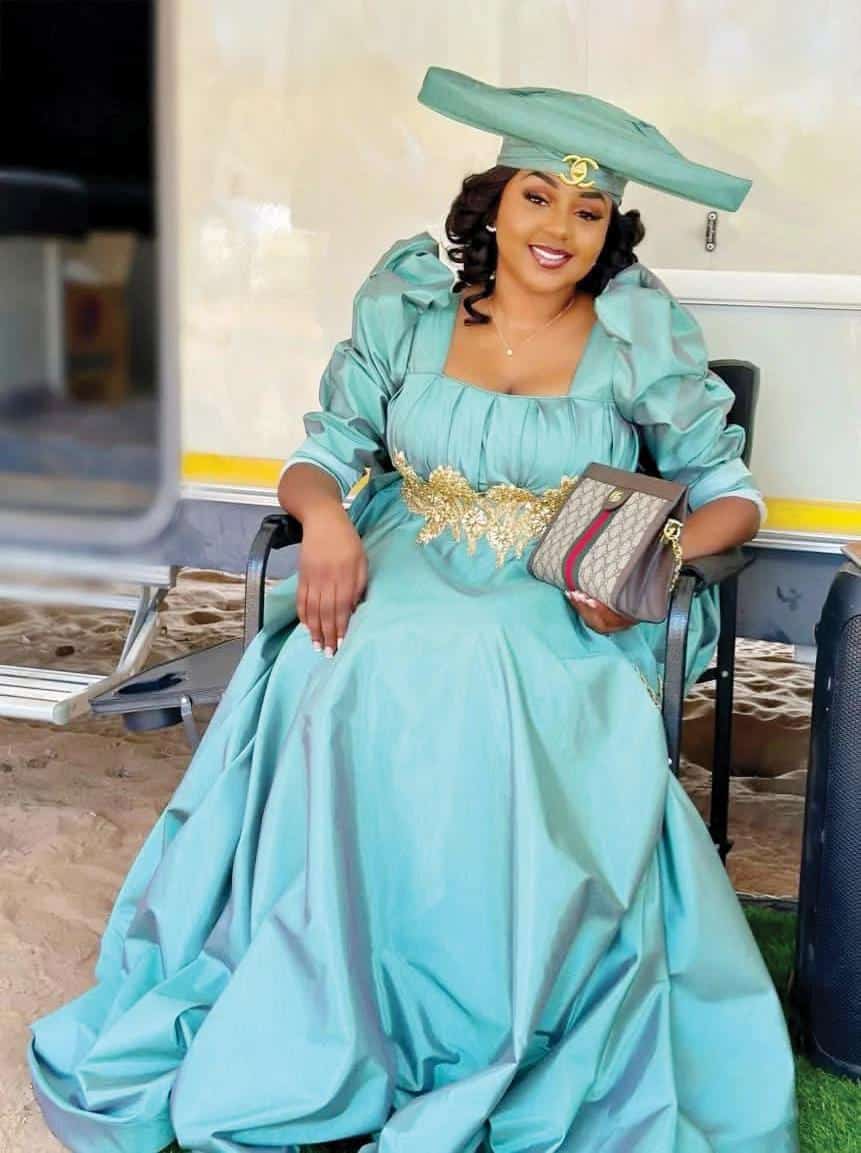
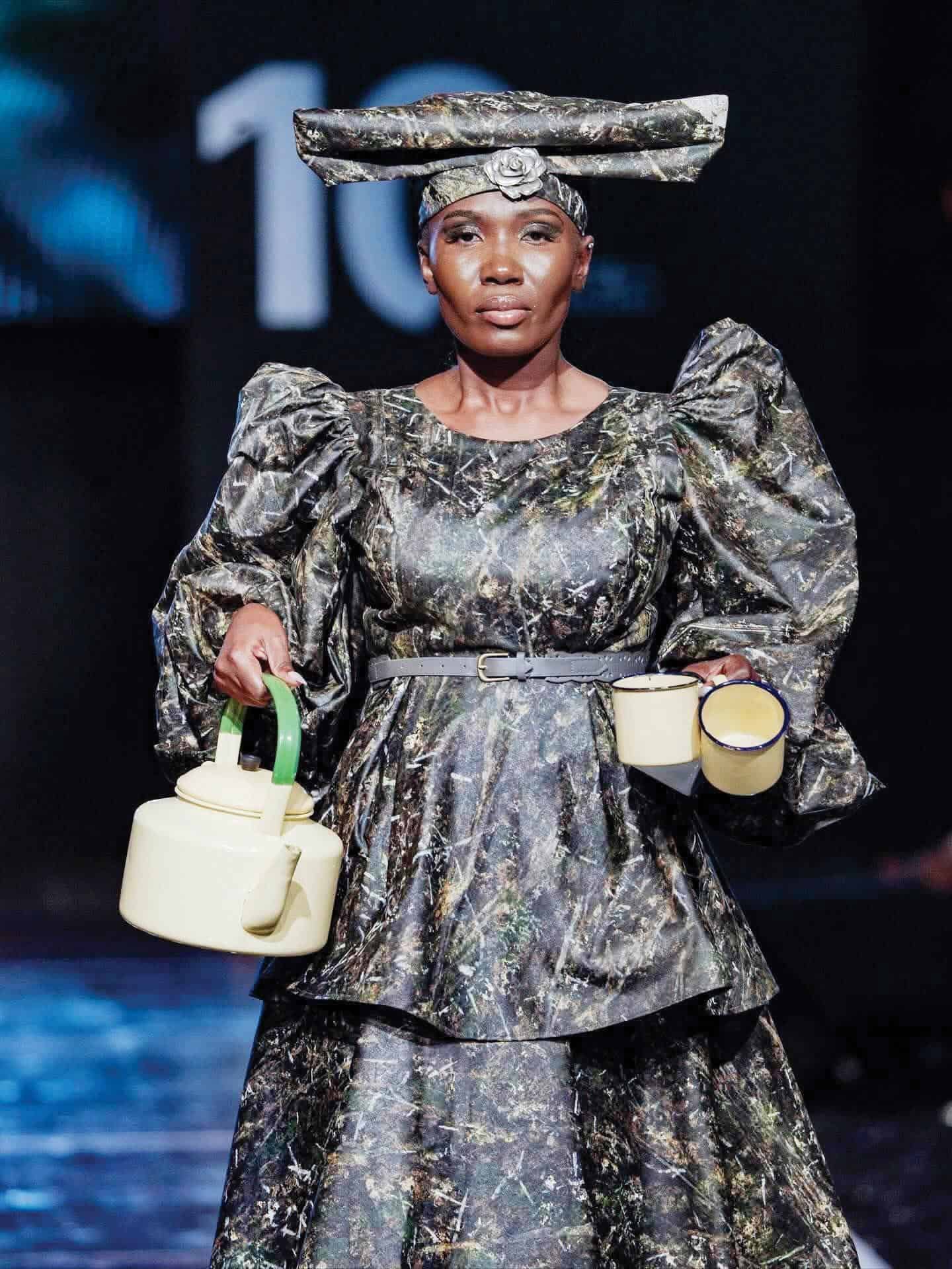
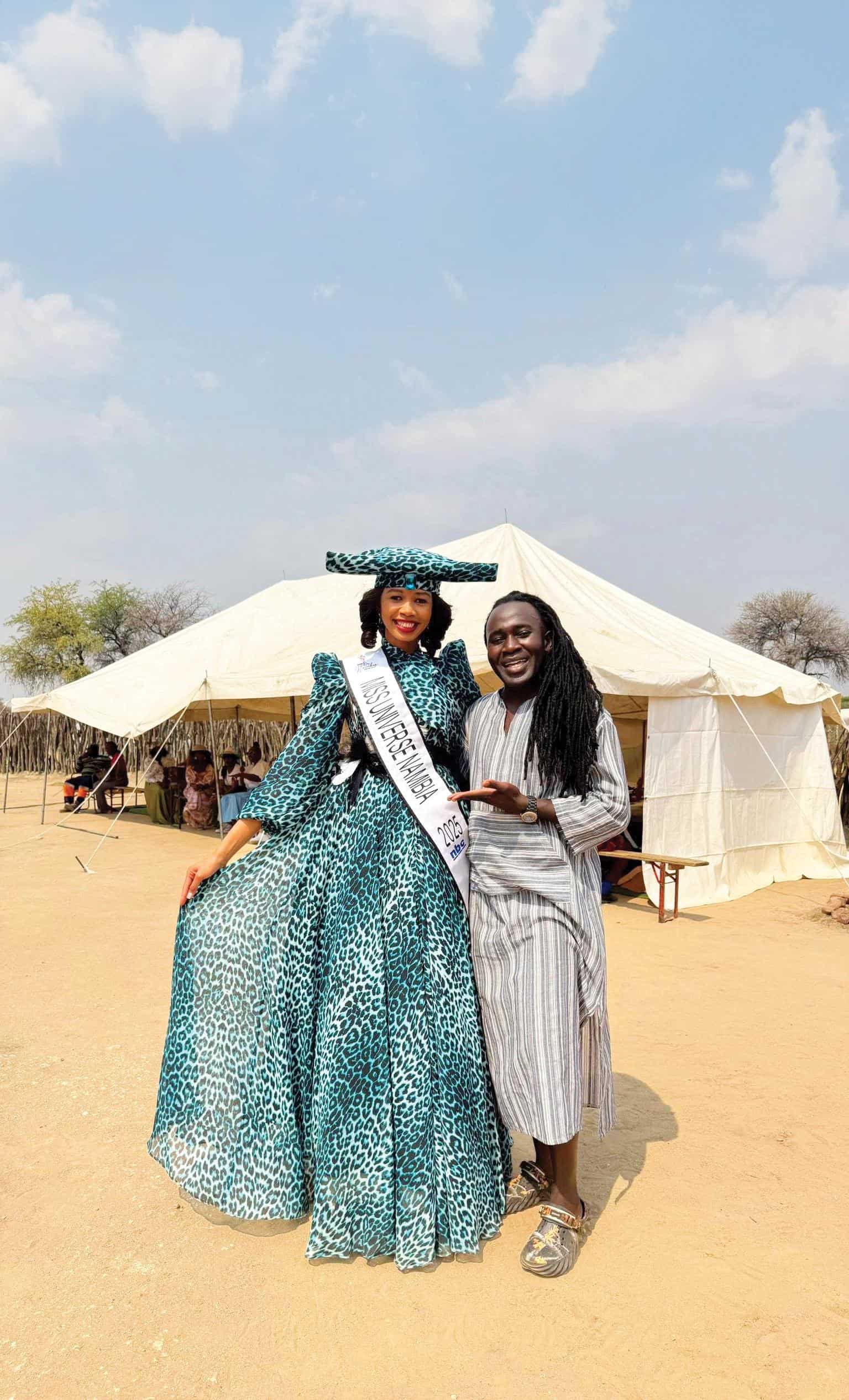
The Herero dress has a distinctive quality. It is large, graceful and profoundly symbolic. History is present in every fold. In the hands of Namibian designer McBride Kavari, this iconic garment is not just preserved; it is evolving, travelling and telling new stories on runways from Windhoek to Berlin.
“I will never go to a runway, whether it’s Milan, Berlin, wherever, and not carry at least one or two traditional garments,” Kavari says. “That’s what tells people who I am.”
Kavari’s journey into fashion did not begin in a studio. It began in his mother’s bedroom. Armed with curiosity and a dusty sewing machine, he started designing as a child, creating his first dress for his niece. By primary school, he was already entering competitions, winning prizes and eventually funding his own education through design.
“I never went to fashion school. It’s a God-given talent,” he says. Balancing school, clients and a growing demand eventually led him to make a defining choice. “At some point, I had to choose my passion.”
The Herero dress itself is a powerful example of cultural adaptation. Its origins trace back to the Victorian era, influenced by the German colonial presence in Namibia. Before colonisation, Herero women wore garments made from animal skins. Over time, these evolved into the now iconic long, layered dresses, modest in structure yet bold in presence.
What makes the dress uniquely Herero is the headgear, known as the otjikaiva. Designed to resemble cattle horns, it reflects the Herero people’s deep connection with cattle, a symbol of wealth, identity and heritage. “Without it, we are not us,” Kavari explains.
While rooted in tradition, the Herero dress has continuously evolved. Earlier designs were defined by strict modesty, with high necklines, long sleeves and a conservative silhouette that reflected cultural values of dignity and womanhood. The otjikaiva was also much smaller and less pronounced than it is today.
Over time, this began to change. The headgear grew in size and structure, becoming more sculptural and expressive. Women experimented with ways to shape it, at one point even using materials like folded newspaper to create the now distinct horned form. The dress itself became fuller and more dramatic, with layered skirts and exaggerated proportions forming the striking silhouette that makes it instantly recognisable today.
Modern designers like Kavari continue this evolution. From introducing shorter sleeves to refining structure and fit, his work brings a contemporary edge while maintaining cultural integrity. “Fashion is not static,” he says. “But we also don’t want to take the dress away from culture; we want to bring the youth closer to it.”
This balance is key. Traditional designs remain for cultural ceremonies, while runway interpretations allow for creative freedom. “There’s confusion,” he admits. “People think you are destroying the dress. But the runway is different – that’s where a designer gets to be creative.”
That approach is resonating with a new generation. Today, many young Herero women proudly own and style multiple dresses, embracing both heritage and individuality. “They’ve fallen in love with it again,” he says.
Traditionally, wearing the Herero dress is tied to cultural rites of passage. Young girls are introduced into womanhood through ceremony, often at a wedding, where they are presented to their ancestors at the holy fire, marking their readiness to wear the dress. “It’s not something you just decide,” Kavari says. “You go through a process.”
Historically, married women were expected to wear the dress daily, symbolising status and identity. While that expectation has shifted, the sense of pride remains. Today, the dress is no longer limited to traditional events. “You can wear it anywhere,” he says. “As long as you wear it with dignity.”
Kavari has become known for modernising the Herero dress while respecting its roots. “There’s a difference between designing for a traditional event and designing for the runway,” he explains. On the runway, designers are free to experiment, reimagining structure, proportion and detail while still honouring the essence of the garment. For Kavari, this evolution is necessary. “If we don’t evolve it, we risk losing it.”
His designs have travelled far beyond Namibia, reaching clients across continents and even finding their way into international collections. What is notable is that his work resonates beyond the Herero community. “I make dresses for everyone,” he says. This global appeal speaks to the universal power of cultural storytelling through fashion.
At the heart of Kavari’s work is preservation. “My biggest dream is for the dress to remain alive,” he says. In a rapidly changing world, the Herero dress stands as both a cultural archive and a living form of expression, evolving yet rooted. Through designers like Kavari, it continues to tell its story. “Nothing about us without us,” he says. “We have to tell our own story.”