This is Namibia: Kavango-Zambezi

Transfrontier Conservation Area

In 2011 a treaty was signed at the SADC Summit in Luanda, Angola, by the Presidents of the republics of Angola, Botswana, Namibia, Zambia and Zimbabwe, which formally and legally established the KavangoZambezi Transfrontier Conservation Area (KAZA TFCA).

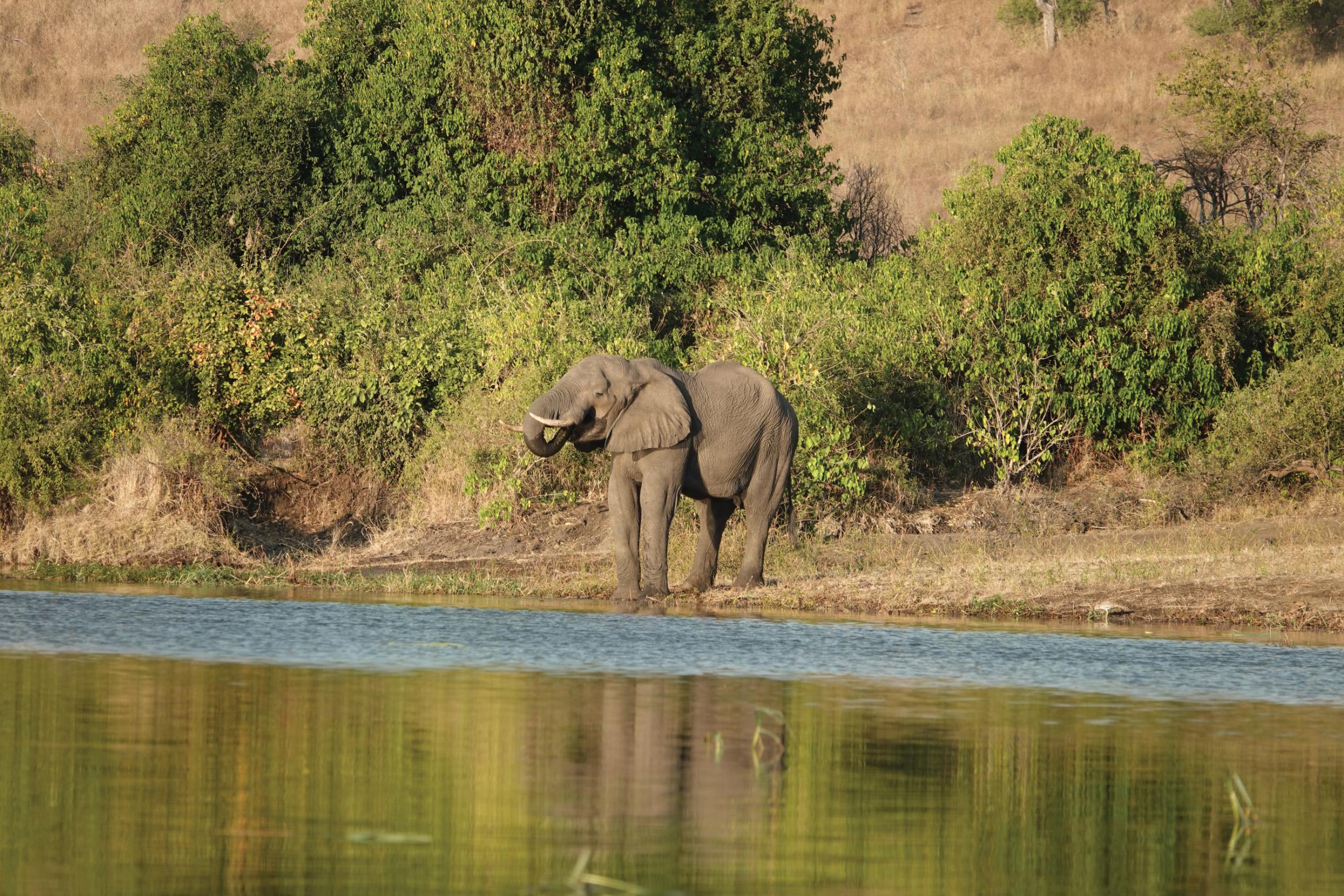
Spanning over 519,912km², and including no less than 36 formally proclaimed national parks, game reserves, forest reserves and game/wildlife management areas across Namibia, Botswana, Zimbabwe, Zambia and Angola, KAZA is the world’s largest conservation area. Namibia has designated Bwabwata National Park, Mudumu National Park, Nkasa Rupara National Park, Khaudum National Park, Mangetti National Park, the Caprivi State Forest and Conservancies, and community forests between and around these protected areas for inclusion in the KAZA TFCA. Over 400 bird species have been recorded in this area. A key objective of a TFCA is to join fragmented wildlife habitats into an interconnected assortment of protected areas and transboundary wildlife corridors to facilitate and enhance the free movement of animals across international boundaries. The KAZA TFCA has the largest contiguous elephant population on the African continent, while it also includes some of the world’s renowned natural features and tourist attractions, such as the Victoria Falls and the Okavango Delta, the largest Ramsar Site in the world.

BASKET TRADITIONS

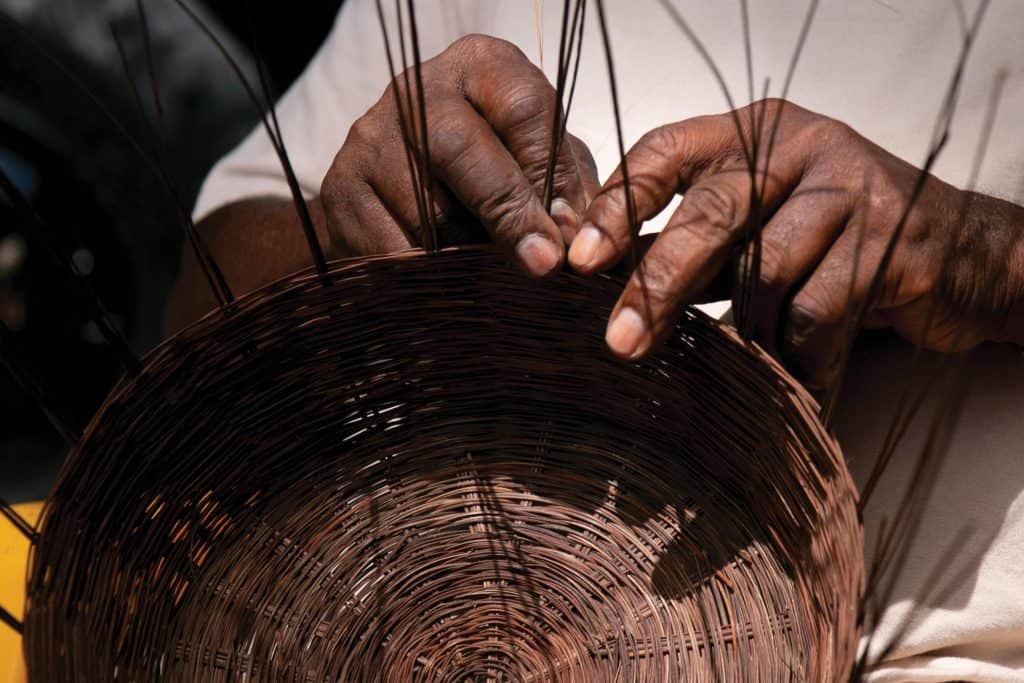
A basket-weaving tradition has survived in Kavango and Zambezi, where the time-honoured baskets still used by women in the mahangu fields for harvesting and winnowing their grain are ideal containers for transporting goods when on foot and for storing the grain in homesteads. The revival of inherent traditional skills, seemingly rendered redundant by modern times, and the acquisition of new skills in marketing and sales, have especially enabled women to create a vibrant and successful craft industry.

Although baskets vary from region to region, they are generally made from the leaves of the makalani palm, Hyphaene petersiana, using the coil technique. Shades of brown, purple and yellow are obtained by boiling the leaves, bark and roots of various shrubs and trees with the strands of prepared palm leaves.

Musemes, the Lozi name for reed floor mats, are made from papyrus by women. Each reed is halved lengthwise and dried in the sun to allow the inner pith to shrink, thus making the reed curl inwards, which makes it more durable. The reeds are then sewn together tightly, using string made from the locally grown mafuu (mother-in-law’s tongue) and narakuku plants.

Find more Namibia travel inspiration at www.thisisnamibia.com

Follow @thisis_namibia on Facebook and instagram for extraordinary Namibia travel stories.

Share:

More Posts

We’re for Namibians: Mariane Akwenye

Wellness entrepreneur Mariane Akwenye is redefining healing through Nomad Wellness Homestead, blending Namibian ancestral knowledge, inclusivity and purpose-driven entrepreneurship rooted in local soil and tradition.

Namibia’s Mining Renaissance

Namibia’s mining sector enters a renaissance with uranium growth, gold expansion, and diamond market shifts. RMB Namibia highlights financing, ESG, and infrastructure as key to

Sign up for our newsletter