
Inform. Inspire. Impact
Namibia National Career Week 2026 celebrates 15 years of connecting young Namibians to education, careers and opportunity through industry engagement, innovation and nationwide expansion.

By Emily Kandanga-Erastus
Understanding our skin and how to care for it is an important part of overall wellbeing. In this new FlyNamibia column, Dr La-toya Mwoombola-Hamutenya shares insights from the world of aesthetic medicine, answering common questions about skincare, treatments and how to make confident, informed choices about your health and appearance.
Aesthetic medicine is a rapidly evolving field that blends science with artistry. For Dr La-toya, the path into this speciality was deeply personal. “Aesthetic medicine is quite a new field in medicine,” she explains. “There was a stage in my life when I wondered where I was going to go and what I was going to do.”
The answer came from an unexpected connection between medicine and creativity. As a performing artist, La-toya found herself drawn to work that would allow her to use both her medical training and her artistic instincts. “It allowed me to do something that still awakens my artistic brain,” she says.
One of the most common questions patients ask is what they should bring to their first consultation. The answer is refreshingly simple. “Bring your beautiful self and your beautiful skin,” she says with a smile.
However, she does recommend bringing along the skincare products you have been using recently. “I’m not talking about bringing every single product you own,” she explains. “But bring the products you’ve used in the last three months so we can look at what you need, what you don’t need, and how we can amplify your skincare.”
This helps create a clearer picture of a patient’s existing routine and allows for more tailored recommendations.
Another question many people ask is whether aesthetic treatments are covered by medical aid. In most cases, they are not.
Cosmetic procedures are generally considered elective treatments and therefore fall outside the scope of traditional medical aid coverage. Dr La-toya advises patients to reserve medical aid benefits for times when medical care is truly necessary.
While skincare routines can vary widely, she believes there is one product that should never be skipped: “SPF is so important for our skin. That’s a non-negotiable.”
Daily sun protection plays a crucial role in preventing premature ageing, protecting skin health and maintaining an even complexion. For women of colour in their thirties, Dr LMH recommends choosing a sunscreen that offers broad-spectrum UVA and UVB protection, ideally with an SPF between 30 and 50.

Namibia National Career Week 2026 celebrates 15 years of connecting young Namibians to education, careers and opportunity through industry engagement, innovation and nationwide expansion.

Oshikoto youth are urged to drive Namibia’s agricultural transformation through agribusiness, climate-smart farming and government-supported funding programmes such as the NYDF and Agribank schemes.

Namibia and Japan strengthen cooperation on trade, investment and mineral development, focusing on critical minerals, industrialisation and value addition for sustainable growth.
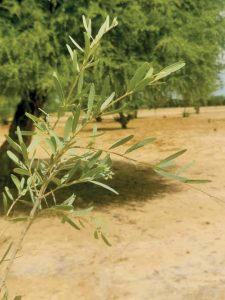
Explore the Shepherd’s Tree (Boscia albitrunca), one of Namibia’s most resilient native plants, known for its adaptability, livestock value, medicinal uses and cultural significance in