Made in Namibia, by Namibians
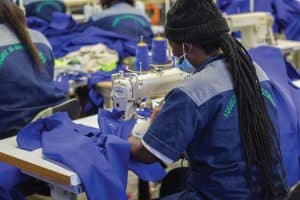
August 26 Manufacturing makes garments and footwear in Windhoek and Okahandja—PPC, healthcare and workwear for mining, oil and gas, hydrogen

As the first light begins to spill across the dunes of Sossusvlei, a hot air balloon quietly lifts into the morning sky. Below, ancient rivers snake through the desert, gemsbok move silently across the plains and towering dunes glow shades of gold and burnt orange.
For many visitors, it becomes the defining memory of their Namibian adventure.
But the story of Namib Sky Balloon Safaris reaches far beyond the hour spent drifting above one of the world’s oldest deserts. It is a story of perseverance, family, conservation and a community that has grown alongside a business built from little more than a dream.
Namib Sky Balloon Safaris was founded in 1991 by Eric and Nancy Hesemans, but the dream began years earlier in Central Africa.
Eric, a conservation biologist living in the Democratic Republic of the Congo, became captivated by hot air ballooning after watching the 1985 blockbuster movie Out of Africa. Determined to experience it for himself, he travelled to Belgium, completed his balloon pilot’s licence and purchased a second-hand balloon, convinced that there was no better way to experience Africa’s wild landscapes.
Before that dream could take shape, however, conflict swept through the region. The family fled the Democratic Republic of the Congo, then Rwanda, and later Burundi, losing almost everything they owned along the way. Travelling across Central Africa in a Hilux with little more than a mattress in the back, a trailer carrying their balloon, and an unwavering determination to keep going, they searched for a place where they could finally begin again.
Botswana offered little opportunity, but everything changed when they crossed into newly independent Namibia.
“We immediately felt welcomed,” recalls Denis Hesemans, senior accountable manager and designated examiner for Namibia, who now runs the company alongside his wife, Andreia. “There was so much space and opportunity.” That opportunity became Sossusvlei.
The Namib they arrived in looked very different to the destination visitors know today.
Working alongside conservation visionary Albi Brückner, founder of the NamibRand Nature Reserve, the Hesemans family became part of a much larger vision: protecting vast tracts of desert through sustainable tourism.
At the time, there were almost no tourism facilities in the area. To make ballooning possible, Eric and Nancy built one of the region’s first tented camps, giving guests somewhere to stay before taking to the skies.
As Namibia’s tourism industry steadily grew during the 1990s, so did the business. International media coverage helped introduce the country to travellers around the world, and more lodges began appearing across the landscape.
Eventually, the family sold their lodges to focus entirely on what had inspired the journey in the first place: ballooning. Today, Namib Sky Balloon Safaris continues to build on the values established in 1991, offering authentic hot air balloon safaris over the Namib Desert with the same unwavering commitment to safety, professionalism and personal service.
For Denis, who grew up in the Namib Desert and has logged more than 2,000 balloon flights, every sunrise still holds the same sense of wonder.
Guests see the calm.
They do not always see everything that makes that calm possible.
Every flight depends on an intricate combination of aviation, logistics and hospitality. While conditions may appear perfect on the ground, balloon pilots are studying winds hundreds of metres above the desert, monitoring temperatures, air currents and weather systems that guests never see.
“It isn’t just about flying,” Denis explains. “A good balloon pilot combines airmanship with showmanship.”
Pilots do not simply navigate the balloon. They guide guests through the landscape, point out wildlife, explain the desert below and help transform a flight into an unforgettable experience. Behind the scenes, around 40 people work together to make each morning possible, from pilots and maintenance crews to reservations, catering, logistics and ground operations.
Even the balloons themselves demand remarkable care. Standing almost 38 metres tall when fully inflated, each balloon completes roughly 750 flights before needing replacement. New balloons take around six months to manufacture, while the company uses between 13 and 15 tonnes of LPG every month simply to keep its fleet airborne.
Having spent his entire life in the desert, Denis has watched landscapes transform in ways few people ever will.
He has flown over rivers flowing where he never imagined water would appear, watched carpets of wildflowers emerge after rare rains and witnessed migrations of birds filling the morning skies.
Yet perhaps the greatest lesson the desert has taught him is how fragile it all is.
Many visitors assume the desert constantly reshapes itself, but Denis says the opposite is often true. Vehicle tracks driven across fragile surfaces can remain visible for decades, sometimes forever.
Operating from the air has reinforced the responsibility Namib Sky carries to protect the landscape that has sustained the company for more than three decades.
While ballooning shaped the business, it was motherhood that inspired one of its greatest legacies.
When Andreia became a mother, she naturally began thinking about her own daughter’s future. She realised she had options that many families living around Sossusvlei simply did not.
The nearest schools were more than 130 kilometres away. For many parents, the choice was heartbreaking. Either send very young children to distant hostels far from home or keep them nearby without access to education.
“If I have all these resources for my own child,” Andreia wondered, “what do parents with far less have?” Mariette, who oversees the school’s educational programmes, says that question became impossible to ignore. The answer started in the most unlikely place. What is now the Namib Sky Community School began in Denis and Andreia’s bedroom, temporarily transformed each day into a tiny daycare centre for just three children. Those three children became one classroom.
One classroom became two.
Today, the school has grown into a thriving early childhood development centre and primary school, recently expanding to include Grades 4 and 5. It remains the only school in the Sossusvlei area and now provides quality education to 52 children.
Everything is provided free of charge: Education. School uniforms. Books. Transport. Meals.
No child is excluded because their family cannot afford it.
As the school grew, so too did the understanding that education alone was not enough.
Teachers quickly recognised that children who arrived hungry struggled to learn. A nutrition programme followed. Families living too far away needed transport. A school bus was introduced.
Some children carried emotional burdens far beyond their years. Counselling and family support became part of the programme.
Workshops now help parents with nutrition, positive parenting, supporting homework at home and addressing challenges such as alcohol abuse within the community. For Mariette, every addition came from listening.
“You come with a vision, and then you get humbled,” she says. “You realise you cannot teach a hungry child.”
The results have been extraordinary. The school proudly maintains a 0% dropout rate. Children leave with strong academic foundations, confidence, curiosity and, perhaps most importantly, a genuine love of learning.
Mariette laughs as she recalls one young learner who became so upset about being sent home sick that he returned to school in his own clothes and quietly waited outside until he was allowed back into class.
“When children are disappointed because school is closed for holidays,” she smiles, “you know you’re doing something right.”
The Namib Sky Community Trust reaches beyond education.
One of its most successful initiatives is a sewing programme designed specifically for adults in the surrounding community.
Participants receive sewing training completely free of charge, together with access to the workshop, sewing machines, equipment and materials. Once they have developed their skills, they create handcrafted products which are purchased by Namib Sky before being sold to visitors and selected lodges throughout the Sossusvlei region.
The model is intentionally different from traditional charity. The artisans are not employed by Namib Sky. Instead, they become independent creators, earning an income from every item they produce. Namib Sky then provides the market by purchasing their work and introducing it to visitors.
The proceeds generated through those sales help to support the school’s ongoing operations, creating a cycle in which tourism directly contributes to education.
For Mariette, that cycle is what makes the project so meaningful. Rather than simply giving people assistance, it creates opportunity.
Parents are able to provide for their families through their own work. They see the direct impact of their efforts, knowing that every item they sew not only supports their own household, but also helps to sustain the school their children attend.
It creates pride. It creates ownership. It creates dignity. The project becomes something built with the community, not merely for the community.
Over the years, Denis has flown everyone, from royalty and celebrities to first-time travellers who spent years saving for the experience.
Yet he says one thing never changes. “The silence.”
There comes a point during almost every flight when conversation fades away. Cameras stop clicking. The basket becomes completely still.
“People just know,” he says.
They know they are witnessing something extraordinary. When asked how he hopes Namib Sky Balloon Safaris will be remembered decades from now, Denis does not talk about balloons.
He talks about the community.
He hopes the company will be remembered for helping create opportunities where there once were none. For giving children growing up in the desert access to an education that can change the course of their lives. For proving that tourism can leave a place better than it found it.
The sunrise flights may be what first bring visitors to Sossusvlei.
But perhaps Namib Sky’s greatest legacy is what has been built on the ground beneath them.
August 26 Manufacturing makes garments and footwear in Windhoek and Okahandja—PPC, healthcare and workwear for mining, oil and gas, hydrogen
With youth joblessness at 44.4%, Namibia cannot recruit its way out of a skills gap. Leadership means first chances, local
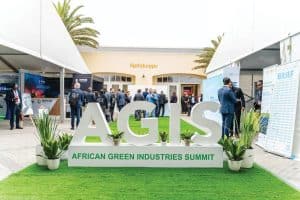
At AGIS 2026 in Swakopmund, Namibia set green industrialisation as a jobs strategy—hydrogen, iron and ammonia under NDP6, not just
First oil is not the starting line. At NOGC 2026, Namibia’s energy talk shifted to readiness: local content, joint ventures