In 2021, while driving past the main station in Windhoek, Kat Stahl noticed something many residents had long grown used to ignoring: an expletive sprawled across the weathered, flaky dark-blue wall of a bus stop.
Fading layers of old, torn posters clung stubbornly to the surface. Overgrown bushes crowded the edges. The corrugated iron slats of the bus stop had an awkward slant, the bench barely holding together. It was functional, yes, but tired and neglected, with that melancholic fatigue reflective of urban public spaces.
Like so many others, Kat and her partner, Wynand Lens, had heard the familiar refrain: someone should do something about it someday. But on that day, the thought shifted. Maybe that someone was them. Maybe that someday was now.
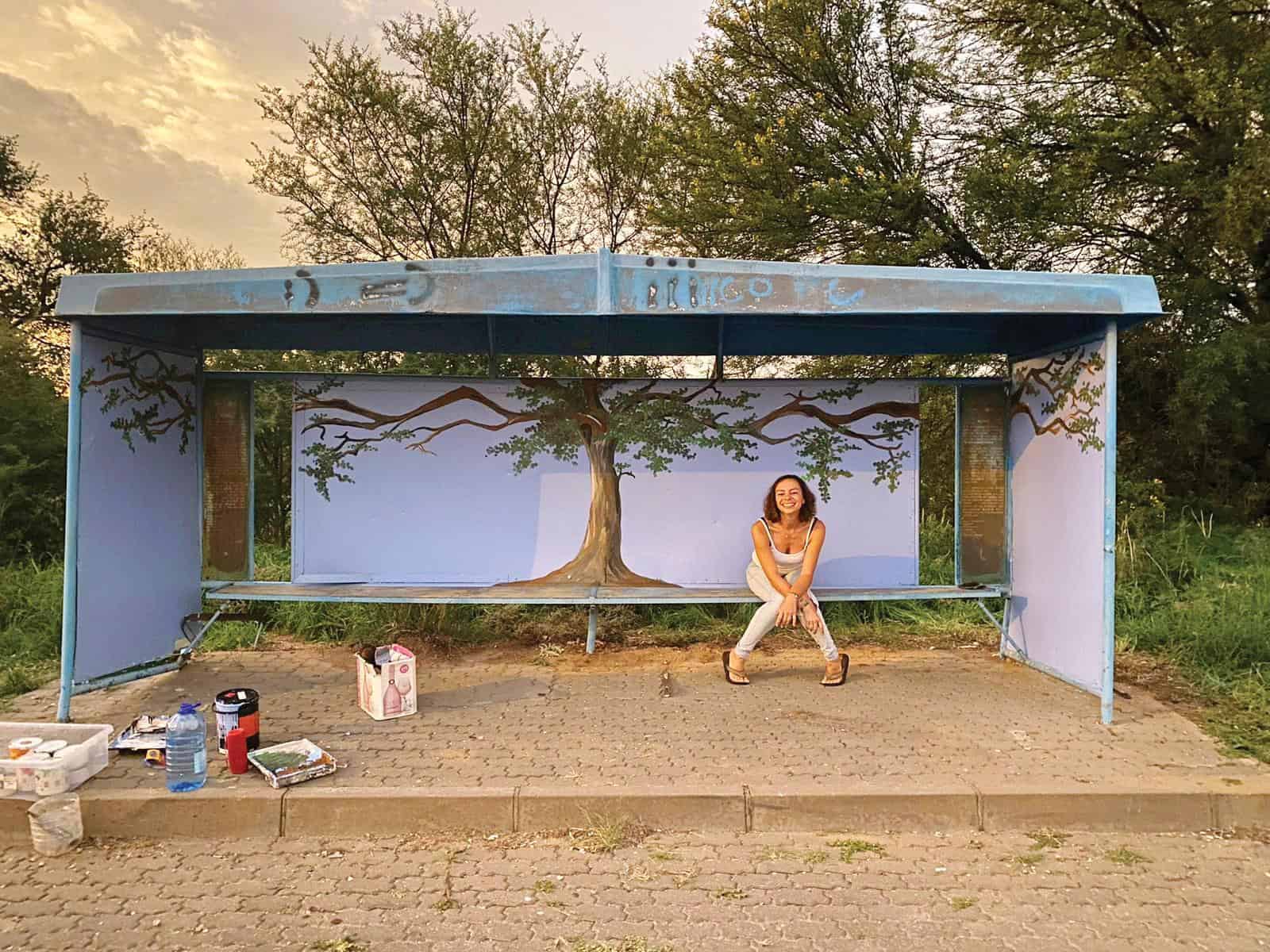
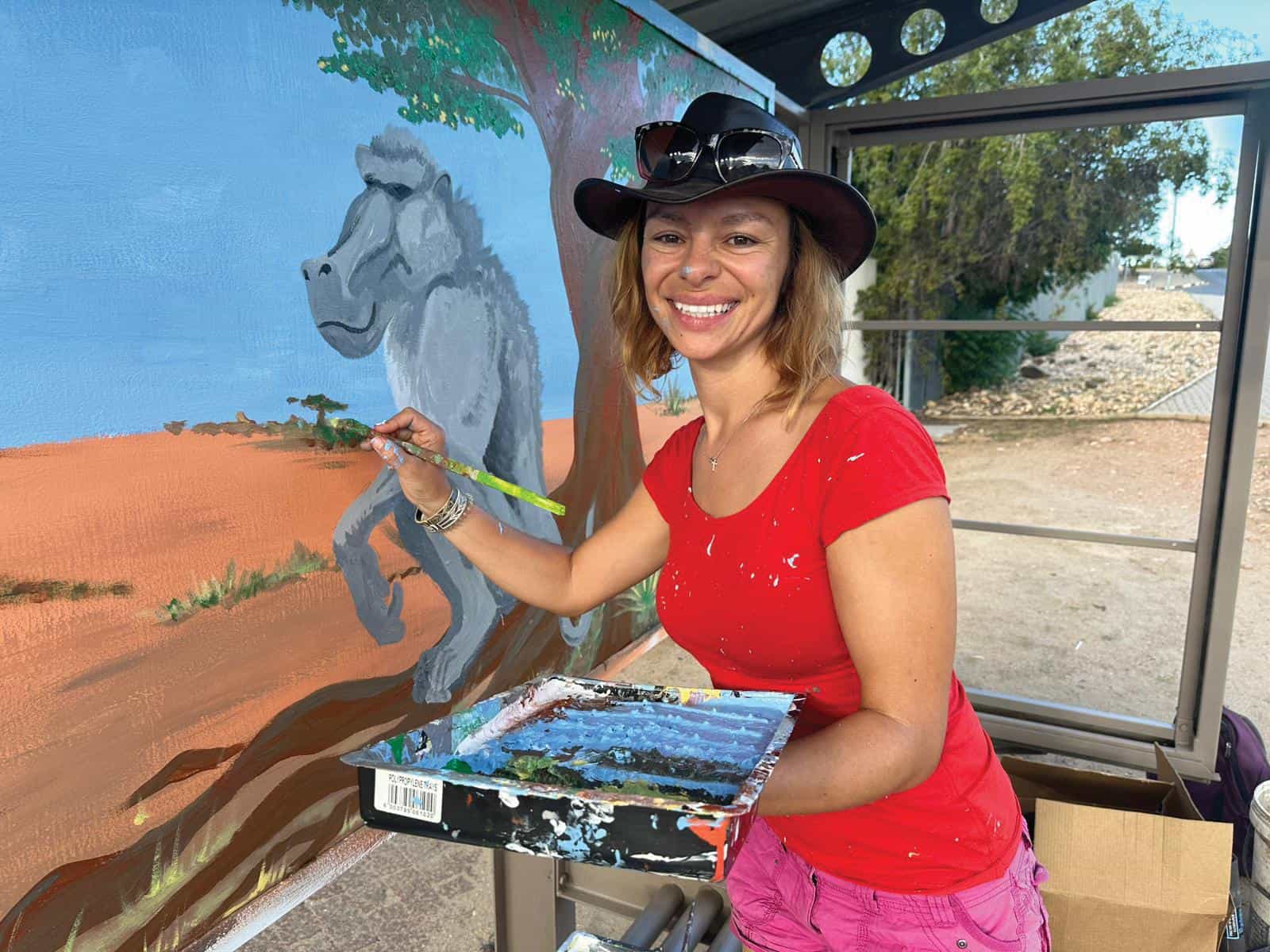
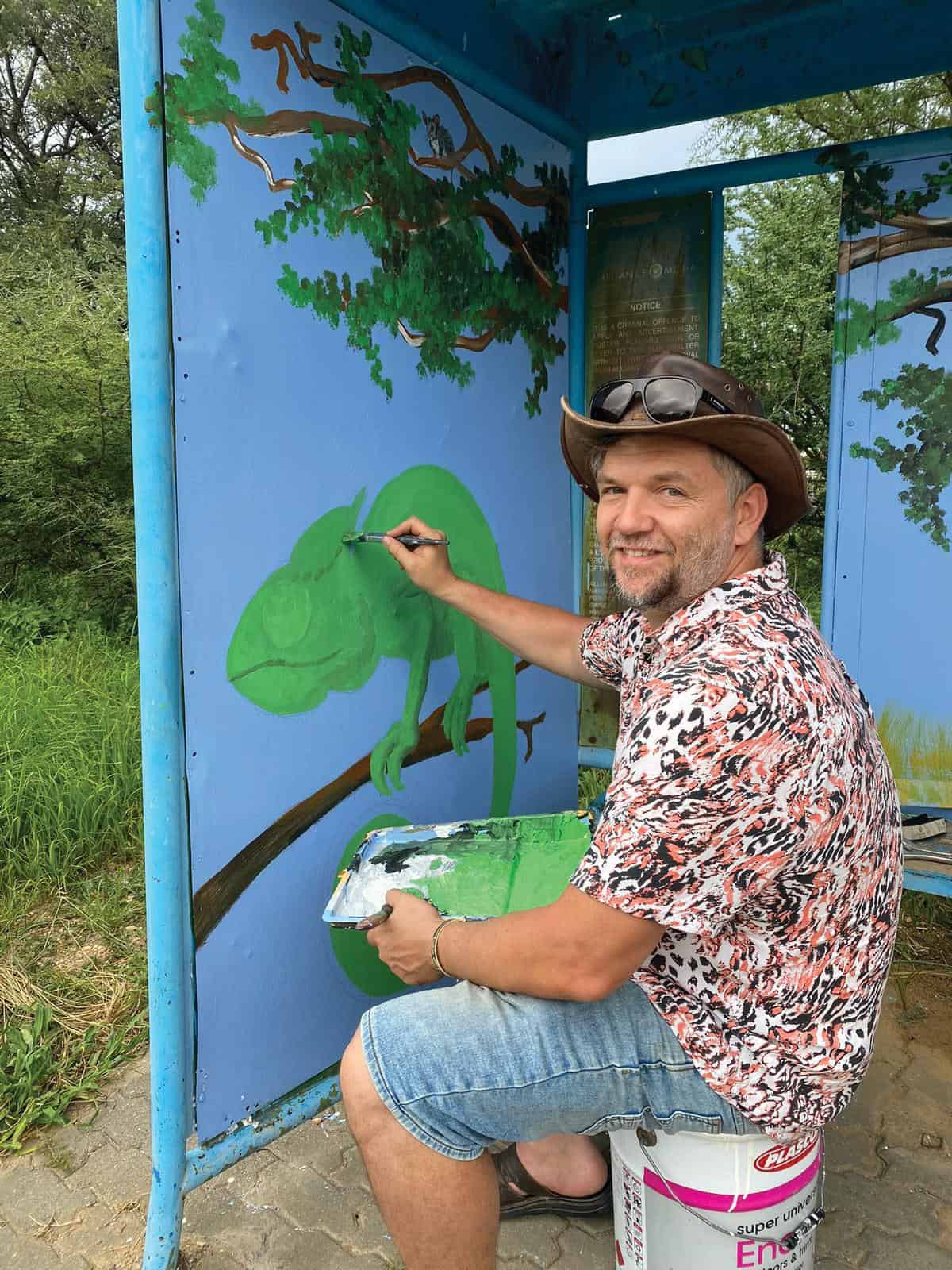
There is an energetic flurry and an immediate warmth as Wynand and Kat welcome me into their home. Wynand offers a wooden bowl of salted almonds and a cup of milky Rooibos tea. It feels easy here, uncomplicated, much like their philosophy. Wynand works as a video game designer, while Kat, originally from Germany, is an online language teacher. Their flexible schedules allow them to slip away from their screens during lunch breaks and pour their energy into something more tangible. Another layer of paint. A bright flourish on a chameleon’s twirled tail. The fine detail of a camelthorn tree fanning its gangly branches across a wall that was once covered with graffiti.
What they do is simple but intentional. In a country where public transport can be a slow and often tedious experience defined by long, long liminal pauses, these spaces matter. Their work offers an approachable, costeffective way to improve shared environments without grand, overwhelming ambitions. No sweeping manifesto. No pressure to change everything at once. Just a steady commitment to doing what they can, where they are.
“The little you can do in your own neighbourhood or community already makes a huge difference,” Kat explains. It is a no-frills, hardy principle: do what you can do, and do it consistently.
That decision in 2021 quickly spurred the couple into action. Armed with a single pail of paint and a sketchbook of ideas, they got to work. Wynand laughs as he recalls how, in those early days, they always kept a bucket of backup white paint nearby, just in case the City of Windhoek objected. Without formal permission, they were prepared to paint over everything and walk away, leaving at least a cleaner surface behind.
But the resistance they anticipated never came. Instead, word spread. When the City of Windhoek did respond, it was surprisingly appreciative and supportive. They could not fund the project, but they approved. They liked it, and they even urged the couple to keep going. And so they did.
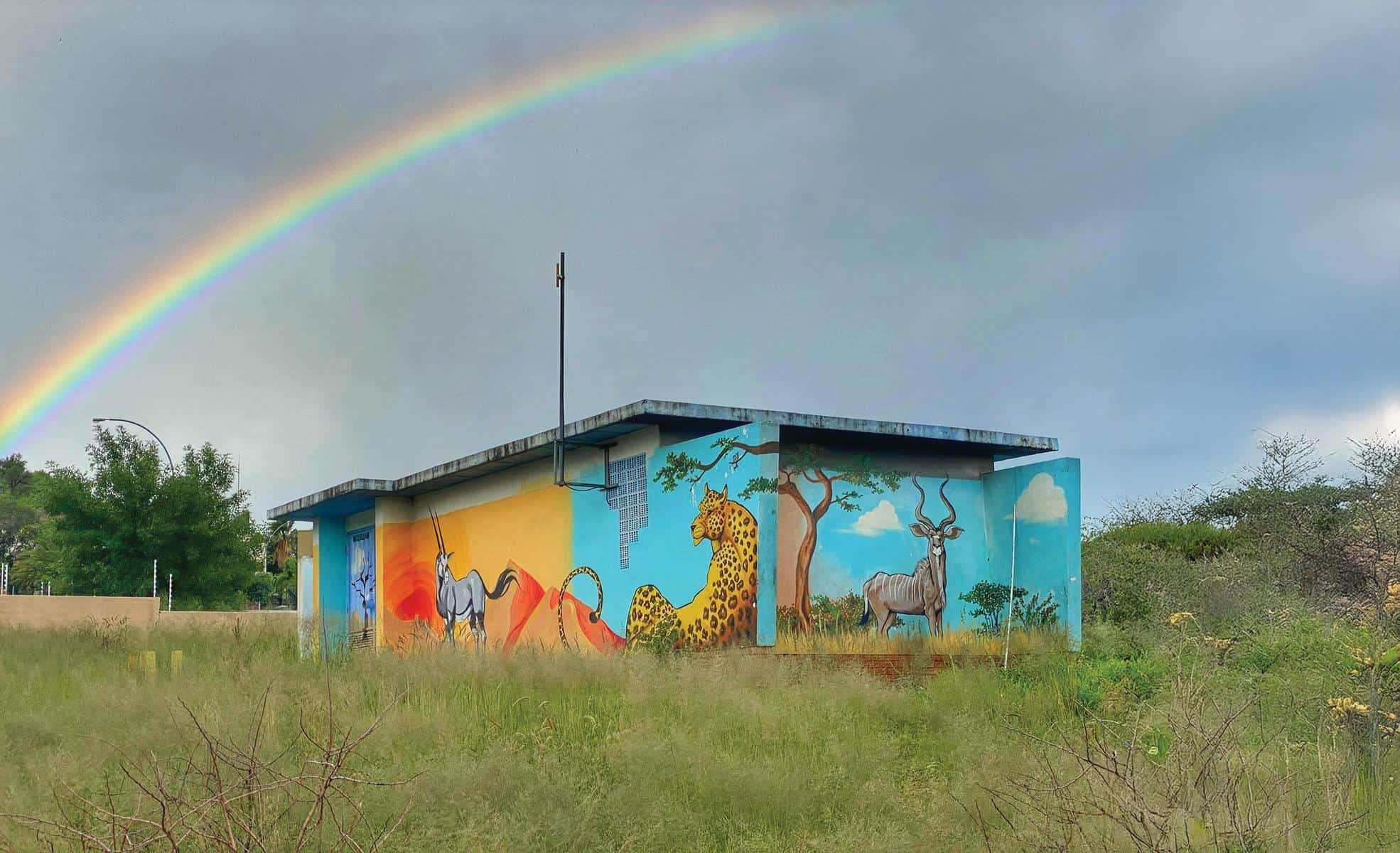
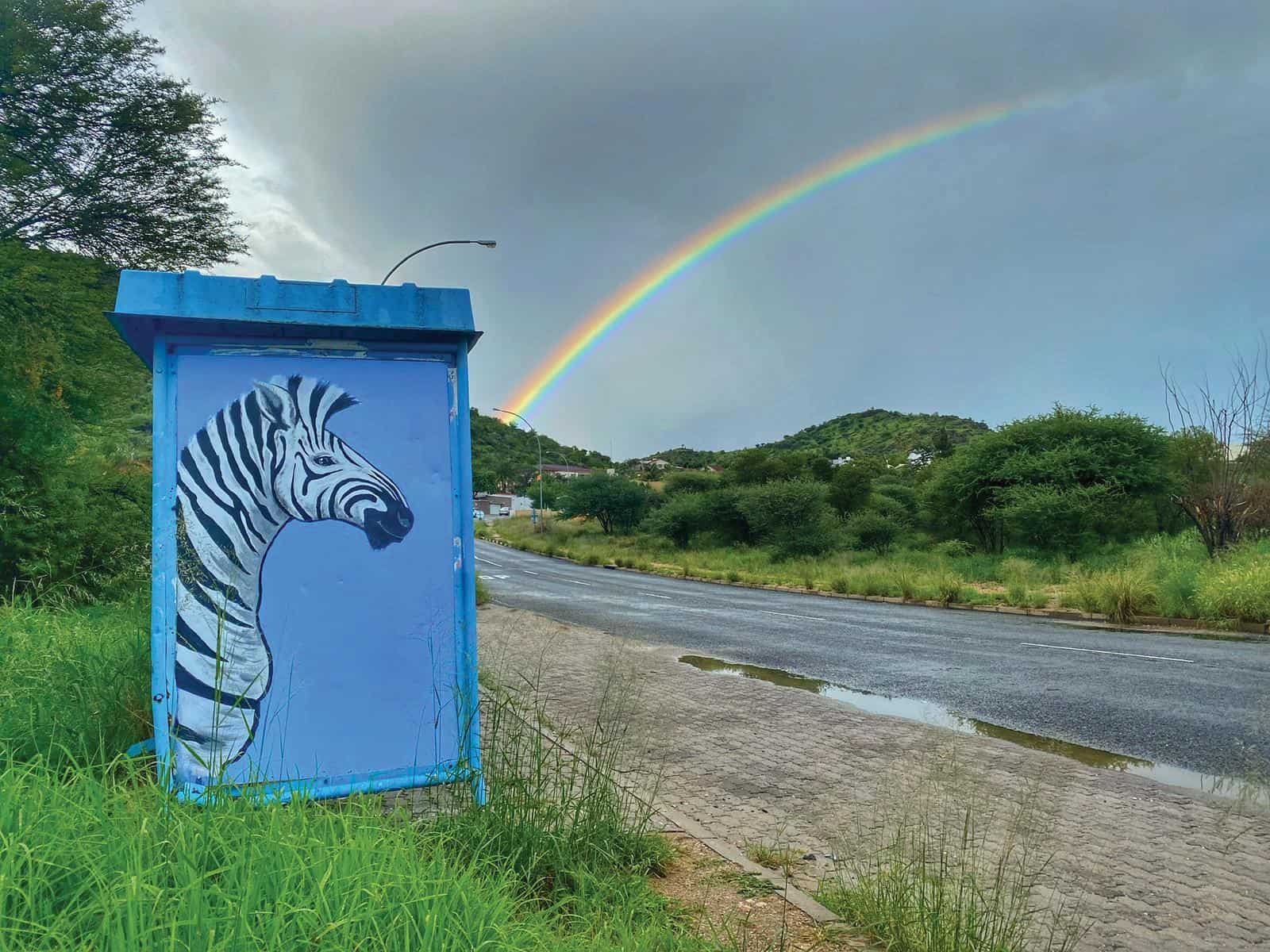
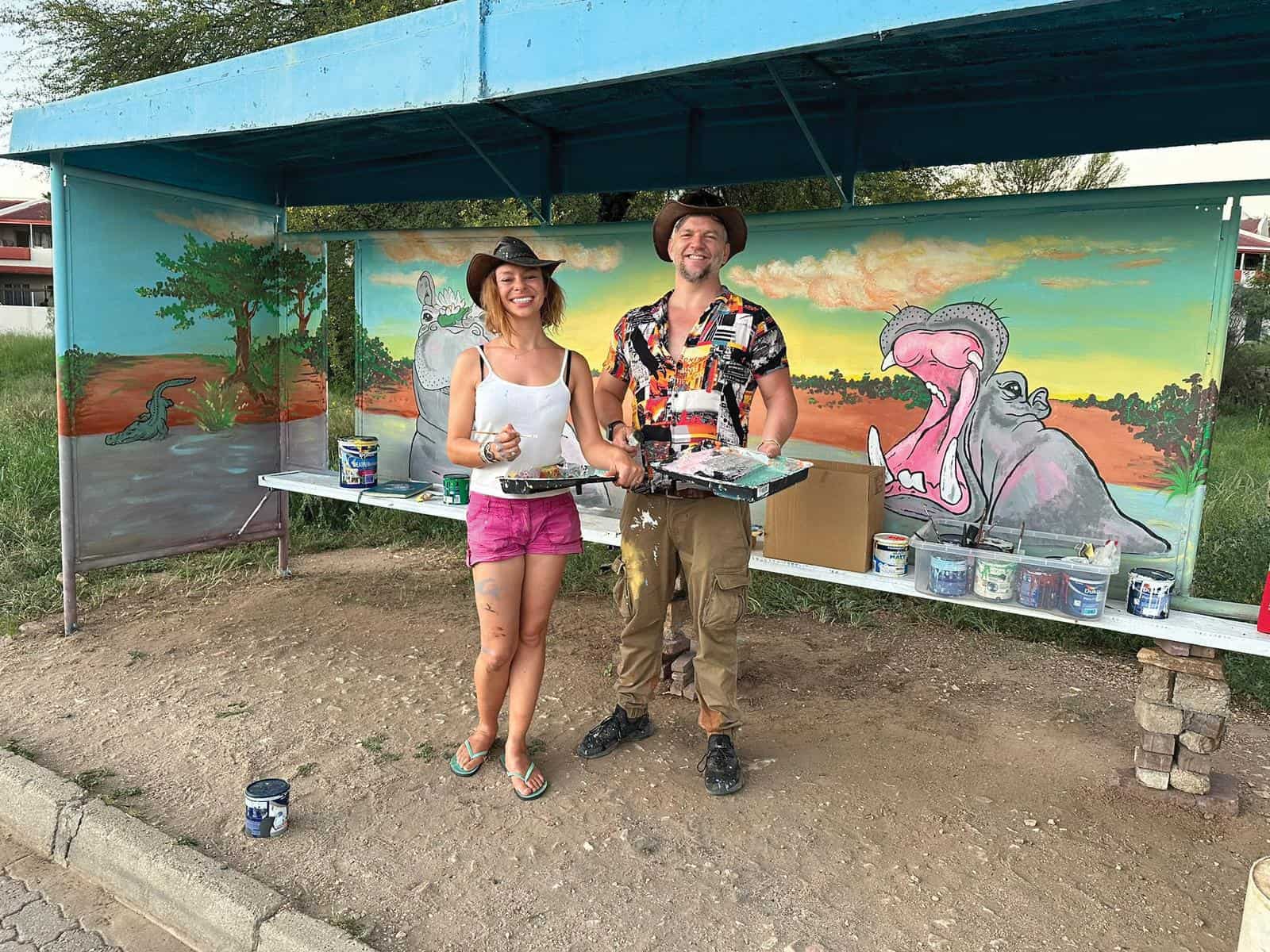
To date, Wynand and Kat have transformed eight bus stops across the city. What began as a small, selffunded initiative has grown, with Dulux Paints stepping in to sponsor paint supplies. Their work remains open, an evolving collaboration with the community and an invitation to anyone passing by to contribute ideas or simply share in the creativity. Their artistic focus leans towards landscapes, nature and wildlife – themes that resonate across cultures and backgrounds.
Strangers stop to offer encouragement, care packages, even cold beers. Unexpected connections form in the most ordinary spaces. Once, Namibian artist EES dropped by after hearing about the project through his mother. On another day, a passing police officer slowed to a stop. Wynand instinctively reached for the emergency bucket of white paint. But instead of reprimanding, the officer wound down his car window, took in the scene, smiled and concluded, “It looks good!”
Small changes have followed. The City of Windhoek has since installed dustbins at bus stops, an incremental but meaningful improvement. It is a reminder that change does not always arrive all at once. Sometimes it gathers quietly, building from the ground up. For Wynand and Kat, the work is not about ownership; it is about contribution. Each person, they believe, has something to invest in their community, something to give.
Their next chapter will take them to Germany for six months, but the story does not end there. When they return, another bus stop may be waiting. Another blank, hopeful canvas. Another opportunity to create. And even if the municipality decides to renovate and replace every structure they have painted (there are plans in the pipeline), their perspective remains unchanged. The work will still have mattered. The vibrancy brought into those spaces, the conversations sparked, the sense of beauty restored; it all matters.
“Share what you are gifted in and pay it forward. Create anyway. It’s always worth it.”