Nothing is more humbling than when you have seen a tree for years, only to realise that you totally underestimated its value. That was me after discovering the sand corkwood tree through informed sightings. In fact, I did not even know that it was a sand corkwood tree. I just knew I saw this tree several times, but I was not familiar with its features. This deciduous tree prefers sandy environments and is widespread in northern and central-eastern Namibia.
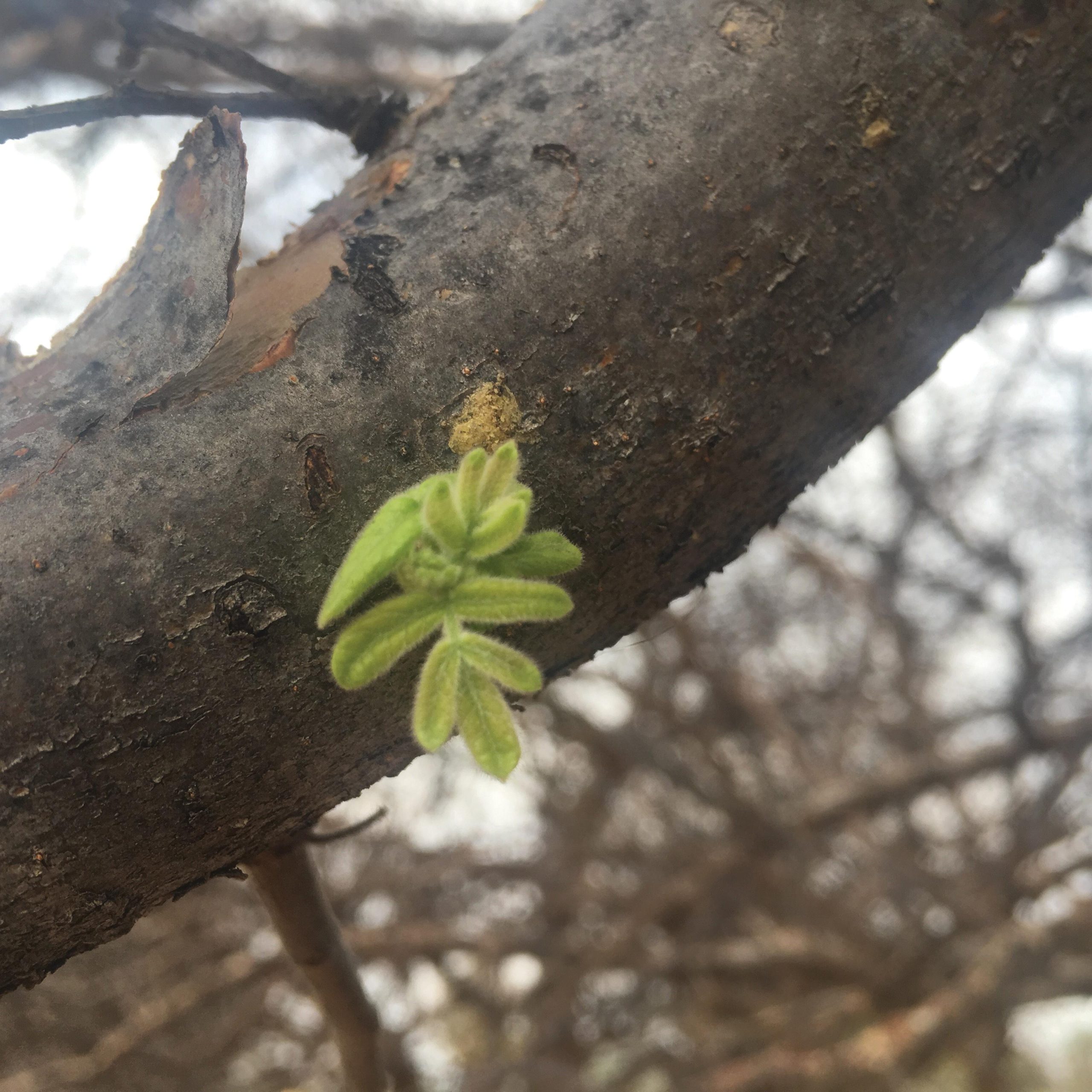
The sand corkwood tree has a single trunk, growing up to a height of anything between half a metre and three metres. It has a yellowish green and grey bark. The grey ranges from light to dark grey with brown markings. These markings usually shed off paper-textured strips, exposing the green bark. The branches of the sand corkwood have stunted thorns, and the leaves appear to be olive green due to their soft hairs. These leaves are trifoliate, broadly elliptic and occur in two to four pairs of leaflets. The sand corkwood has small, yellow-coloured flowers that are visible as soon as the leaves appear. Flowering occurs from November to March, and right after flowering it presents small circular fruits that turn into a reddish pink when they are ripe.
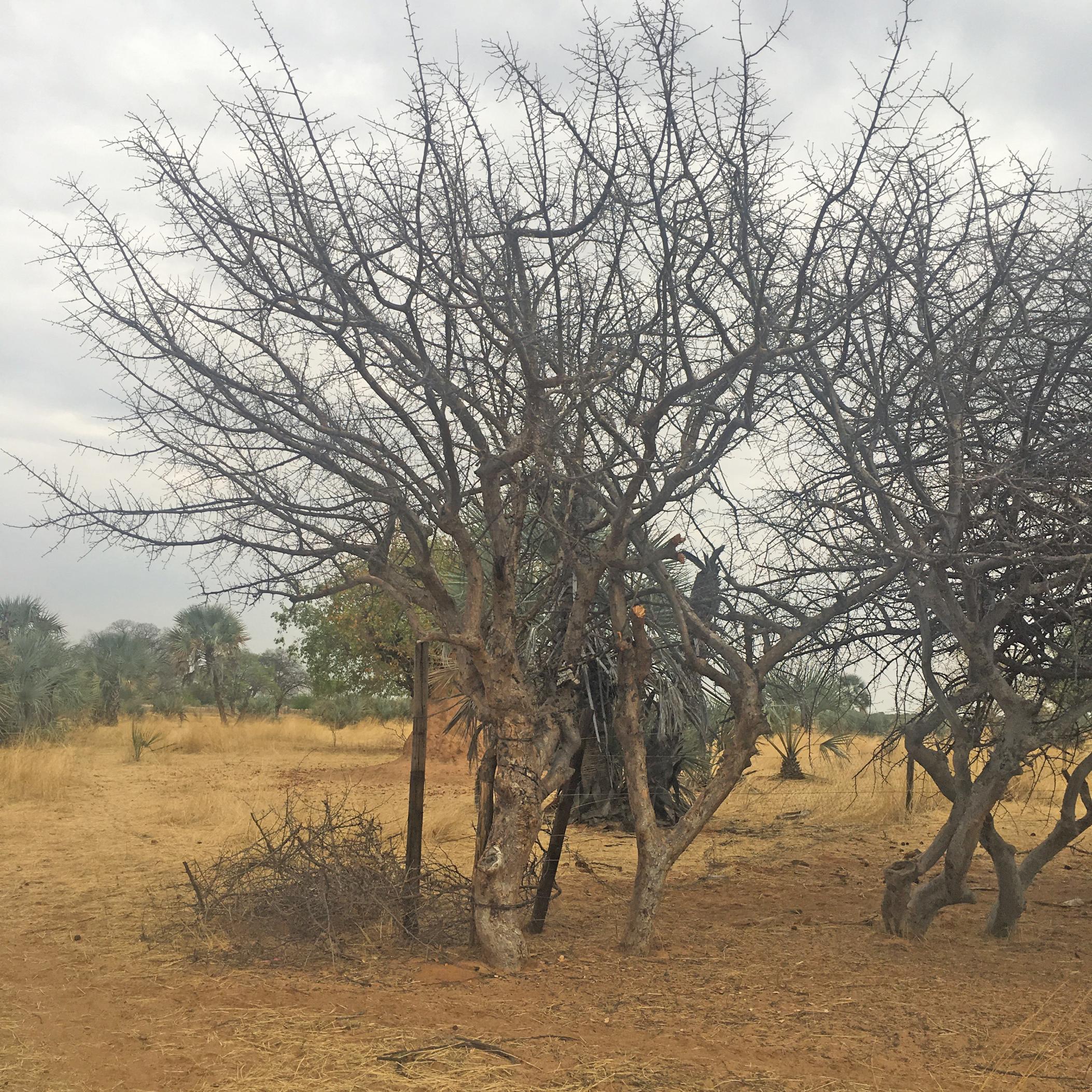
During a site visit, I noticed these trees that were seemingly planted in a row, and I took a small branch out of curiosity. It was surprisingly easy to break, making a snapping sound. The wood is soft when moist and turgid in its dry state. Curiosity made me search for the reason why these trees were in a row as if planted. A nostalgic childhood story was then unfolded to me by one of the elderly men I came across. He told me that, when he was a young man, there were quite a few sand corkwood trees in his father’s field. They took the branches to fence off their land and these branches naturally grounded themselves, supported by the favourably sandy soil and sufficient rainfall. This means the sand corkwood is easily propagated by a mere cutting.
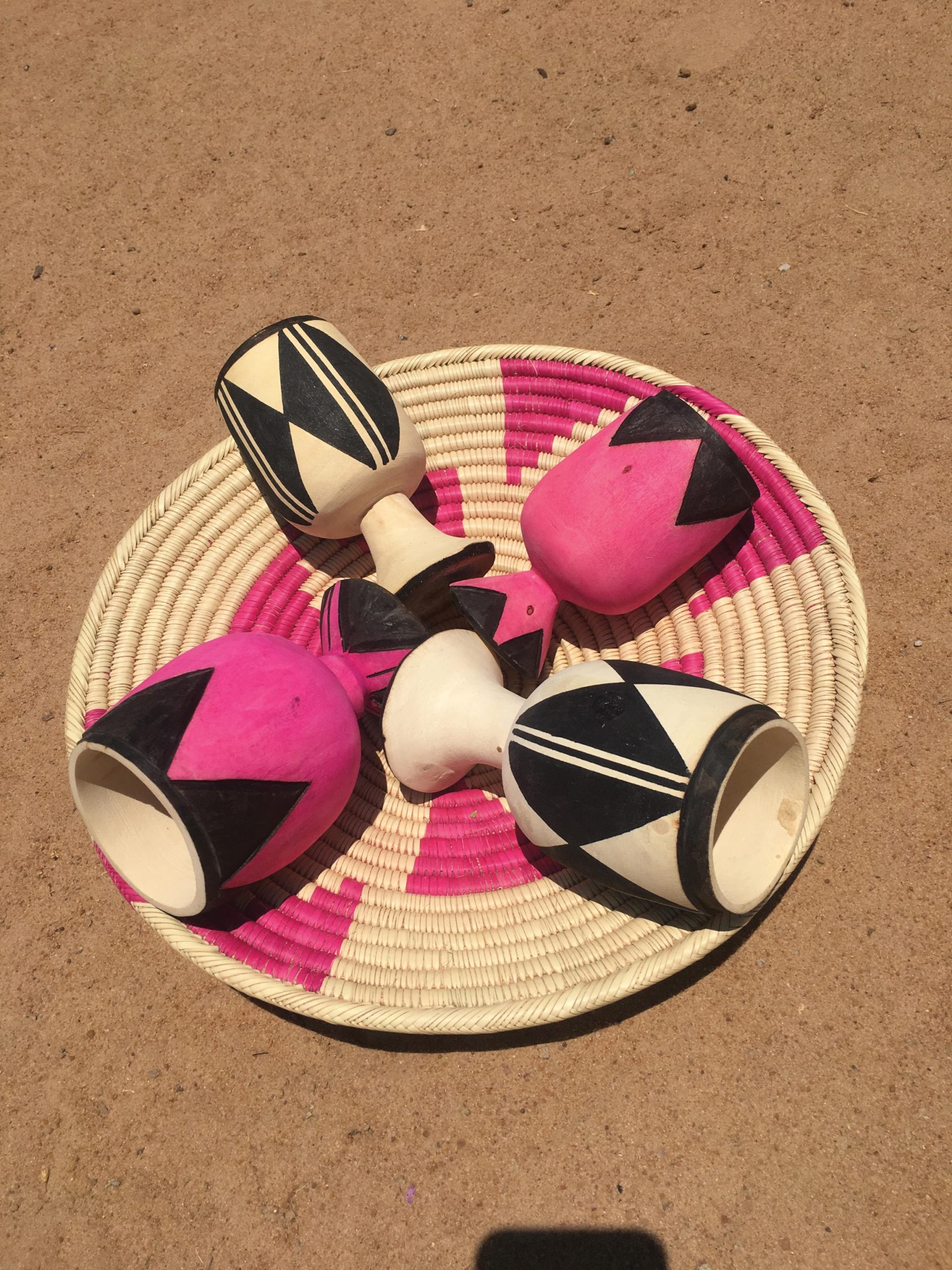
My intrigued self continued probing plant talks with the locals, ranging from where else in the village these trees are found to the type of wood it yields. Interestingly, while we discussed the features of the wood, I learnt that the sand corkwood’s wood is used to carve out mugs that we use for drinking traditional brews. A celebratory event without these wooden mugs is therefore hard to imagine. These beautiful mugs, which come in different shapes and sizes, are often decorated with different colours, most commonly pink and black.
It was only then that I realised that this was the same tree I witnessed a man make a mug from during a strategic environmental assessment I once facilitated. The biodiversity in that particular area was rich, but the sand corkwood was quite limited. Still, community members were using the tree to their benefit – as fencing material and making mugs to sell. This is in contrast with my village, where corkwood trees are more prevalent, but the tree is not used much. Carving wooden mugs is a skill, but it seems that the younger generation have not been taught this art and none within my village took it upon themselves to learn this skill.
Maybe this ignorance is what is currently preserving the numbers of this species. However, without the right awareness, those who might still learn the carving skill may very well take advantage of this opportunity in an unsustainable way. At least we know that it can be grown from a cutting, which makes it easier to ensure that the numbers are maintained.