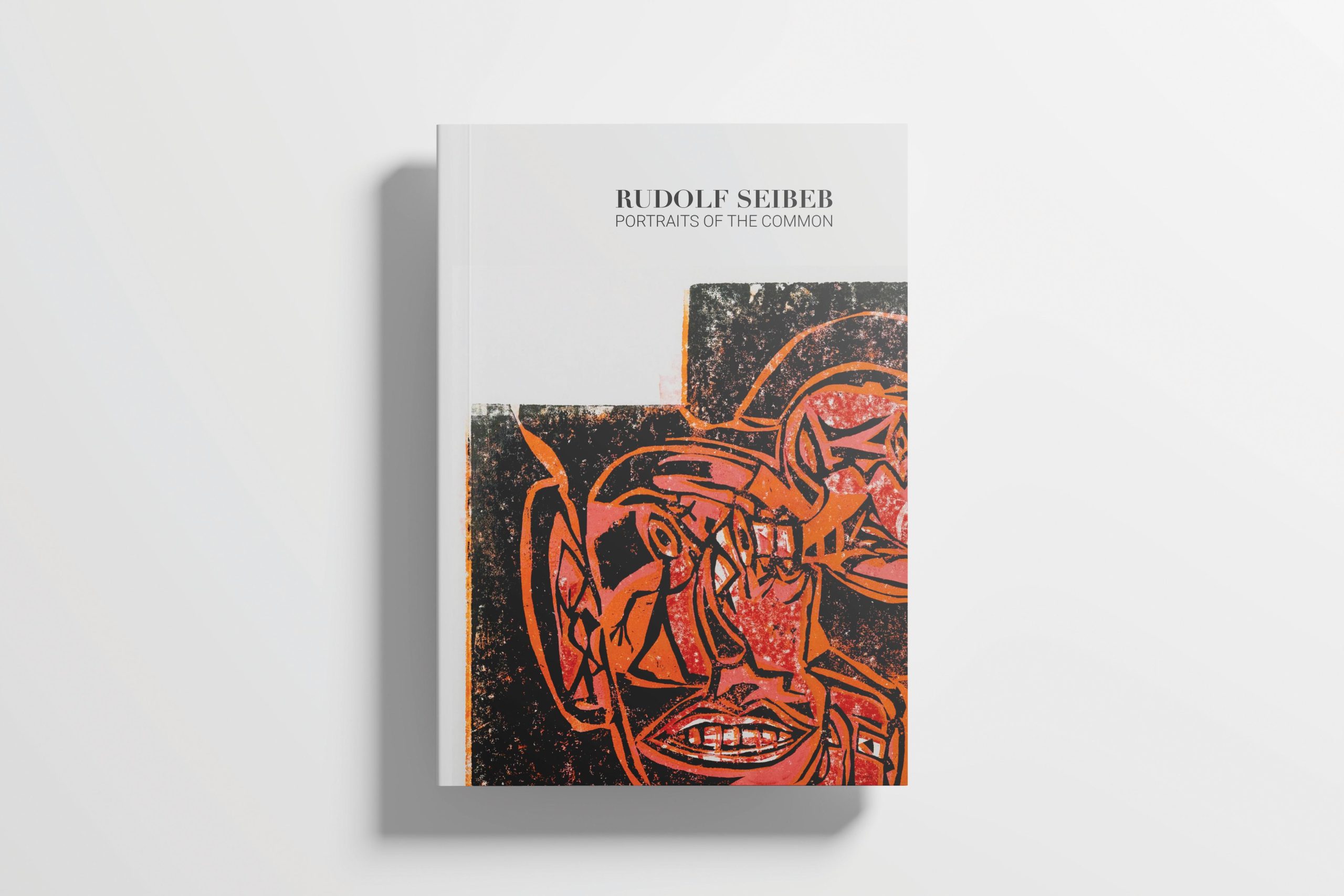
The ARAK Collection and The Project Room is proud to announce the launch of Rudolf Seibeb: Portraits of the Common, a significant new publication celebrating the life and work of Namibian artist Rudolf Seibeb. The book was launched in Windhoek at The Project Room on 20 January 2026, followed by an international launch in Cape Town during the Investec Cape Town Art Fair on 18 February 2026. Together, these moments mark both a homecoming and a global positioning of an artist whose work quietly but powerfully insists on the dignity, complexity and shared humanity of everyday life.
Rudolf Seibeb, born in 1964 and based in the town of Okahandja, is a self-taught artist whose practice has developed outside formal academic frameworks, yet displays remarkable clarity and conviction. His paintings, often described as naïve or outsider art, resist easy categorisation. They are grounded in lived experience, community and observation, and they document what ARAK Collection founder Abdul Rahman Saleh AlKhelaif describes as “the vibrant tapestry of life in Namibia”. AlKhelaif’s foreword traces his first encounter with Seibeb’s work in 2020 and the deepening relationship that followed, culminating in visits to the artist’s studio, Tadami Khu Arts – a Damara phrase meaning “Do not talk bad about your people.” This ethos resonates throughout Seibeb’s practice, underscoring an unwavering commitment to place, people and ethical representation.
Portraits of the Common brings together an important group of writers whose contributions frame Seibeb’s work from multiple perspectives. Among them is acclaimed art writer and critic Ashraf Jamal, whose essay offers a rigorous and poetic reading of Seibeb’s faces – faces that are at once generic and deeply familiar. Jamal asks whether Seibeb paints the same face repeatedly, and if so, whose face it might be. His conclusion is compelling: Seibeb’s figures are not portraits in the Western sense, nor are they concerned with individual ego, power or status. Instead, they function as sites of mutual recognition, allowing viewers to see themselves and others reflected in simplified yet profoundly resonant forms.
Jamal’s text challenges the often-romanticised notion of innocence or purity frequently projected onto self-taught artists. Rather than reading Seibeb’s visual language as unrefined, he proposes that the artist consciously stylises a perceived crudity, using flatness, repetition and bold lines to explore complex questions of identity, collectivity and inner life. Faces appear within faces, bodies within bodies, suggesting not ancestry or hierarchy but multiplicity – the many selves that constitute a shared human condition. These works, Jamal argues, are not shallow surfaces but “fathomless inquiries into the heart, mind and soul”.
Additional contributions by Marcos Jinguba, Jamil Osmar Parasol, Elize van Huyssteen and Frieda Lühl further contextualise Seibeb’s practice within Namibian art histories, contemporary discourse and lived social realities. Together, these voices reinforce the significance of Seibeb’s position as an artist who operates at the periphery of the global art world while steadily gaining recognition as a collectable and increasingly iconic figure.
Seibeb’s journey into art began in earnest during the 1990s when he encountered the John Muafangejo Art Centre, a formative moment that anchored him within Namibia’s creative community. Working primarily in acrylic on canvas, and occasionally incorporating found objects, his techniques have evolved through decades of experimentation rather than formal instruction. What remains constant is the sense of optimism and hope that permeates his work – a utopic worldview that reflects resilience rather than escapism.
The launch of Rudolf Seibeb: Portraits of the Common is both a celebration and an invitation to look closely at the ordinary, to recognise ourselves in the unfamiliar and to acknowledge the quiet power of an artist who speaks not from the centre, but from a place of deep sincerity and shared humanity.
Beyond his studio practice, Seibeb’s work has steadily entered important private and institutional collections, both locally and internationally, signalling a growing recognition of his unique visual language. While he remains rooted in Okahandja, his paintings have travelled widely, appearing in exhibitions and art fairs that place Namibian stories into broader global conversations. This balance – between remaining grounded in community and engaging with international audiences – is central to Seibeb’s significance. His work does not seek spectacle or provocation; instead, it offers a quiet insistence on presence, on seeing and being seen.
The publication itself is conceived as more than a monograph. Rudolf Seibeb: Portraits of the Common functions as an archive, a critical reader and a tribute. Through carefully curated essays and reproductions, it traces the evolution of an artist who has consistently returned to the human figure as a vessel for shared experience. In doing so, the book affirms Seibeb’s place within contemporary Namibian art history while also positioning his work within a wider global discourse on figuration, selftaught practices and the politics of representation.
Launching first in Windhoek at The Project Room – a longstanding advocate for Namibian artists – the book’s debut honours the local networks that have supported Seibeb’s practice over decades. Its subsequent launch at the Investec Cape Town Art Fair extends this conversation beyond national borders, introducing Portraits of the Common to collectors, curators and audiences from across the continent and beyond. Together, these launches underscore the book’s central proposition: that the socalled “common” is not marginal, but universal, and that within Seibeb’s flattened faces and steady gazes lies an enduring, collective humanity.