I find it fascinating that we have a culture of naming tourism establishments after plants or animals – if not tribes, rivers or mountains – and in most cases the names are in our native languages. A trend not only here in Namibia but common throughout the continent of Africa. Second only to Asia in size, Africa has just recently been adjusted on the world map to show its real dimensions in proportion to the rest of the continents. It is eye-opening that century-old narratives and assumptions can be challenged and changed. Well, the Correct the Map movement succeeded, but it makes me wonder what other misrepresentations about Africa still exist if we had something as basic as the size of Africa wrong.
The plant enthusiast in me is now wondering whether we perhaps have native plants of Africa out there wrongly assumed as native to other continents. Talking about tourism establishments named after animals or plants, here in Namibia, you will find lodges such as Onduli, which translates to giraffe, or Damara Mopane Lodge, which is a combination of the Damara tribe and the mopane tree. We have the Tambuti Lodge in Rundu, which refers to the tamboti tree. (This tree can also be referred to as tamboti or tambuti, but the most common name reference is tamboti.) I found this tree to have a unique use in the preparation of a traditional delicacy of the Aawambo people, but let’s save the best for last and first get to know a little more about this tree.
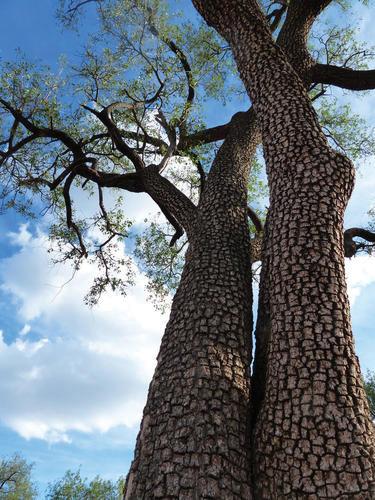
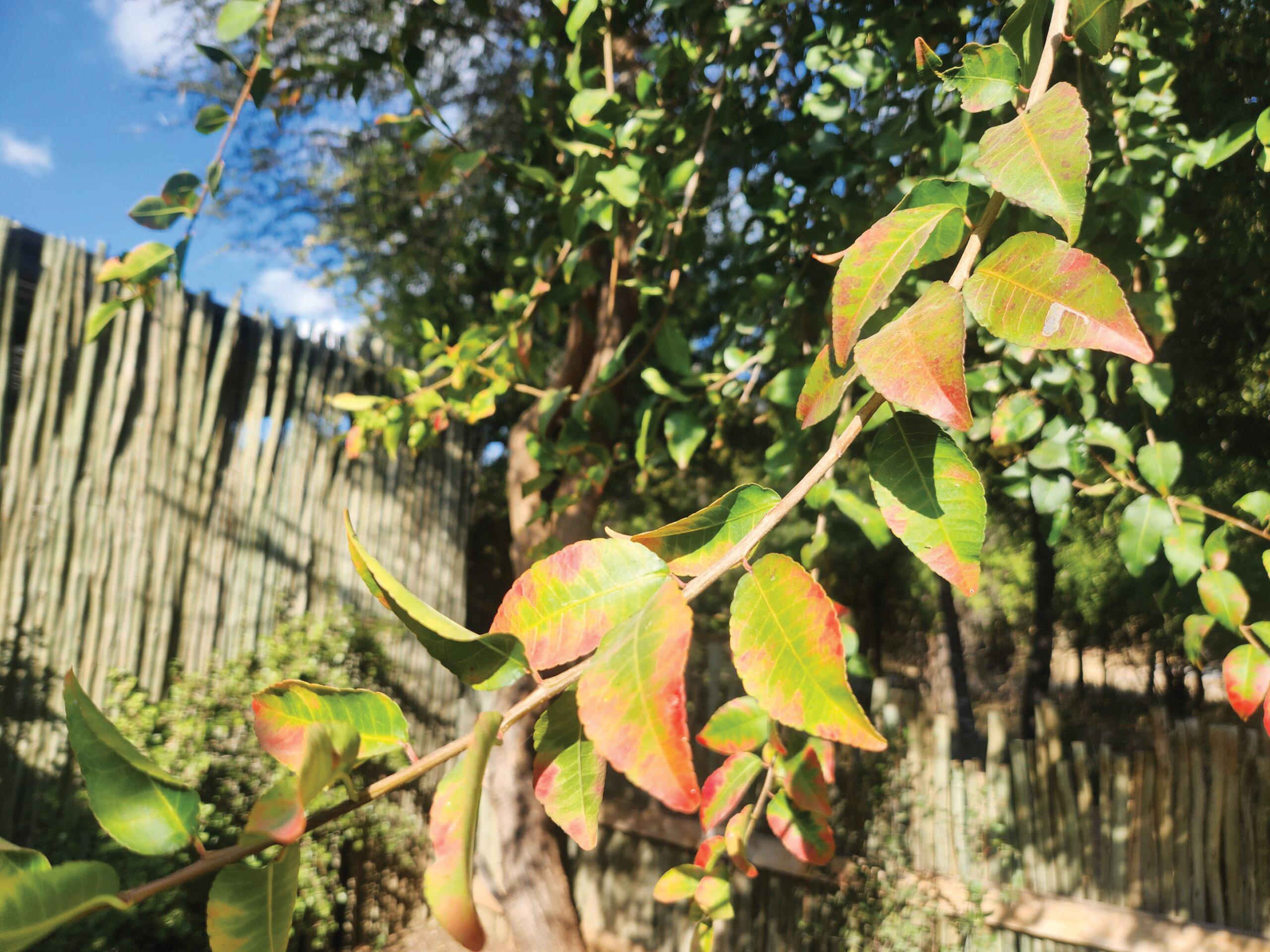
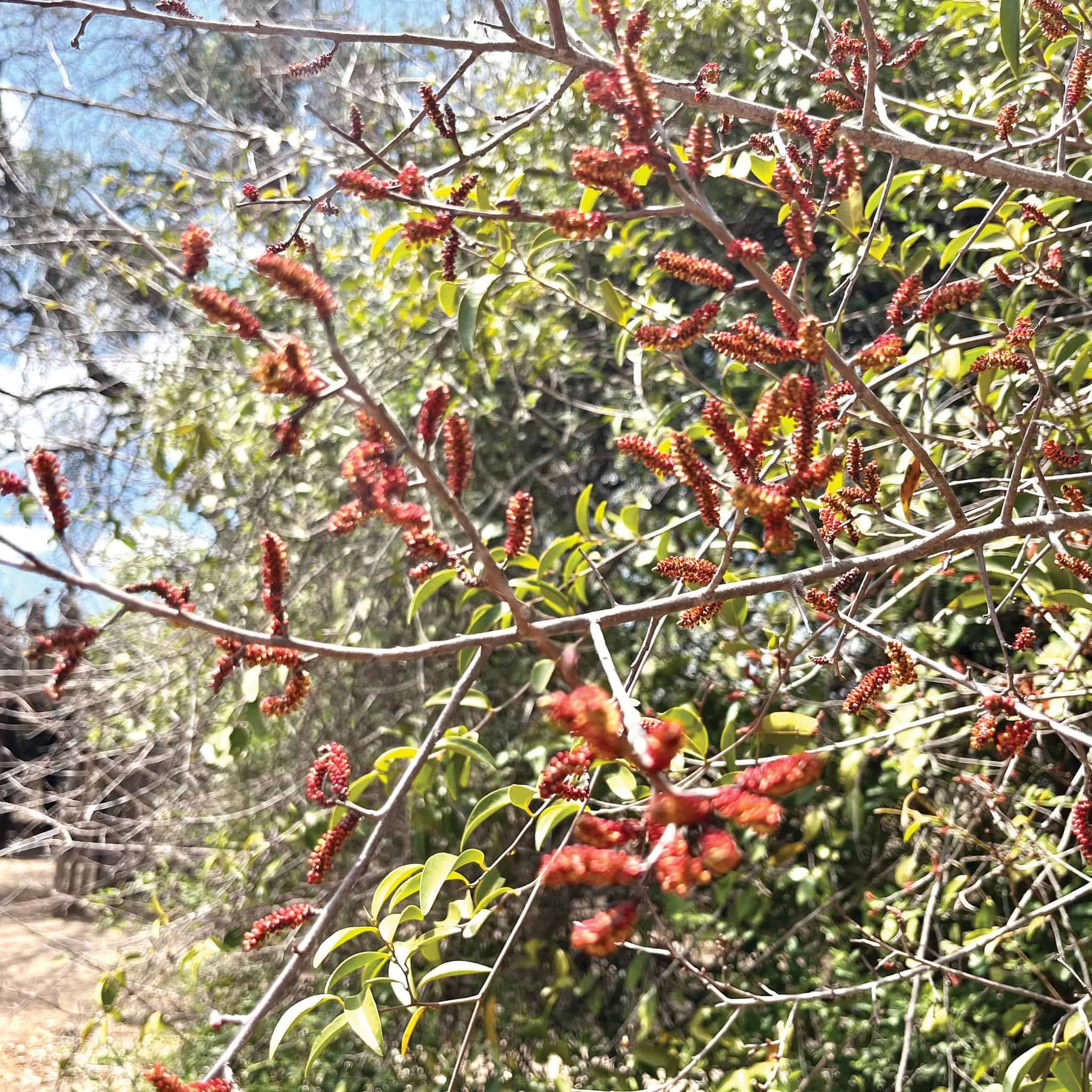
Tamboti trees can grow up to a height of 12 metres and have spread crowns. Their bark is often very rough, with deep fissures forming rectangular shapes. The colour of the bark ranges from light grey to almost black. Its leaves are simple with an ovate shape, and they are spirally arranged. The surface of the leaves is hairless and has a prominent midrib. The upper side of the leaf surface is dull and dark green, while the lower side is pale green. The leaves of the tamboti turn yellow in autumn. It flowers in spikes covered with brown bracts that can be up to 30 millimetres long. Both male and female flowers are on the same tree, and flowering occurs from August to December.
The tamboti tree is amongst the protected trees in Namibia since it is heavily used for timber. Its wood is hard and oily, and sawing it is easy. Although its wood is one of the best wood types one can get locally, it needs to be treated to prevent it from cracking. The wood is also used to build huts, fences and carvings, but it is not suitable for firewood because its smoke has a bitter aftertaste when inhaled. The aftertaste is known to cause nausea or even headaches. This means that food exposed to its smoke is likely to be poisonous.
While in most cases the tamboti tree is rather toxic, communities have figured out ways to best use it both locally and beyond the borders of Namibia – from making beads from the wood to using pieces of the wood to serve as an insect repellent in linen and clothes or to treat livestock for tick and snake bites. I must admit that the scent of the wood is something one could smell over and over again – a scent I would consider suitable for a perfume. While all sorts of uses of this tree point towards a “no-taste policy”, there is a delicacy out there that seems to be incomplete without a piece of the tamboti wood in the pot.
Good rains come with a good supply of African giant bullfrogs – something which is considered a delicacy amongst my people, the Aawambo. What most people do not know is the significance of the presence of a piece of tamboti wood in the preparation of bullfrogs. The tamboti wood is often placed in the pot when preparing this cuisine.
Why? The African giant bullfrog is known to contain a lethal toxin within its skin and bladder that can cause possible kidney failure. The presence of a piece of tamboti wood during cooking is therefore essential, as its chemical properties react with the juices of the frogs, neutralising these toxins and preventing possible kidney failure. This makes the frogs safe to consume. Interesting, right? Not just a ritual, but chemistry.