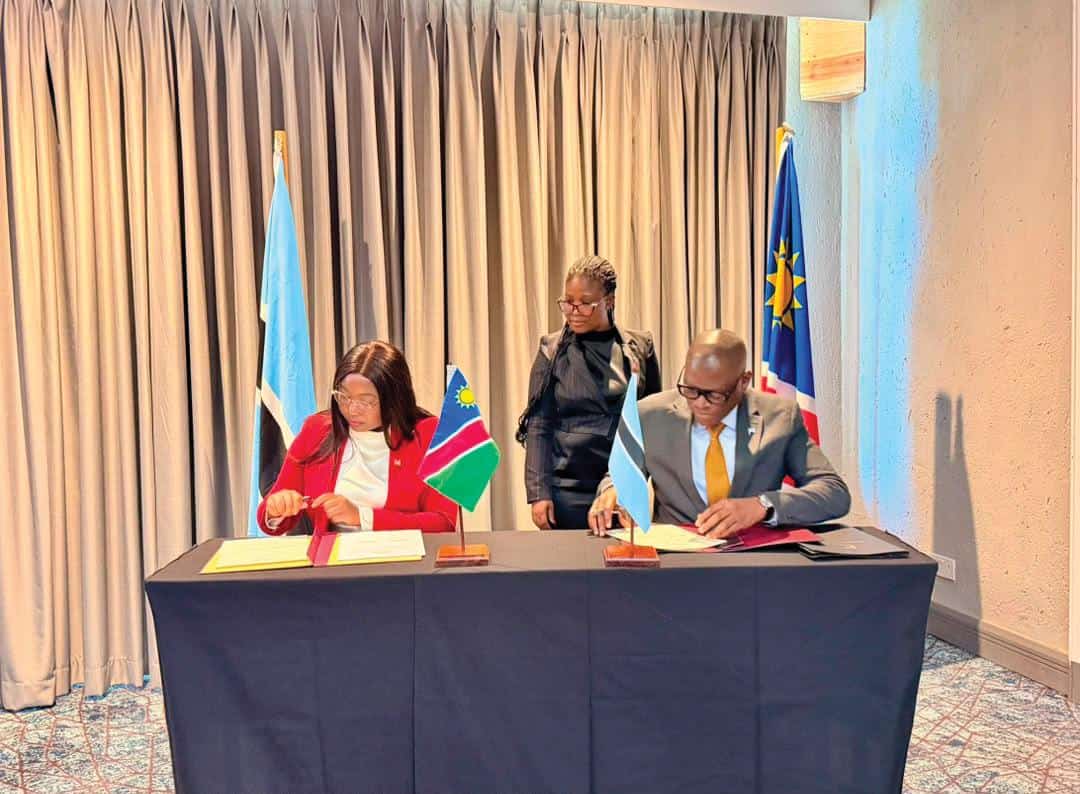
Namibia and Botswana strengthen ICT cooperation

Information and communication technology (ICT) has become a critical driver of development in Namibia, enabling greater connectivity, improved access to information and more efficient service delivery. As the country continues to embrace digital transformation, ICT is playing an increasingly important role in supporting economic growth, creating employment opportunities and improving the lives of citizens.

From education and healthcare to banking, agriculture and government services, ICT is helping to bridge geographical distances and connect communities to essential services and opportunities. The sector also supports innovation, entrepreneurship and investment, enabling Namibia to compete more effectively in the global digital economy.

As such, Namibia and Botswana have strengthened cooperation in ICT with the signing of a memorandum of understanding (MoU) aimed at improving digital connectivity, cybersecurity, digital transformation and technical cooperation between the two countries.

Strengthening regional cooperation

Speaking at the signing ceremony, Namibia’s Minister of Information and Communication Technology Emma Theofelus said the agreement reflects the two countries’ commitment to using technology to support economic growth, improve public services and deepen regional integration.

Theofelus said the agreement follows directives from the second Namibia–Botswana Bi-National Commission (BNC) held in Windhoek in October 2025.

“The MoU provides a comprehensive framework for cooperation in key areas of information and communication technology. It facilitates the exchange of knowledge, best practices and expertise in digital government, ICT policy and regulation, as well as digital transformation,” she noted.

Among the key areas of cooperation are improving telecommunications coverage along the Trans-Kalahari Corridor, reducing data roaming costs, exploring number portability, strengthening cybersecurity and expanding digital infrastructure.

According to the minister, a connectivity assessment along the Trans-Kalahari Corridor identified the need for 13 additional telecommunication sites at an estimated cost of N$52 million to achieve seamless 4G coverage.

Theofelus also highlighted progress between Mobile Telecommunications Limited (MTC) and Botswana Fibre Networks (BoFiNet), including the completion of a fibre connection between Gobabis and the Buitepos border, which is directly interconnected with the BoFiNet network in Botswana.

Cybersecurity and implementation framework

The two countries are also working to strengthen cybersecurity cooperation through Namibia’s Cybersecurity Incident Response Team (NAM-CSIRT) and Botswana’s BWCIRT, including knowledge sharing, capacity building and policy cooperation.

Theofelus called for the establishment of a dedicated working committee to oversee implementation of the agreement and develop an action plan with clear timelines and costs.

“I wish to emphasise the importance of establishing a dedicated working committee that will coordinate and oversee the effective implementation of this MoU, ensuring that our shared commitments translate into tangible results for the people of Namibia and Botswana. Additionally, the envisaged committee should develop an implementation action plan with clear timelines and cost implications which should be ready by the mid-term review of the second session of the BNC,” she added.

David Tshere, Botswana’s Minister of Communication and Innovation, said the agreement was intended to move the two countries from cooperation in principle to practical initiatives that deliver tangible benefits for citizens and businesses.

The minister said the success of the agreement would ultimately be measured by its implementation, calling on joint working teams to focus on practical outcomes such as:

  • Affordable and reliable connectivity
  • Cybersecurity and digital trust
  • Digital skills development
  • Innovation and entrepreneurship
  • Cross-border digital trade
  • Digital public services
  • Infrastructure and knowledge sharing
  • Opportunities for technology companies to access larger regional markets

“Let us use it to create opportunities for our young people, strengthen our institutions and businesses, and position Botswana and Namibia as active contributors to the digital transformation of the SADC region and the African continent,” said Tshere.

Tshere further noted that Botswana is expanding international connectivity and investing in data infrastructure, including the Digital Delta Data Centre, while developing digital government services such as electronic identification, payments, passports and revenue collection.

As technology continues to evolve, investment in ICT infrastructure, digital skills and innovation will remain essential to ensuring that all Namibians benefit from the opportunities presented by the digital age while contributing to the country’s long-term economic and social development.

From the September 2026 issue

Share:

More Posts

Sign up for our newsletter