Namibia Accelerates Water Security Measures Amidst Ongoing Drought

By Maggie Forcelledo Paz

Prolonged periods of below-average rainfall lead to a shortage of water for communities, farming and the environment. While drought is a natural phenomenon, its effects on livelihoods can be severe and far-reaching. In Namibia, this is a recurring challenge, with large parts of the country experiencing chronic water scarcity. Falling groundwater levels, shifting rainfall patterns and increasing demand have placed immense pressure on the nation’s water resources.

In rural communities, the impact is immediate and personal. In regions such as Kunene, Omusati, Oshana, Ohangwena, Oshikoto, Kavango East, Kavango West, and Omaheke, families who depend on farming and livestock are living on the frontlines of water scarcity. Urban areas are also feeling the pressure with water restrictions becoming common. Conversations about conservation are no longer abstract, they are necessary!

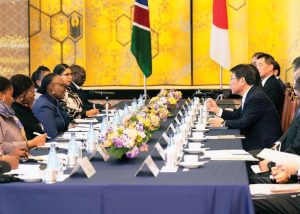
In response, the government has launched a national effort aimed at both relief and resilience during an urgent highlevel drought response meeting led by Prime Minister Elijah Ngurare, together with key institutions such as NamWater, NamPower and line ministries.

IMMEDIATE RESPONSE EFFORTS

The government has intensified efforts to address ongoing water shortages across the country through a series of key interventions. These include expanding water pipelines and improving rainwater harvesting by constructing and rehabilitating dams. Boreholes are being drilled and upgraded, with mini desalination plants introduced in remote areas to provide safe drinking water. Communities are also being supported to establish household and communal gardens to strengthen food security. Additionally, measures to prevent and control veld fires have been strengthened, and the sealing of the Etaka-Uuvudhiya Earth Canal in the northern regions is being fast-tracked to reduce water losses and improve distribution.

In many areas, agriculture is the main source of income. When water becomes scarce, crops fail to grow and livestock struggle to survive, leading to reduced harvests, food shortages and higher market prices. These affect both farmers and consumers. Farmers may lose their income, while families who depend on agricultural jobs face financial strain. Over time, prolonged drought can weaken local economies, heighten food insecurity and force families to relocate in search of better opportunities.

The Ministry of Agriculture, Fisheries, Water and Land Reform said work is progressing steadily on the 140-hectare Ekoka Irrigation Project in the Ohangwena Region. The initiative aligns with President Netumbo Nandi-Ndaitwah’s call to boost agricultural production and strengthen Namibia’s food self-sufficiency.

During a recent site visit to Ekoka village, the ministry’s executive director, Ndiyakupi Nghituwamata, reiterated the government’s commitment to transforming underutilised land into productive agricultural hubs that create jobs and improve livelihoods. A key focus of the project is securing a sustainable water supply. The ministry confirmed that a geophysical investigation was carried out in August 2025 to identify suitable borehole sites capable of supplying reliable, goodquality groundwater. This is considered the most practical and cost-effective option for the scheme’s long-term success.

Share:

More Posts

Cameras put bread on the table

Namibian youths are turning photography into a source of income, proving that creativity and determination can build sustainable livelihoods. This inspiring story follows young entrepreneurs

Living Well: The Healer Within

Rediscover the healer within. This wellness column explores how mindset, emotions, nature and spiritual awareness contribute to holistic healing and self-restoration, reminding us that lasting

Sign up for our newsletter