BE Wellness: The art of staying you in a world that demands more
In a world that demands more, discover how to protect your identity, reconnect with yourself and grow without losing who

The Ministry of International Relations and Trade (MIRT) has called for greater export diversification and increased local value addition as Namibia seeks to expand its presence in regional, continental and global markets.
MIRT Executive Director Ndiitah Nghipondoka-Robiati made the call during the official launch of the first edition of the Namibia Exporters Guide in collaboration with the Namibia Investment Promotion and Development Board (NIPDB).
Nghipondoka-Robiati said the guide is intended to equip Namibian enterprises, particularly micro, small and medium enterprises (MSMEs), with practical information to facilitate their expansion into international markets. “With a domestic market of approximately 3.2 million people, sustained economic expansion and business growth depend heavily on our capacity to look beyond our national borders, compete internationally and integrate our producers into broader regional and global value chains,” she noted.
Namibia has set a target of reaching N$168 billion in total exports by 2030, which Nghipondoka-Robiati said will require changes to the structure of the country’s trade through increased local value addition and product diversification. She said the Namibia Exporters Guide is aligned with several national policy frameworks, including the Sixth National Development Plan (NDP6), the National Trade Policy, the AfCFTA National Strategy and the MIRT Strategic Plan 2025–2030.
The policy framework includes targets to increase the share of manufactured goods in total exports from 42% to 60%, while increasing the contribution of the agro-processing sector to the GDP from 7.5% to 10% by 2029. Other targets include doubling non-resource Namibian goods exports by 2028 and facilitating the integration of MSMEs into export markets, with a target of N$100 million in MSME export revenues by 2028.
Namibian businesses have preferential access to several international markets through trade arrangements, including the African Continental Free Trade Area (AfCFTA), Southern African Customs Union (SACU), Southern African Development Community (SADC), the EUSADC Economic Partnership Agreement, the UK-SACUM Economic Partnership Agreement, the SACU-MERCOSUR Preferential Trade Agreement and the African Growth and Opportunity Act (AGOA).
“However, negotiated market access alone does not automatically yield trade volumes. To convert trade agreements into actual commercial transactions, businesses require trade intelligence, clear operational guidance, regulatory compliance capabilities and accessible support systems. For many businesses, especially MSMEs, navigating export procedures, technical standards, documentation requirements, customs regulations, transport logistics and foreign buyer verification can present complex challenges. This publication addresses that precise gap,” said Nghipondoka-Robiati.
Spearheading the development of the guide, NIPDB Acting Chief Executive Officer Julia Muetudhana emphasised that growing Namibia’s exports would require more than increasing sales abroad. Businesses would also need to diversify their products and markets, increase local value addition and move towards higher-value production. “Achieving this requires a collective effort from the government, institutions and the private sector,” she noted.
She said Namibian MSMEs had already begun accessing markets such as Botswana, Zambia and China, particularly in sectors including cosmetology, agro-processing and manufacturing. “At NIPDB, we remain committed to supporting export-led growth through initiatives such as the High Potential Pool (HPP), market intelligence, policy advocacy and business advisory services. However, the success of this guide will ultimately depend on how businesses use it to identify opportunities and take action,” said Muetudhana.
The 74-page guide targets first-time and established exporters, particularly MSMEs. Its 12 chapters cover export readiness, IMEX registration and permits, trade agreements, market selection, export strategies, documentation, customs clearance, logistics, certification, finance, pricing, risk management, buyer relations, sustainability and digital exporting. Appendices include an export readiness checklist, Namibia’s trade agreements, export support services and contact details for selected Namibian embassies.
The Namibia Exporters Guide is available on the NIPDB website:
From the November 2026 issue

In a world that demands more, discover how to protect your identity, reconnect with yourself and grow without losing who

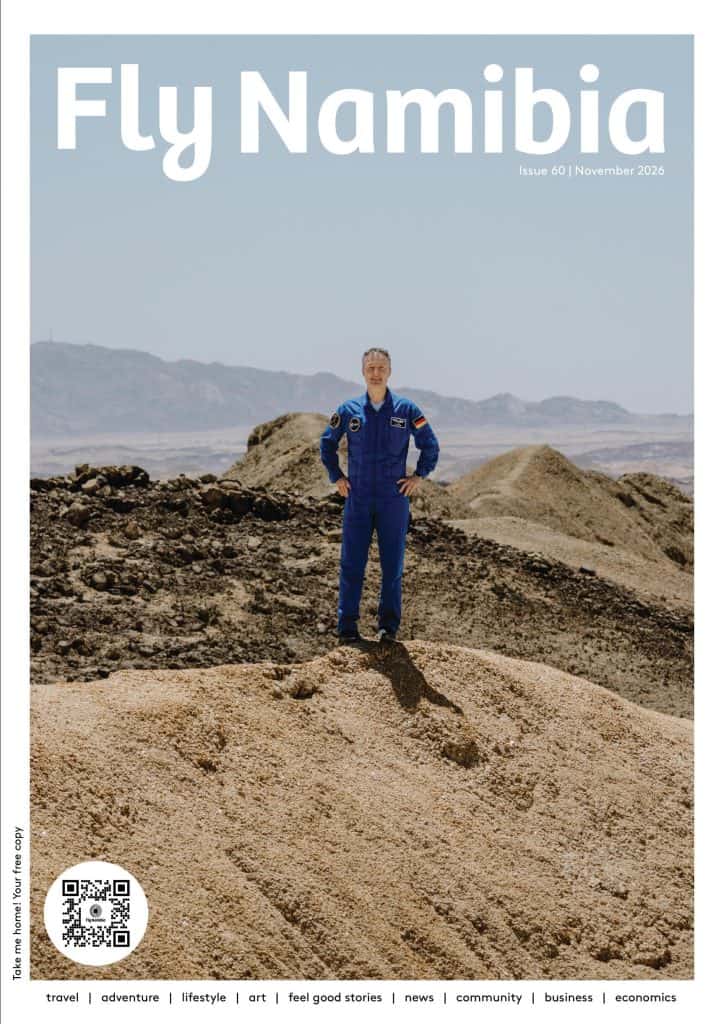
Namibia marks World Space Week 2026 with ESA astronaut Dr Matthias Maurer, spotlighting STEM education, satellite data and the country’s

Agnes Shivute’s Native Leaves introduces Namibian children to indigenous plants through interactive booklets, planting seeds of conservation education and cultural

President Netumbo Nandi-Ndaitwah calls for UN and global financial reforms at the 81st UNGA, while advancing Namibia’s development agenda in