KAZA: Where Borders Blur and Wildlife Roams

By Elzanne McCulloch

From the window of a FlyNamibia flight into Victoria Falls or Maun, the landscape below looks endless. Rivers carve silver paths through floodplains, islands scatter across the water like confetti, and woodland stretches to the horizon. It feels wild. It is also one of the most ambitious conservation experiments on Earth.

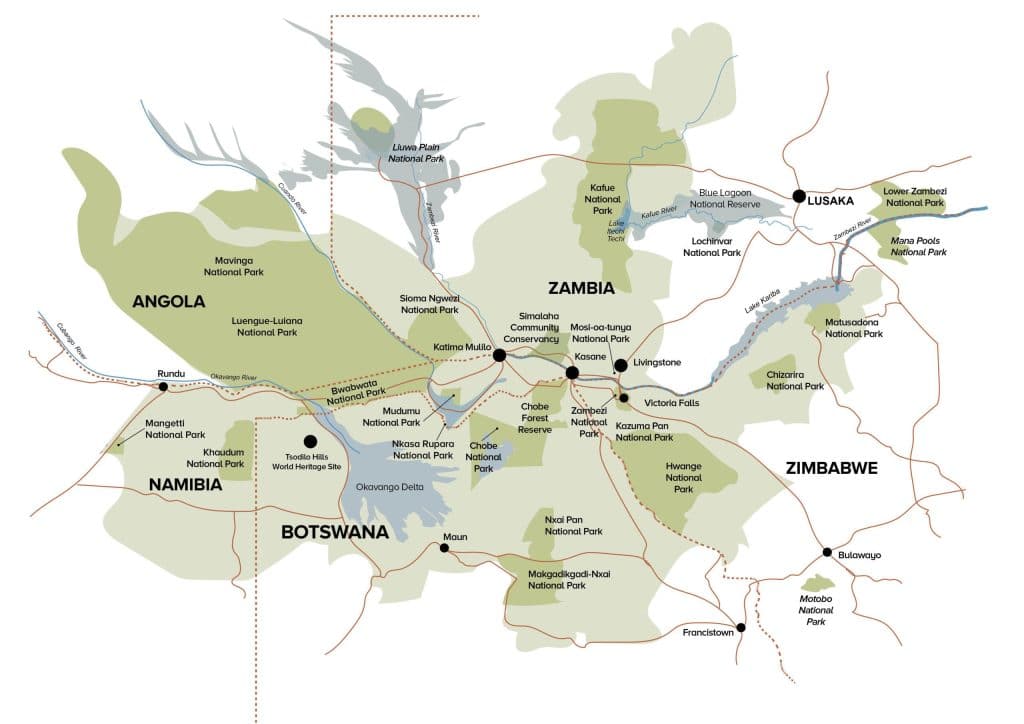
This is KAZA – the Kavango Zambezi Transfrontier Conservation Area – a joint initiative by Angola, Botswana, Namibia, Zambia and Zimbabwe that links a mosaic of national parks, conservancies and community lands into one vast shared conservation landscape. Covering roughly 520,000 km², it is the largest terrestrial transboundary conservation area in the world.

KAZA sits where the Okavango and Zambezi river basins meet, wrapping around iconic places like the Okavango Delta, Chobe, Hwange, and of course Victoria Falls itself.

AN ELEPHANT STRONGHOLD FOR AFRICA

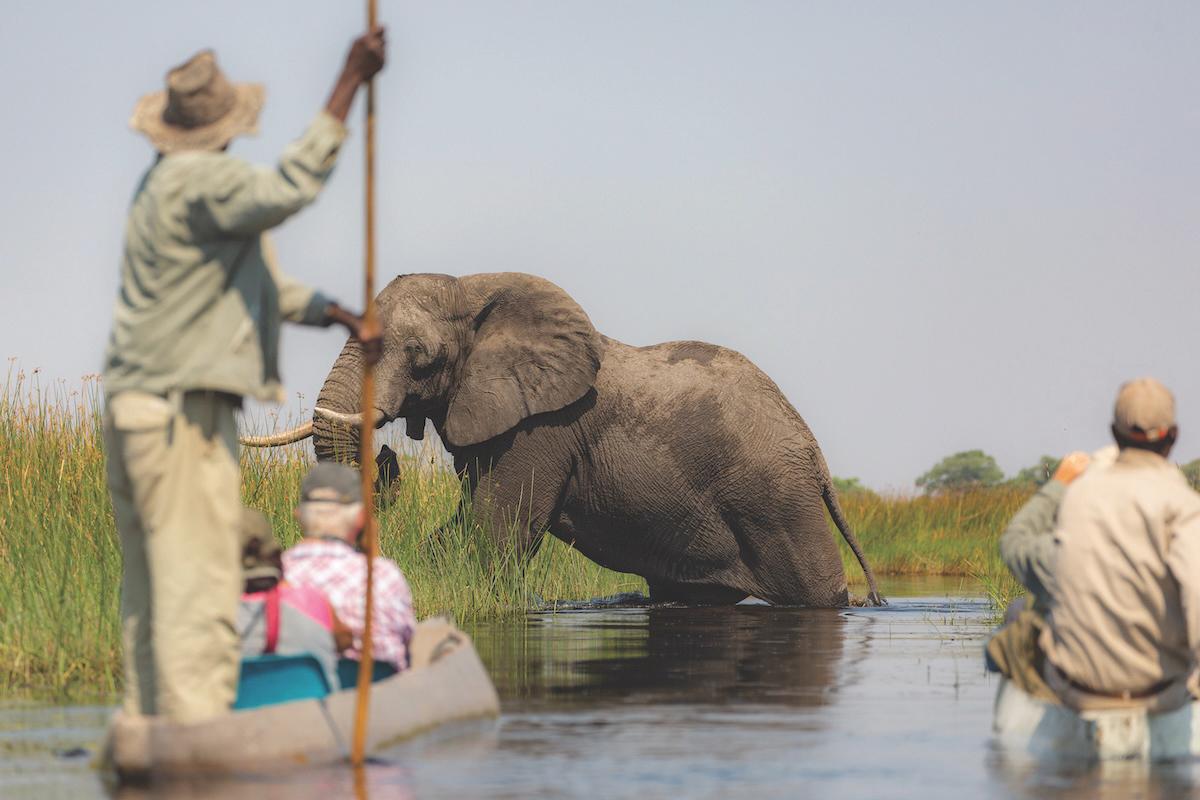
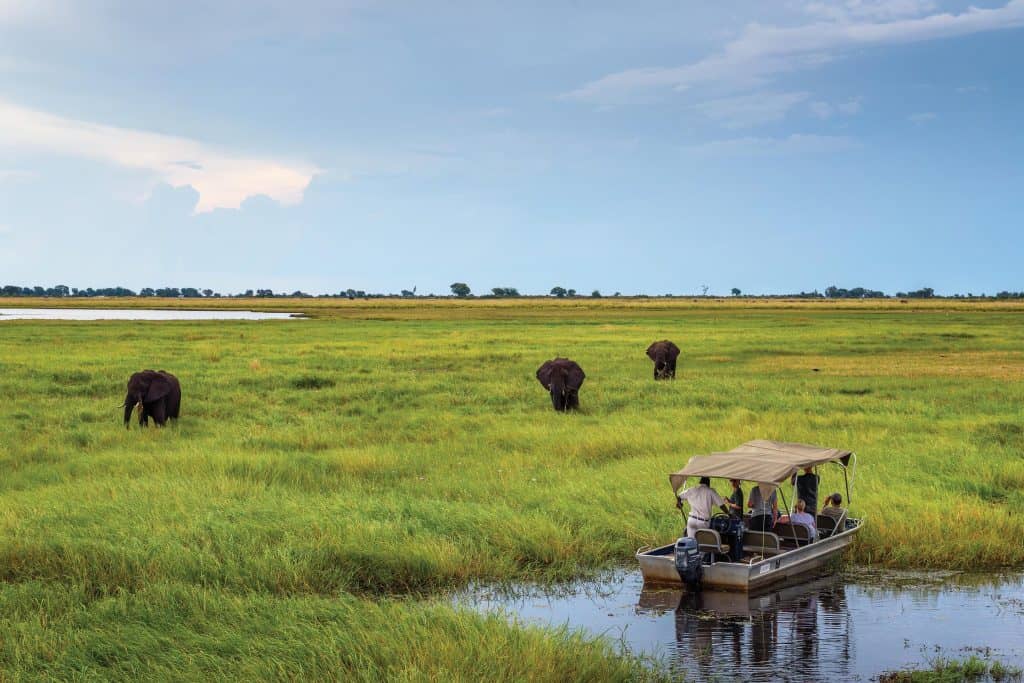
If KAZA had a totem animal, it would be the elephant. The region holds over half of Africa’s remaining savanna elephants, making it the single most important stronghold for the species on the continent.

For decades, elephants here were hemmed in by fences, farms and borders that did not exist in their memories. Old migration routes faded as new towns emerged and political boundaries hardened. KAZA’s vision is to reverse that – to reconnect fragmented habitats into wildlife corridors so that elephants and other wide-ranging species can move freely again between parks, countries and seasons.

Recent aerial surveys across KAZA, flown over all five member countries, have started to give conservationists a clearer picture of elephant numbers and movements, helping them plan where corridors are most urgently needed and where pressure on landscapes is highest.

In a changing climate, that mobility becomes a lifeline. As rainfall patterns shift and water sources become less predictable, animals must be able to move to survive.

CORRIDORS, COMMUNITIES AND CONTESTED SPACE

The romantic version of a wildlife corridor is simple: animals walk, people cheer. Reality is more complex.

Many potential corridors run through areas where people are already living, farming or grazing livestock. New research out of KAZA highlights how elephant corridors can become contested spaces, as conservation goals meet local livelihoods and national development priorities.

KAZA’s planners are acutely aware of this. The Master Integrated Development Plan and newer green-growth strategies emphasise that conservation cannot be separated from people – it has to be woven into better land-use planning, infrastructure, tourism and local economies.

Across the landscape, that thinking translates into practical projects:

  • Securing key crossing points for elephants in Zambia and along the Namibia–Botswana–Zimbabwe borders.
  • Working with communities to reduce human–wildlife conflict.
  • Aligning tourism projects with conservancies and community trusts so that local people share in the benefits of wildlife.

PEOPLE AT THE HEART OF THE PARK

For travellers, it is easy to focus on the wildlife and forget the people whose daily lives intersect with elephants, lions, wild dogs and hippos.

A large percentage of people in some KAZA regions live below national poverty lines, and many still depend heavily on smallscale agriculture and natural resources. Tourism, when it is done right, offers one of the few realistic alternatives – a way to earn income from keeping landscapes wild rather than clearing them.

That is why KAZA is deliberately not one giant fenced park. It is a patchwork of national parks, forest reserves, communal conservancies and agricultural lands, with thousands of families living inside or alongside it.

The success of the whole vision rests on whether those families feel that conservation is working for them, not against them. Where lodges partner with conservancies, where jobs, training, scholarships and revenue-sharing are real, tolerance for elephants raiding fields or predators taking livestock is higher. Where the benefits are abstract, resentment grows.

FLYING INTO A LIVING EXPERIMENT

For travellers, it is easy to focus on the wildlife and forget the people whose daily lives intersect with elephants, lions, wild dogs and hippos.

A large percentage of people in some KAZA regions live below national poverty lines, and many still depend heavily on smallscale agriculture and natural resources. Tourism, when it is done right, offers one of the few realistic alternatives – a way to earn income from keeping landscapes wild rather than clearing them.

That is why KAZA is deliberately not one giant fenced park. It is a patchwork of national parks, forest reserves, communal conservancies and agricultural lands, with thousands of families living inside or alongside it.

The success of the whole vision rests on whether those families feel that conservation is working for them, not against them. Where lodges partner with conservancies, where jobs, training, scholarships and revenue-sharing are real, tolerance for elephants raiding fields or predators taking livestock is higher. Where the benefits are abstract, resentment grows.

Share:

More Posts

Cameras put bread on the table

Namibian youths are turning photography into a source of income, proving that creativity and determination can build sustainable livelihoods. This inspiring story follows young entrepreneurs

Living Well: The Healer Within

Rediscover the healer within. This wellness column explores how mindset, emotions, nature and spiritual awareness contribute to holistic healing and self-restoration, reminding us that lasting

Sign up for our newsletter