We rise by lifting others: Championing the Namibians who make Namibia extraordinary
FlyNamibia’s “We rise by lifting others” in action: We’re for Namibians stories, the Makers Project and Padel for a Purpose
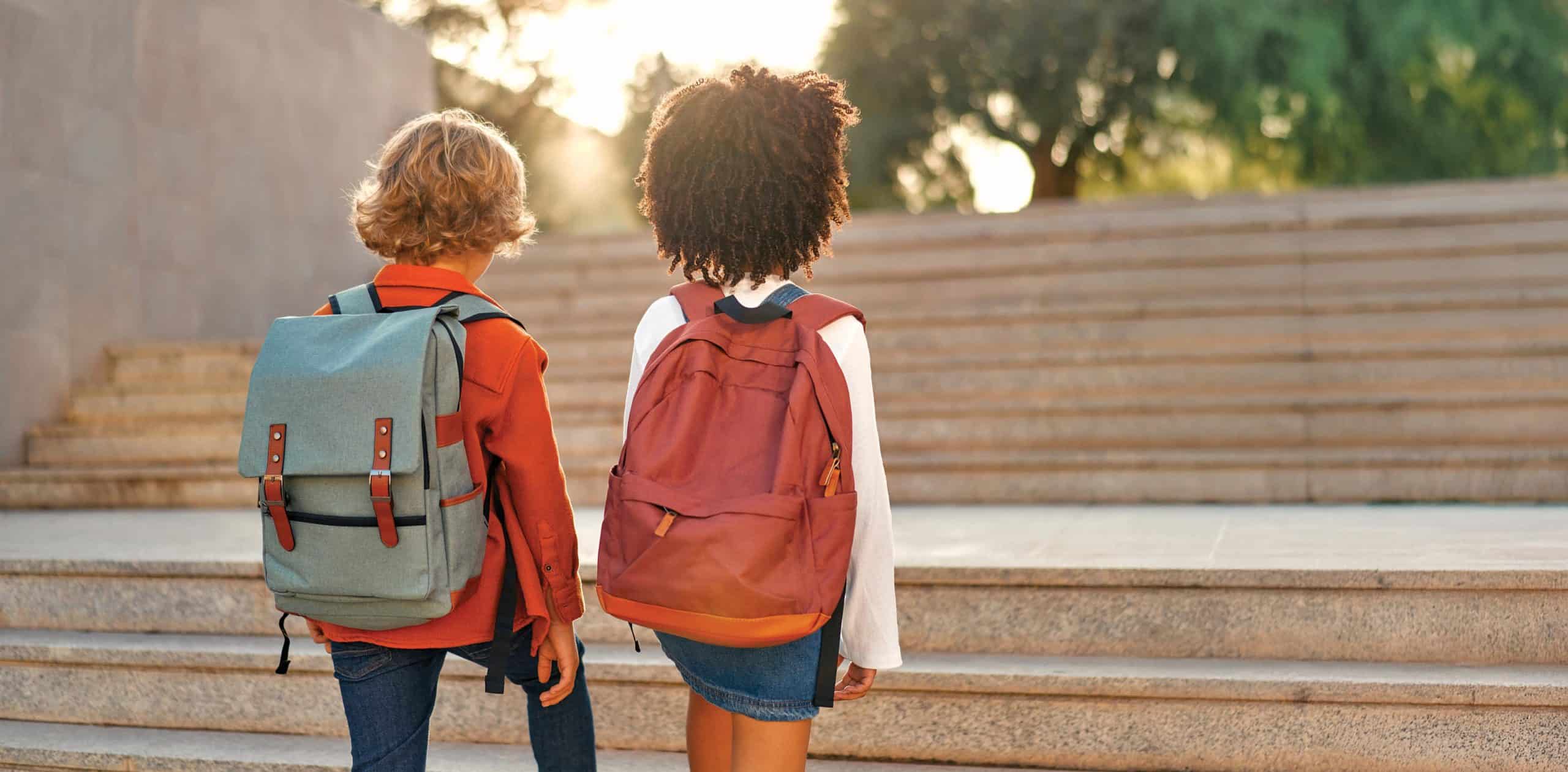
Before a child starts school, we carefully prepare the things they will carry. A lunchbox. A water bottle. Shoes. A correctly labelled jersey that will probably disappear before the end of the first week. But every child also arrives carrying an invisible backpack.
Inside it are the things no stationery list mentions: the ability to cope with frustration, to wait, to ask for help, to separate from a parent, to make a mistake without falling apart and to trust that one difficult day does not mean that everything is going wrong. This may be the most important “school readiness preparation” we do.
We often prepare children for school by teaching them to perform like schoolchildren. We practise letters, numbers, pencil grip and sitting still. These skills are useful, but they are only part of the picture. A classroom asks much more of a child.
Your child will have to share an adult’s attention with many others. They will not always be understood immediately. Someone else may get the chair, toy or turn they wanted. Instructions may be difficult. Their work may not look like the teacher’s example. A friend may choose somebody else.
School readiness is therefore not just the ability to complete a task. It is the ability to remain reasonably okay when the task, the teacher, the friend or the entire morning does not go according to plan. That kind of readiness is not developed through worksheets. It grows in ordinary family life.
Parents naturally want to make the path smoother for their children. We remind them repeatedly, carry what they have forgotten, speak on their behalf and step in when they are uncomfortable. We do this because we love them. Yet, if we remove every stone from the road, children never discover that they can walk over stones.
Capability grows through small experiences of manageable difficulty. Let your child struggle briefly with a button. Allow them to explain their own problem to an adult. Expect them to carry their bag, pack away their belongings and to help clean up what they have spilled.
When they say, “I can’t,” resist the urge to take over immediately. The goal is not to make childhood unnecessarily hard. It is to give children regular proof that hard things do not have to be avoided. Confidence is not something we talk children into. It is something they build by meeting a challenge and discovering: I managed
“School readiness is therefore not just the ability to complete a task. It is the ability to remain reasonably okay when the task, the teacher, the friend, or the entire morning does not go according to plan.”
This may sound strange, but one of the best ways to prepare a child for school is to let them experience moments when they are loved, but not the centre of attention. Perhaps the family attends a sibling’s match. Perhaps they wait while an adult finishes a conversation. Perhaps the restaurant is not chosen around their preference. Perhaps they help with a task that benefits everyone but is not especially entertaining.
A child-centred home can easily become a child-managed home. These are not the same thing.
Children need to know that they matter deeply. They also need to know that other people matter. In a family, everyone belongs and everyone contributes. Sometimes we lead. Sometimes we wait. Sometimes we celebrate somebody else. This prepares children for the social reality of a classroom far more effectively than repeatedly telling them to share.
When children enter unfamiliar situations, they do not only listen to our words. They study our faces, voices and bodies. We may say, “School is going to be wonderful,” while checking repeatedly whether they are nervous, warning the teacher about every possible difficulty and appearing distressed at the classroom door.
The child notices the things we do not say. Before a transition, ask yourself: “What story is my nervous system telling my child?” Calm does not mean pretending that everything is easy. It means showing your child that feelings are manageable. Children borrow our calm before they can reliably create their own.
Some children behave beautifully at school and fall apart the moment they reach home. This can confuse parents. If they managed all day, why can they not manage now? Because home is safe.
After hours of listening, waiting, sharing, coping with noise and trying to get things right, a child’s resources may simply be finished. Their distress may emerge as tears, irritability, silliness or a complete crisis over the wrong-coloured cup.
Try not to turn the first few minutes after school into an interview. Offer food, water, movement and quiet connection. Let their nervous system arrive home before expecting conversation or cooperation. Sometimes the most helpful question is not, “What happened today?” but, “Do you need closeness, space or something to eat?”
Transitions are easier when children have reliable anchors. Choose a few simple rituals that will remain steady when school begins: a particular goodbye, an afternoon snack together, a familiar bedtime routine or pancakes on Saturday morning. Rituals create predictability. Predictability creates safety. Safety gives children somewhere solid to stand while everything else is changing.
Your child does not need to begin school fearless, perfectly independent or academically ahead. They need to know that they can feel nervous and still take the next step. They need adults who believe in their capability, boundaries that make life feel predictable and a home where belonging does not depend on performance.
Long after the lunchbox is lost and the labelled jersey belongs to somebody else, this is the backpack they will continue to carry.
Educational Psychologist
From the September 2026 issue

FlyNamibia’s “We rise by lifting others” in action: We’re for Namibians stories, the Makers Project and Padel for a Purpose

“I don’t know” is often “I’m not ready to face what I know.” On intuition versus fear — and the

Meet FlyNamibia Maker Kanyanga Paulus Simaho, the UNAM Arts student turning recycled materials into handmade Namibian art, aircraft models and

A friend’s suicide and Namibia’s rising toll: why talking matters this Suicide Prevention Month — and where to find help