From neighbourhood walk to national movement: Inside Cleanup Namibia
Cleanup Namibia, founded by Dr La-Toya Mwoombola-Hamutenya, turns a neighbourhood walk into a national clean-up. First Windhoek activation: 19 September
Stretching along Namibia’s southern coastline, the Namibian Islands’ Marine Protected Area (NIMPA) is Africa’s second largest marine protected area. Its offshore islands once supported thriving seabird colonies, including the African Penguin and Cape Gannet. Both these species had large breeding colonies on the uninhabited islands off the Namibian coast. Today, the African Penguin is listed as critically endangered and the Cape Gannet as endangered, indicating significant declines during the past few years. Many of Namibia’s islands have gone silent.
When islands appear to be empty, seabirds are less likely to use them for breeding, even if their population numbers recover. This is because small colonies are much more vulnerable to predators than large colonies of birds – no bird wants to lay their eggs in an “unsafe-looking neighbourhood”. To remedy this, scientists have come up with a way to trick the birds into thinking that an island is already home to a large seabird colony. They do this by putting up decoys that look like the birds and using loud playbacks from thriving breeding colonies.
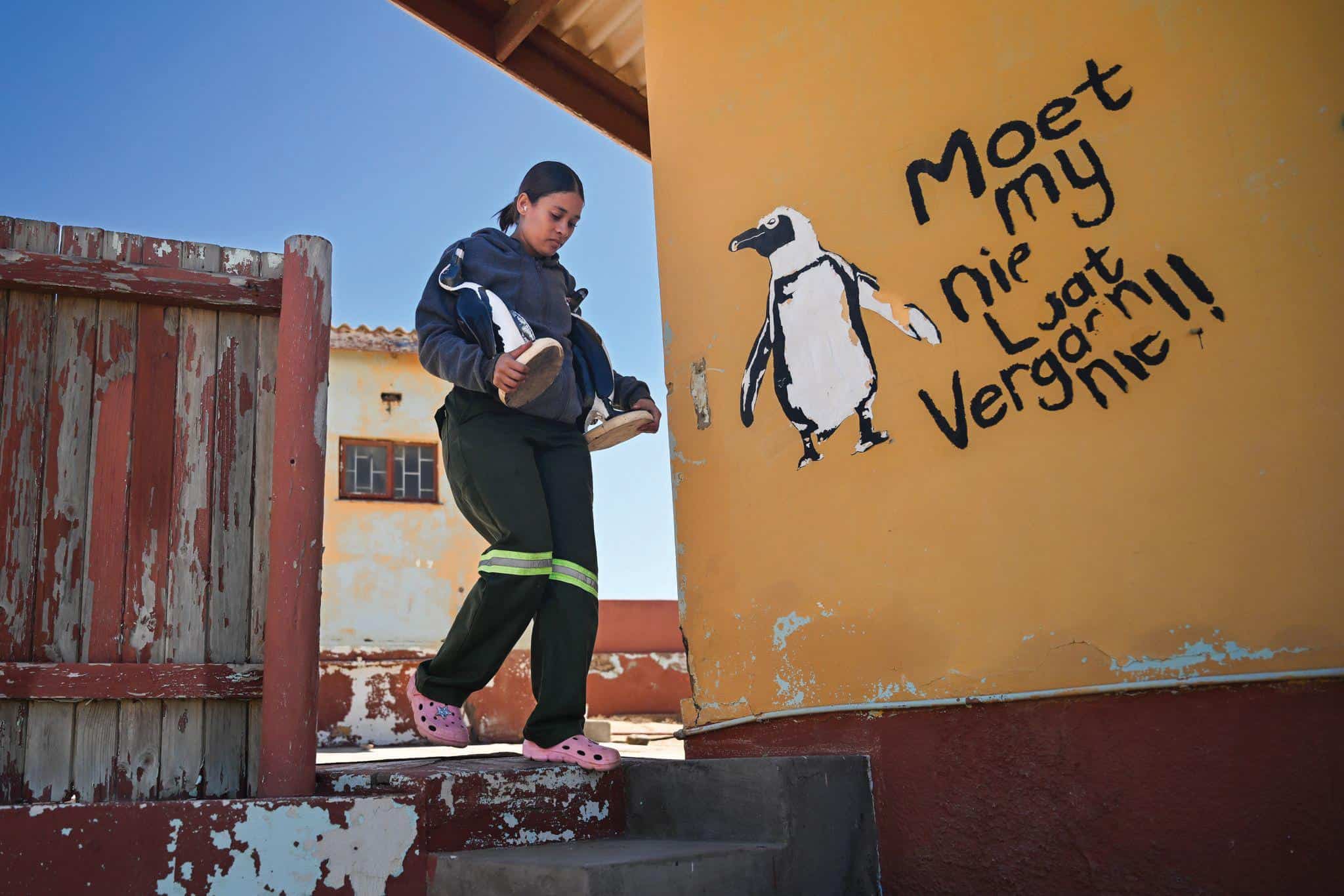
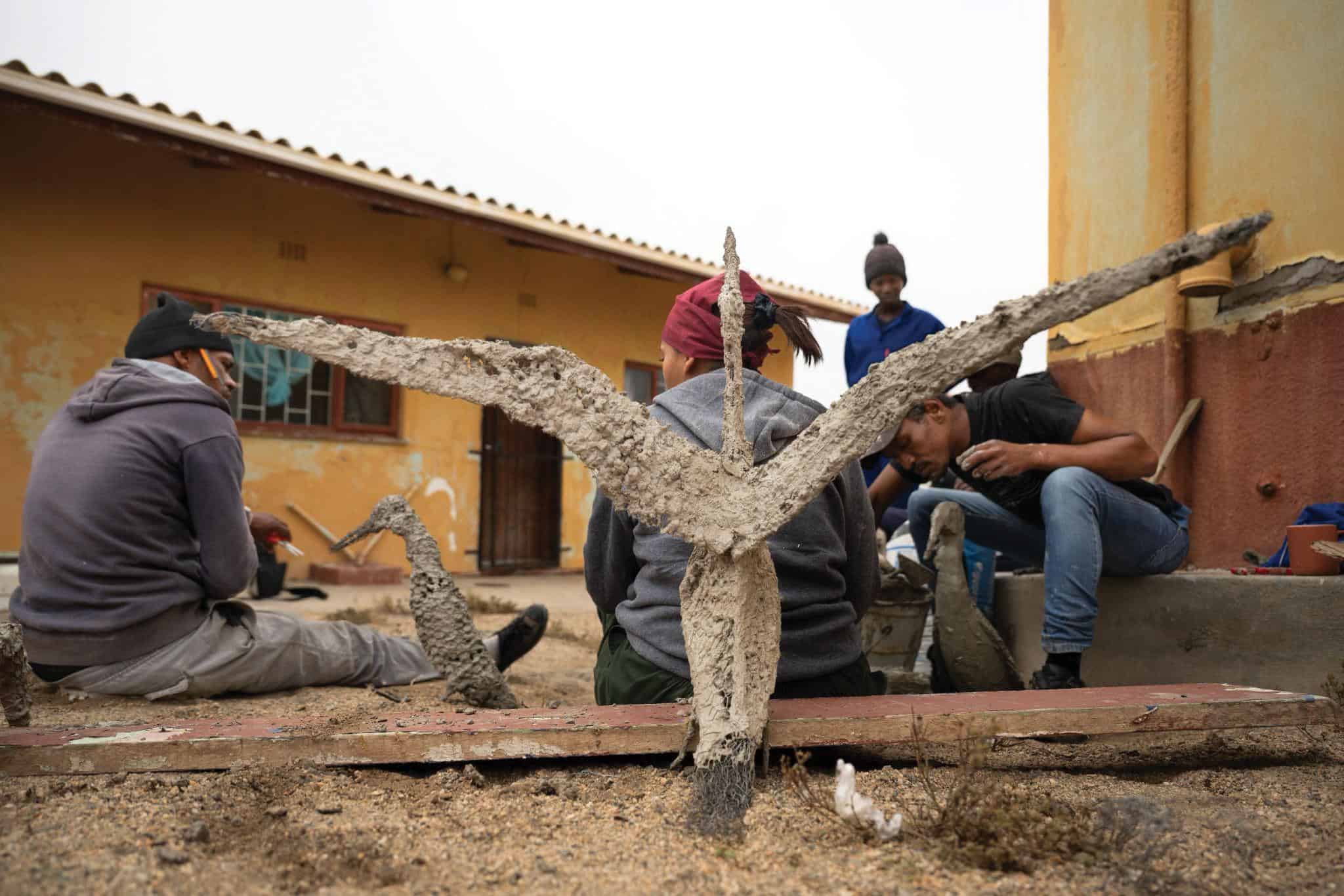
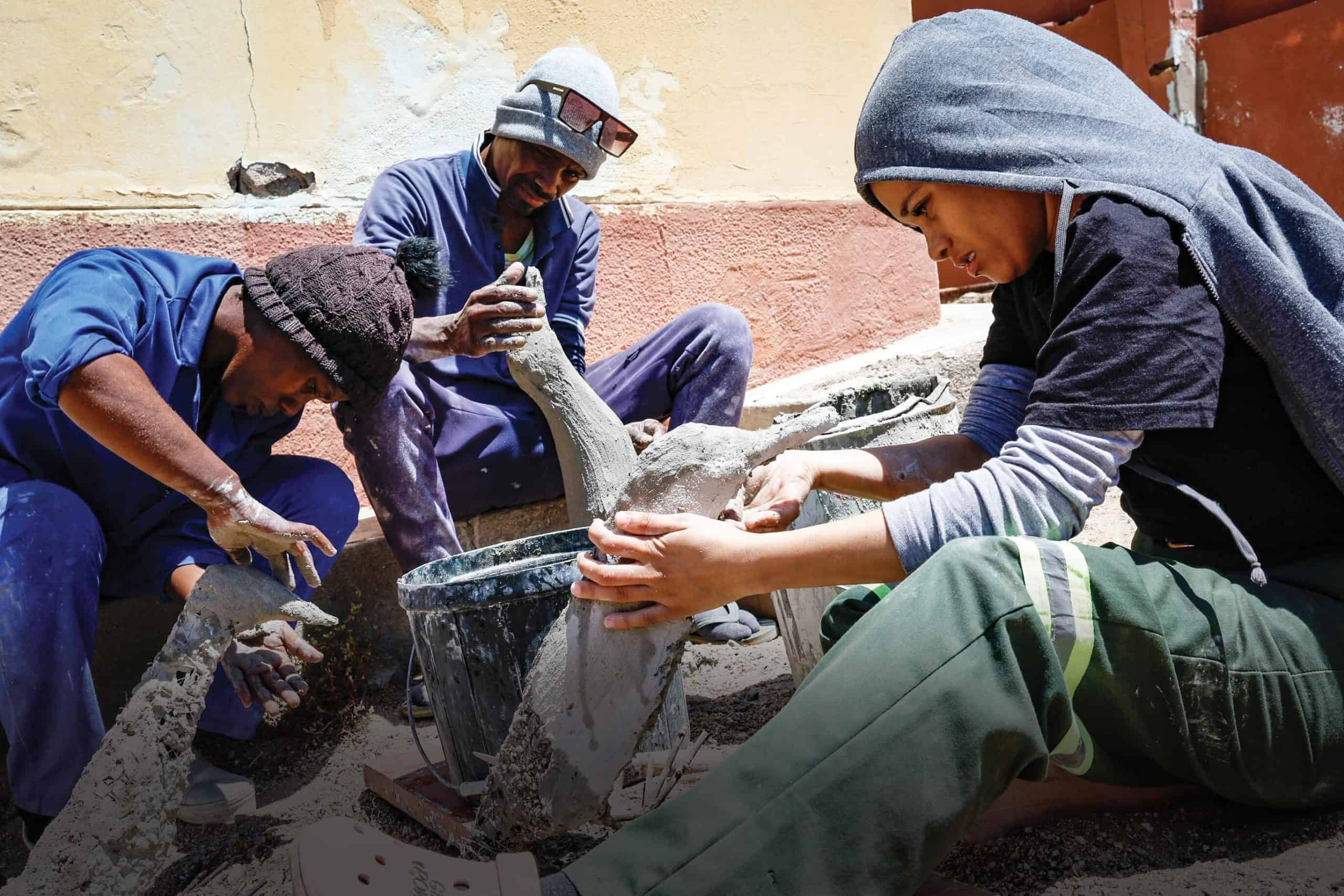
In Namibia, community members in Lüderitz are playing a vital role in this restoration effort for the penguins and gannets. Through a unique community-based conservation initiative, local residents are helping to produce life-like seabird decoys.
For Sizwe Shawa, a Lüderitz resident born and raised in the coastal town, being part of this effort is deeply personal. Sizwe is one of several community members involved in producing the African Penguin and Cape Gannet decoys that will be placed on key islands within the NIMPA.
I was born and raised in Lüderitz. I enjoy the ocean and the life in it – especially the animals on the islands like the African Penguins,” he says. “I joined this project because I want to help prevent them from going extinct. I have seen them with my own eyes, and I want my children and even my great-grandchildren to see them in the future.
Scientific research has shown that such methods are highly effective in restoring seabird populations to former or new breeding sites. In a global review, Jones and Kress (2012) found that techniques such as decoys and acoustic playbacks successfully attract seabirds back to restoration sites, often leading to the establishment of stable breeding colonies. In several cases, species that had disappeared from an area returned and began nesting again within a few years.
Bianca Langs, another Lüderitz resident involved in the project, describes the work as both challenging and meaningful.
I am a member of a small-scale fishers’ association in Lüderitz (known as BIFHA) and a mother of one child. I was born and raised in Lüderitz,” she explains. “I am part of the group helping the seabirds return to the islands because right now they are very empty.
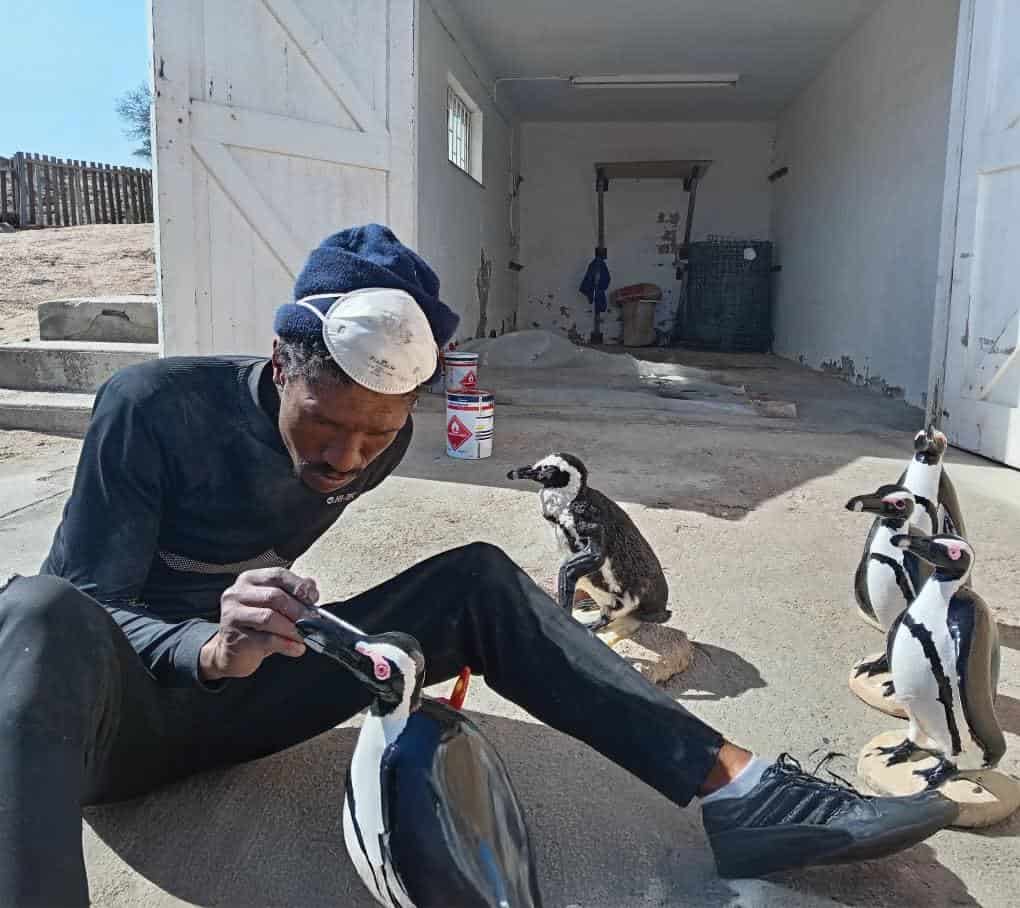
The team was tasked with producing a total of 50 seabird decoys as part of the pilot phase of the project. These include Cape Gannet and African Penguin decoys made from cement or wood – the team will test which materials are most suited to this environment during the pilot. Creating them requires a combination of specialised skills such as welding, sculpting and painting along with patience and careful craftsmanship. The work also depends heavily on weather conditions along the windy southern coast.
“One of the main challenges is the weather,” Bianca explains. “Sometimes the materials we use need time to dry before we can paint them. When the weather is wet or the wind is strong, we cannot continue working.”
Despite these challenges, the motivation behind the project remains strong. For Bianca, the initiative represents an opportunity not only to support conservation but also to create awareness around the state of our environment and how people in the community can help, no matter how small the effort is.
By involving community members directly in restoration work, the project is helping to build local ownership and pride in protecting Namibia’s marine environment. For Sizu, the possibility of seeing seabirds return to the islands carries deep personal meaning.
“If this is successful,” he says, “I will be able to say that I was part of helping bring the penguins back to the islands. That is something I can tell my children and my great-grandchildren one day.”
Through their hands and dedication, community members in Lüderitz are not only shaping decoys, but they are also helping to shape a future where Namibia’s seabirds may once again return to their island homes.
This restoration effort is the result of collaboration between the Namibian Government, conservation practitioners, scientists, and community members. Research scientists from the Ministry of Agriculture, Fisheries, Water and Land Reform (MAFWLR), working alongside partners from the Southern African Foundation for the Conservation of Coastal Birds (SANCCOB) and the Namibian Foundation for the Conservation of Seabirds (NAMCOB), have been instrumental in designing and guiding the seabird restoration techniques being piloted on Namibia’s offshore islands.
The initiative has also been made possible through the financial support of the Pupkewitz Foundation and the NIMPA+ Project, whose contributions are helping to turn innovative conservation ideas into practical action.
From the September 2026 issue

Cleanup Namibia, founded by Dr La-Toya Mwoombola-Hamutenya, turns a neighbourhood walk into a national clean-up. First Windhoek activation: 19 September

Clocks do not measure an independent flow called time. They count physical cycles. Relativity’s “time dilation” is a change in

FlyNamibia’s “We rise by lifting others” in action: We’re for Namibians stories, the Makers Project and Padel for a Purpose

“I don’t know” is often “I’m not ready to face what I know.” On intuition versus fear — and the