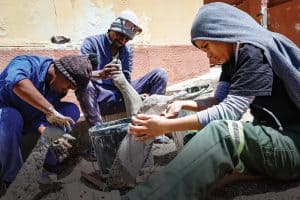
Where conservation meets community
In Lüderitz, community makers are building penguin and gannet decoys to lure seabirds back to silent islands in Namibia’s NIMPA

“What would you choose if you trusted that you already had some of the information you needed?”
We often say, “I don’t know.” What should I do? Should I stay or go? Is this the right decision? What do I actually want? Sometimes, of course, we genuinely do not know. But I wonder how often “I don’t know” is actually shorthand for something else:
We live in a world that encourages us to look outside ourselves for answers. We ask friends, search Google, read books, consult experts, make lists and analyse every possible outcome. There is value in all of this. But somewhere beneath the noise, there is often another form of knowing – quieter, less logical and harder to explain.
We call it intuition.
Intuition is often described as a gut feeling, a sixth sense or simply “knowing”. It does not necessarily arrive as a clear sentence in your head. Sometimes it is a sense of ease around one decision and resistance around another. Sometimes it is the feeling that something is not quite right, even though you cannot yet explain why.
The challenge is that intuition can be difficult to hear when the mind is busy.
Our brains are constantly processing information, comparing possibilities and trying to predict what might happen next. Add stress, fear, other people’s expectations and the pressure to make the “right” decision, and our own inner signals can become almost impossible to distinguish from the noise.
This is why creating space matters.
You do not necessarily need another answer. You may need fewer distractions.
Try sitting quietly for a few minutes. Go for a walk without your phone. Write without editing yourself. Ask a better question: not “What should I do?” but “What do I already know about this?”
Or try the question that has stayed with me:
What would you choose if you trusted that you already had some of the information you needed?
What would your future self tell you is important now?
What feels aligned with the life you are trying to create?
These questions do not magically produce answers. They create room for answers to emerge.
There is also an important distinction between intuition and fear. Fear often feels urgent, repetitive and catastrophic:
What if everything goes wrong? What if I regret this? Intuition can be much quieter. It may simply say, “This isn’t right,” or “Go this way.”
Learning to recognise that difference takes practice.
And perhaps intuition is not about becoming more certain. Perhaps it is about becoming more willing to listen.
The next time you find yourself saying, “I don’t know,” pause before immediately looking for someone else to tell you.
Try asking:
“What if I do know?” You may be surprised by what becomes audible when you finally make enough space to hear it.
Living Well is a monthly wellness column exploring functional health, natural rituals and conscious living in Namibia. Follow Cerina on Instagram for tips, workshops and holistic health guidance, or read more on Substack.
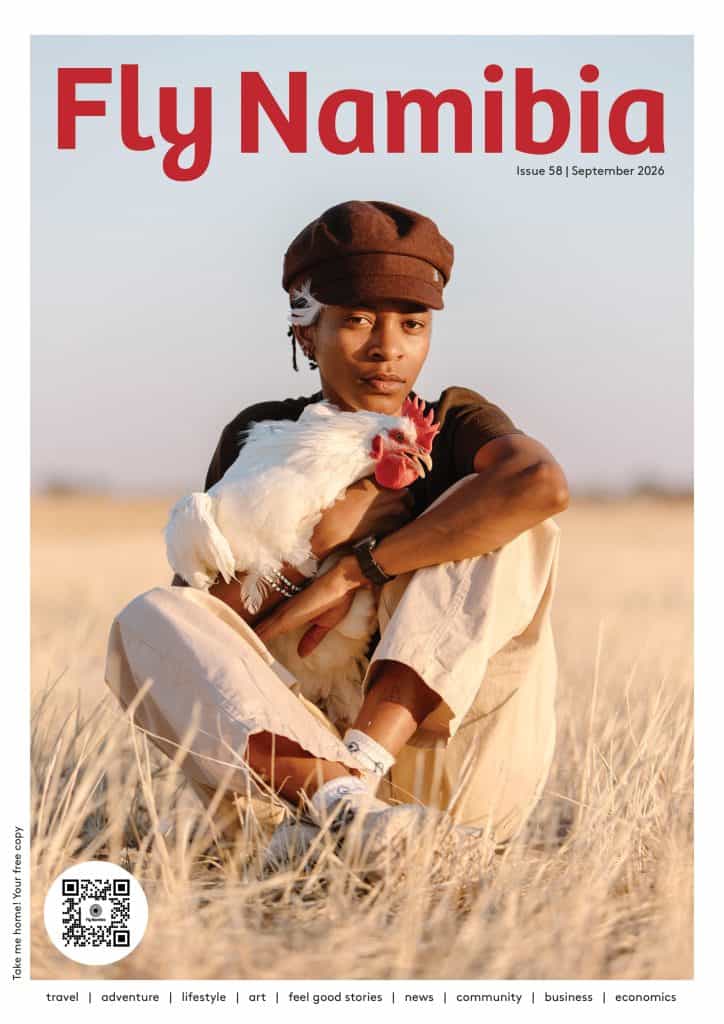
From the September 2026 issue

In Lüderitz, community makers are building penguin and gannet decoys to lure seabirds back to silent islands in Namibia’s NIMPA

Clocks do not measure an independent flow called time. They count physical cycles. Relativity’s “time dilation” is a change in

FlyNamibia’s “We rise by lifting others” in action: We’re for Namibians stories, the Makers Project and Padel for a Purpose

Meet FlyNamibia Maker Kanyanga Paulus Simaho, the UNAM Arts student turning recycled materials into handmade Namibian art, aircraft models and