
From Paddies to Prosperity: How rice is rewriting livelihoods
Discover how Debmarine Namibia’s investment in rice farming at UNAM Ogongo is improving food security, empowering farmers, and creating sustainable
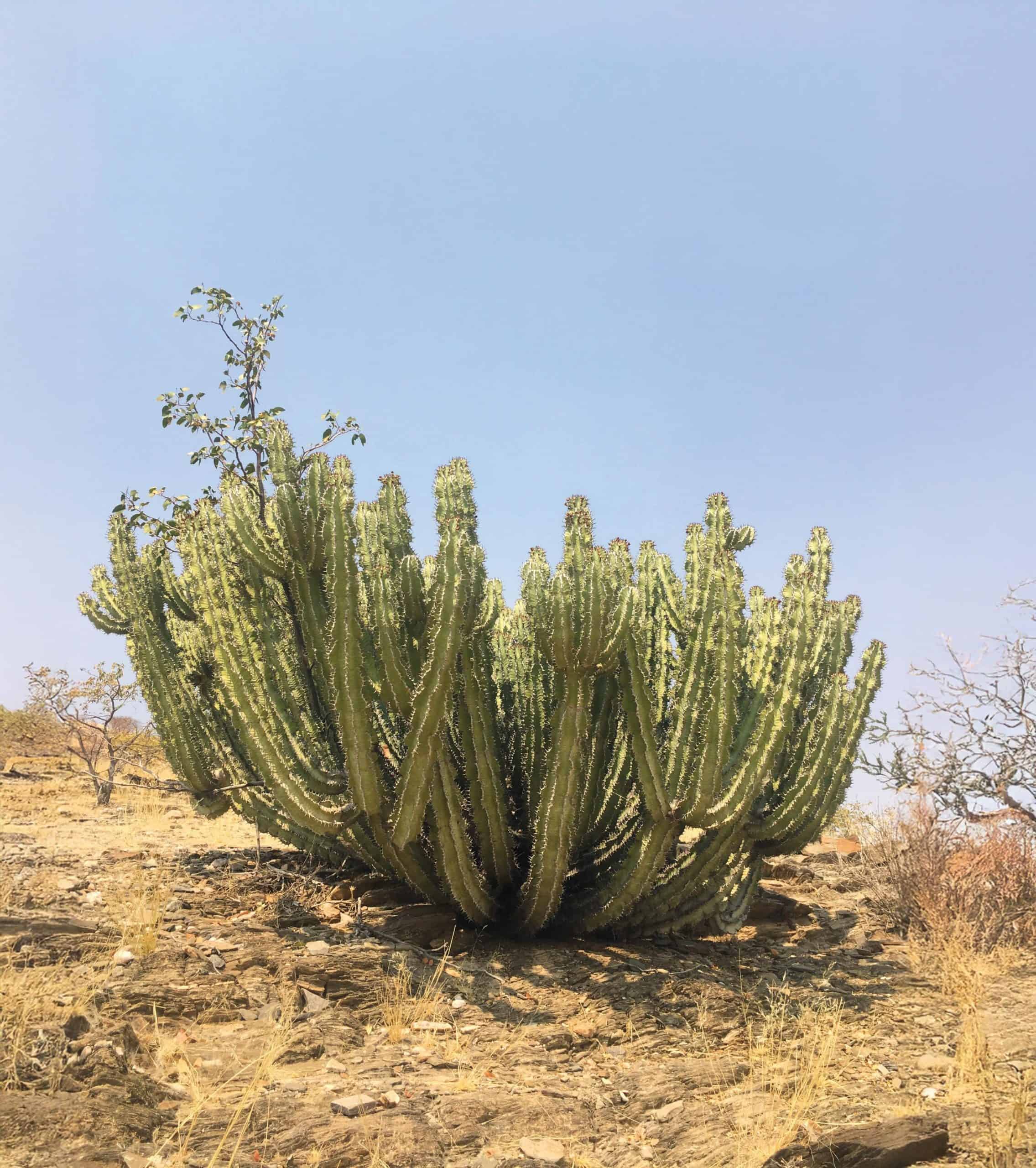
I recently found myself exploring a rather unusual plant, its patterns looking like one of those intentionally repetitive art designs with no flaws. The candelabra euphorbia belongs to the Euphorbiaceae – a diverse plant family ranging from small plants to big trees. The euphorbia species’ distinct features include having many stems, flowers and (mostly) a milky latex. They occur in different regions throughout the country and can easily be misidentified due to sharing similar physical features with other species, especially when viewed from afar.
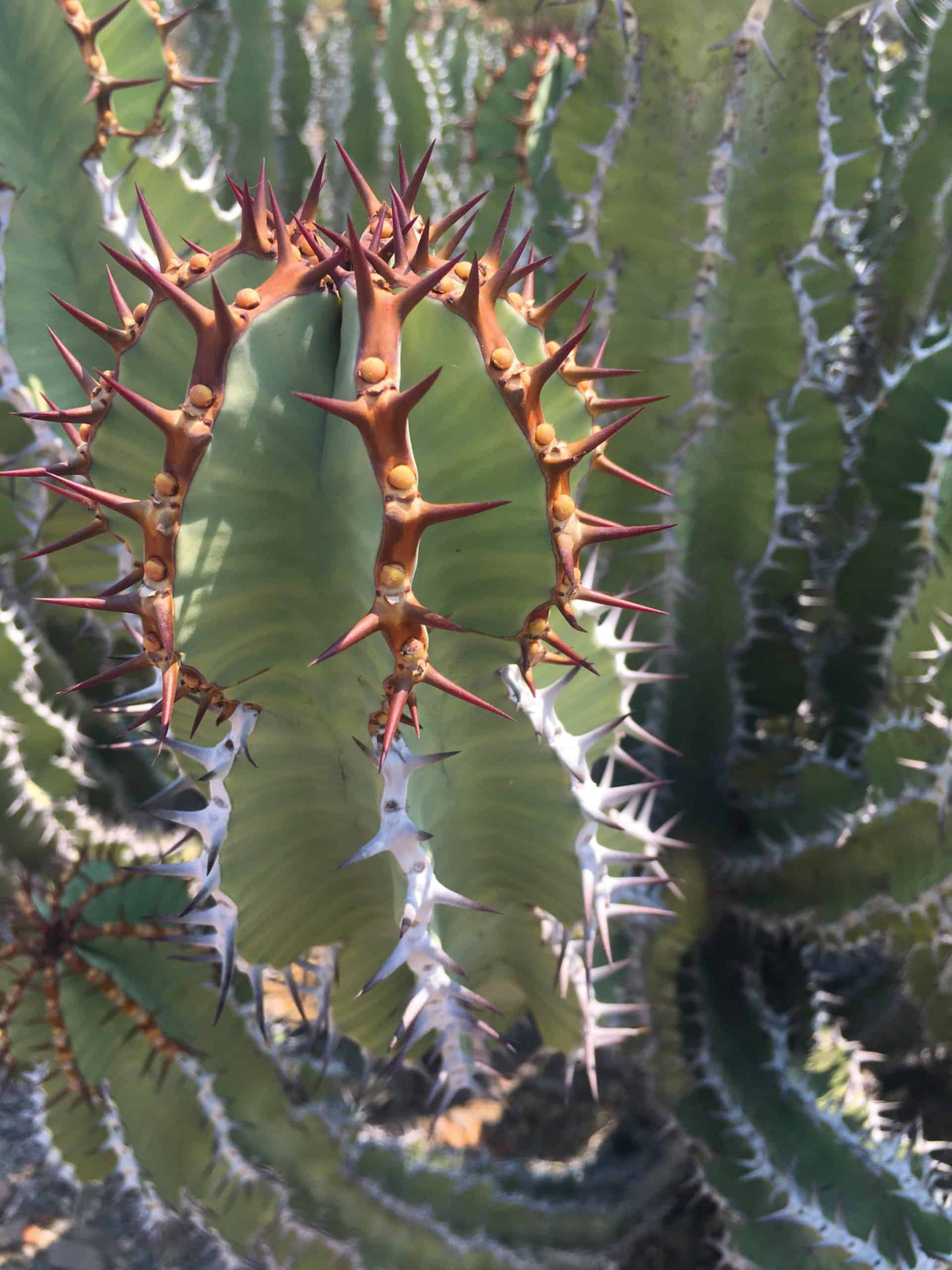
The candelabra euphorbia has distinct features and is easy to identify. It grows in many areas across the country, but mostly on rocky substrates. While it is a succulent with many stems and spiny like most euphorbia species, it has straight thorns that are paired. It has undivided branches on the lower part, but the top part only has secondary branches. The branches are constricted at intervals, forming symmetrical segments, with paired thorns on the edges of the plates that are formed by deep furrows. Between each of these paired thorns flowers grow, transforming into a single fruit with a maroon-purplish colour. The fruit turns light brown when dry.
Last year, in the wilderness of the Kunene Region, was my first opportunity to have a really close view of the candelabra euphorbia. While I was mostly admiring the landscape for the few days we were there, I eventually took the time to have a thorough look at this shrub. Some shrubs were quite small, while others were of great height and size. Comparing the small shrubs with the bigger ones, it took careful consideration before I could conclude it is indeed the same shrub.
Curiosity killed the cat, they say, but I guess on that day I was the cat with nine lives. The eternal explorer enthused by nature, I was touching the rigid thorns and branches, pressing the hard flesh and observing. My instincts were eager to explore through touch and a bit of squeezing, although the flesh did not rapture. Fortunately, I did not go as far as tasting anything from this beauty. What I learnt afterwards is that the latex of the candelabra euphorbia is extremely toxic and has the ability to cause blindness if it comes into contact with the eyes. The latex is also said to cause a painful burning sensation which can be felt for hours. I was in potential danger without knowing it.
It is true when they say “what has no harm to one can be poisonous to another”. In the same way, what is poisonous to one may have no effect on another. While the candelabra euphorbia has toxic effects on humans, wildlife like rhinos are known to browse on this shrub without any ill effects. Good on them! Not so good is the fact that this shrub can be invasive in some areas owing to overly favourable conditions.
A little investment in reading awakens the mind. As I recalled myself exploring this shrub and luckily not tasting it, I was reminded of the rules of biology. Unlike geology, where you can lick on certain stones to identify them, tasting is not recommended in biology. Observing and reading up on a particular plant is the safest way of identification. Rather use field guides to compare detailed features than succumbing to the temptation of identifying at your own risk.

Discover how Debmarine Namibia’s investment in rice farming at UNAM Ogongo is improving food security, empowering farmers, and creating sustainable

From humble beginnings to hundreds of thriving gardens, discover how young Namibians are growing food security, self-reliance, and stronger communities.

Discover how Windhoek residents Kat Stahl and Wynand Lens are transforming neglected bus stops into vibrant public artworks, inspiring community

Discover how to spend 24 hours in Windhoek with this curated guide featuring scenic hiking trails, local culture, traditional Namibian