Lighting up the ordinary with technicolour
Discover how Windhoek residents Kat Stahl and Wynand Lens are transforming neglected bus stops into vibrant public artworks, inspiring community pride, creativity and positive urban
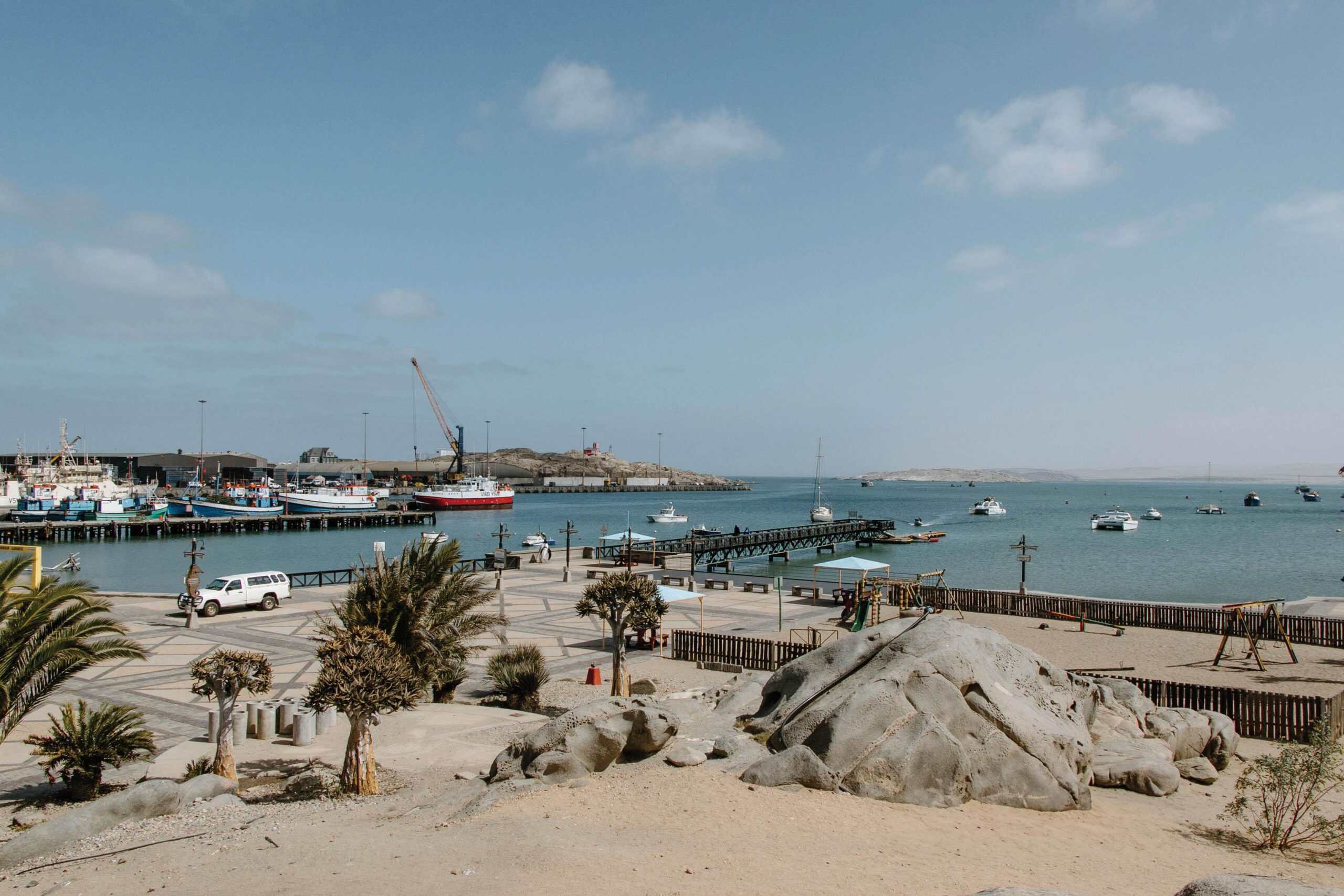
One of Namibia’s truly unique destinations is the coastal town of Lüderitz in the socalled Deep South. Originally named Angra Pequena (small bay) by the famous Portuguese explorer Bartholomeu Dias in 1487, the settlement was renamed Lüderitz in honour of its founder Adolf Lüderitz in 1886. Located directly on the shores of Lüderitz Bay facing the Atlantic Ocean, Lüderitz forms a barrier between the towering coastal dunes of Namib-Naukluft National Park directly to the north, and the unforgiving rocky coastline to the south. The town has a fishing harbour surrounded by early 20th century German colonial buildings. Ten kilometres to the east the world-renowned ghost town, Kolmanskop, affords you the opportunity to gain a spellbinding insight into what life was once like in this former diamond settlement. Other activities include bird-watching such as at Halifax Island to view Namibia’s largest colony of African Penguins from a boat. Set aside a morning or afternoon to explore the sheltered coves of the Lüderitz Peninsula, Shark Island, Grosse Bucht, Sturmvogel Bucht and Dias Point where the Portuguese navigator Bartholomeu Dias erected a stone cross in July 1488. Lüderitz is especially famous for its delicious fresh seafood: west coast rock lobster (called crayfish locally), oysters and the much sought-after delicacy – abalone (perlemoen variety). The town celebrates its rich seafood culture with an annual Lüderitz Crayfish Festival. The Ombepo Wind Farm east of Lüderitz is Namibia’s first wind farm.
A number of exciting modern developments have taken place in the centre of Lüderitz. One of them is the Lüderitz Waterfront Development which currently includes the harbour square that hosts the annual Crayfish Festival. The harbour square consists of shops, restaurants and coffee shops, offices and apartments. The Yacht Club is also at the Waterfront. A major project which was launched in the last quarter of 2024 is the largest maritime museum complex in Africa. This multi-million-Namibia-dollar attraction displays Namibia’s rich maritime history, geology and marine fauna and flora. It is housed in the Lüderitz Waterfront complex at the historical power station located directly on Lüderitz Bay. The impressive modernised building is currently home to a restaurant, offices, gym, conference facilities, auditorium, a large promenade and a satellite campus of the Namibia University of Science and Technology. Lüderitz is easily accessible by good roads from Windhoek (685 km tar), Keetmanshoop (340 km tar) and the Fish River Canyon (480 km from Ai-Ais Resort – 184 gravel and 295 tar), and with FlyNamibia on a direct flight between Windhoek and Lüderitz airport.
Among the most striking architectural attractions are the Goerkehaus and Felsenkirche (rock church). Both adorn the slopes of Diamond Mountain. The church with its beautiful stained-glass windows is truly unique, as all building materials – even the sand – were shipped from Germany. In the ‘old town’ are the houses of former mining magnates and prominent businessmen, including Kreplin House and Troost House. The Krabbenhöft & Lampe Building was erected for a trading business during the period of economic prosperity that followed the discovery of diamonds. The Deutsche Afrika Bank is part of the historic street view of Bismarck Street, one of the oldest roads in town. In Berg Street, in the historic core of the town, is a complex of residences built during the diamond boom. Other noteworthy structures are the old post office, the former German school, the Lesehalle and the Turnhalle.
Find more Namibia travel inspiration

Discover how Windhoek residents Kat Stahl and Wynand Lens are transforming neglected bus stops into vibrant public artworks, inspiring community pride, creativity and positive urban

Discover how to spend 24 hours in Windhoek with this curated guide featuring scenic hiking trails, local culture, traditional Namibian cuisine, rooftop dining and the

Namibia’s 2026 State of the Nation Address highlights economic growth, infrastructure development, governance reforms, energy investments and job creation as the government advances Vision 2030

Namibia is advancing its sustainable finance agenda as RMB Namibia and the Bank of Namibia lead efforts to unlock climate finance, attract investment, and support